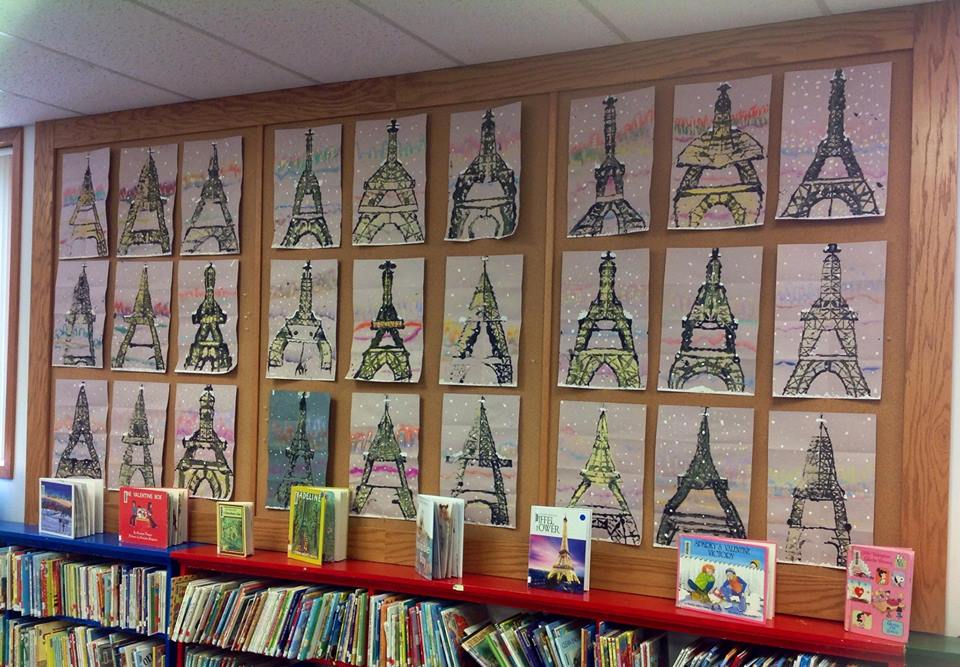
New Art Display at Oakland Public Library
January 16, 2014 Leave a comment
Northeast Nebraska's dependable news source
January 16, 2014 Leave a comment
In 2012 the median annual earnings for women who worked full-time all year was $37,791 compared to men’s salary of $49,398. What are your thoughts on this?
January 16, 2014 Leave a comment
News Column
John Wilson
Extension Educator
December 13, 2013
Feeding Birds
One of the best ways to enjoy wildlife in the comfort of your home is to watch birds at a feeder. You’ll be amazed at the variety of birds that will come to your feeder throughout the year. Experts disagree about whether backyard bird feeding significantly helps bird populations. But feeding certainly can help individual birds living near your home.
Some people, like my wife and I, feed birds year-round. While this isn’t necessary, we enjoy watching the birds that are attracted to our backyard. However, the most critical time to feed birds is during spring and fall migration, when birds need extra energy, and especially during the winter and early spring when other food sources for birds that spend the winter here may become scarce. At this time of year, it is important to keep feeding birds once you start. Birds may become dependent on your feeders and an interruption in their food supply can stress them.
Set up your feeders in a quiet place where they are easy to see and convenient to refill. Feeders close to natural shelter such as trees or shrubs offer resting places for birds between feedings and a quick refuge if a hawk flies through. Evergreens are ideal because their thick foliage buffers winter winds and offers year-round hiding places from predators.
Be careful not to locate your feeder too close to cover, though. Nearby branches can provide easy access for seed-hungry squirrels and hiding places for bird-hungry cats. A distance of about 10 feet seems to be a good compromise, but try experimenting. You can provide resting and escape cover for ground-feeding birds by placing shrubs or loosely stacked brush piles near your feeders.
There are many types of feeders and different types will be used by different birds. Each has its own advantages and disadvantages. Bird feeder options include tray or platform feeders, hopper or house feeders, window feeders, tube feeders, nyjer seed feeders and suet feeders.
Some feeders will come with shields over the top, or you can purchase optional shields, that discourage other animals such as squirrels or raccoons from jumping down on a feeder from a nearby tree. Notice I said discourage because my experience is, these seed-robbing critters like to figure out how to overcome any obstacle you might throw in their way. The weight of a larger animal will cause some feeders to close access to the seed, but they will remain open when birds are feeding.
There are just as many types of bird food as there are types of bird feeders. Some of the more common food sources include sunflower seed, proso millet, milo, cracked corn, or mixtures of these seeds… as well as nyjer seed and suet blocks. Different birds will be attracted to different types of seed. So put up a couple feeders and use different types of bird food in different feeders. Don’t forget to scatter a little seed on the ground for those birds that won’t go to the feeders, but will feed on the ground for seed you left them or that other birds scattered out of the feeders.
There are a number of sources of information about birds on-line, but one I have found particularly helpful is the Cornell Lab of Ornithology’s website at http://www.allaboutbirds.org. They also have a couple of interesting programs where you watch and count the birds that you observe. One of these is called FeederWatch and the other is the Great Backyard Bird Count.
Just as important as feeding birds during the winter is a supply of fresh water. You can purchase birdbath heaters that keep water from freezing during the winter. Besides drinking water, birds need water to keep their feathers clean and fluffy to protect them against cold temperatures.
Remember, bird feeders and waterers make great Christmas presents for that hard to shop for person. For more information on feeding birds, check out http://www.allaboutbirds.org or contact your local UNL Extension office.
January 16, 2014 Leave a comment
Rachel Wise, District 3, Nebraska State Board of Education (December, 2013)
By Rachel Wise
This month I will focus on two topics that are near and dear to my heart. First, is the selection of the next Nebraska Commissioner of Education. Secondly, I want to celebrate the arts, or more specifically, the fine arts standards which are in draft form, ready for public input.
Speaking of public input, let’s start with the selection of our next Commissioner. On December 11, interviews were held with four finalists for the Commissioner of Education. These interviews were conducted in a public meeting. All four finalists brought tremendous strengths to the position and the interview. The finalists, Norm Ridder, Virginia Moon, Matt Blomstedt and Michael Sentance have exceptional qualifications and diverse background experiences. On December 12, the State Board of Education had a significant discussion on the strengths of the candidates and the priorities and needs for educational leadership in Nebraska. The State Board voted to offer a contract to Dr. Matt Blomstedt of Central City. Blomstedt has leadership experience with the Nebraska Educational Service Unit Coordinating Council and the Nebraska Rural Community Schools Association.
On to the celebration of fine arts! The Nebraska Department of Education was fortunate to receive funding from the Nebraska Arts Council and the Nebraska Cultural Endowment to develop fine art standards. Over 50 PK-16 teachers and local artists were engaged in the development of the draft fine arts standards. These standards include the strands of dance, music, theater, visual and media arts. The fine arts standards were developed in grade bands, such as K-2, 3-5, 6-8 and 9-12. This will allow for greater flexibility in the development of curriculum and the integration of standards at the local school level
Celebrating the blending of the arts and education is great for the future educational experiences of Nebraska students. A comprehensive educational experience is the foundation of a well-rounded individual. If we narrow our focus to core subjects (reading/language arts, math, science and social studies), I believe we miss the opportunity to engage students in areas of interest and talent that are essential to student success.
So, why I am writing about this? Obviously, you have just read my opinion regarding the importance of fine arts, but I would also like to share information about the next steps in the development of the fine arts standards. The State Board of Education and the Nebraska Department of Education values and requires public input. From December 16-January 17 the public may complete an electronic survey at: http://www.education.ne.gov/standardssurvey/. The public may also comment now through January 17 at the NDE website: http://www.education.ne.gov/FineArts/index.html. A final opportunity for public input will be to provide testimony at a January 16 public hearing.
Finally, the fine arts are important to student achievement and student success. According to Americans for the Arts, participation in the arts:
‘Tis the season to enjoy the arts…..celebrate by attending a concert in your community or your school and thank teachers for their dedication to enriching the lives of students through the arts!!
You can find additional information about our new Commissioner and the fine art standards at the NDE website: www.education.ne.gov. If you would like to contact me, feel free to do so at rachel.wise@nebraska.gov.
January 16, 2014 Leave a comment
By Amelia Schlichten
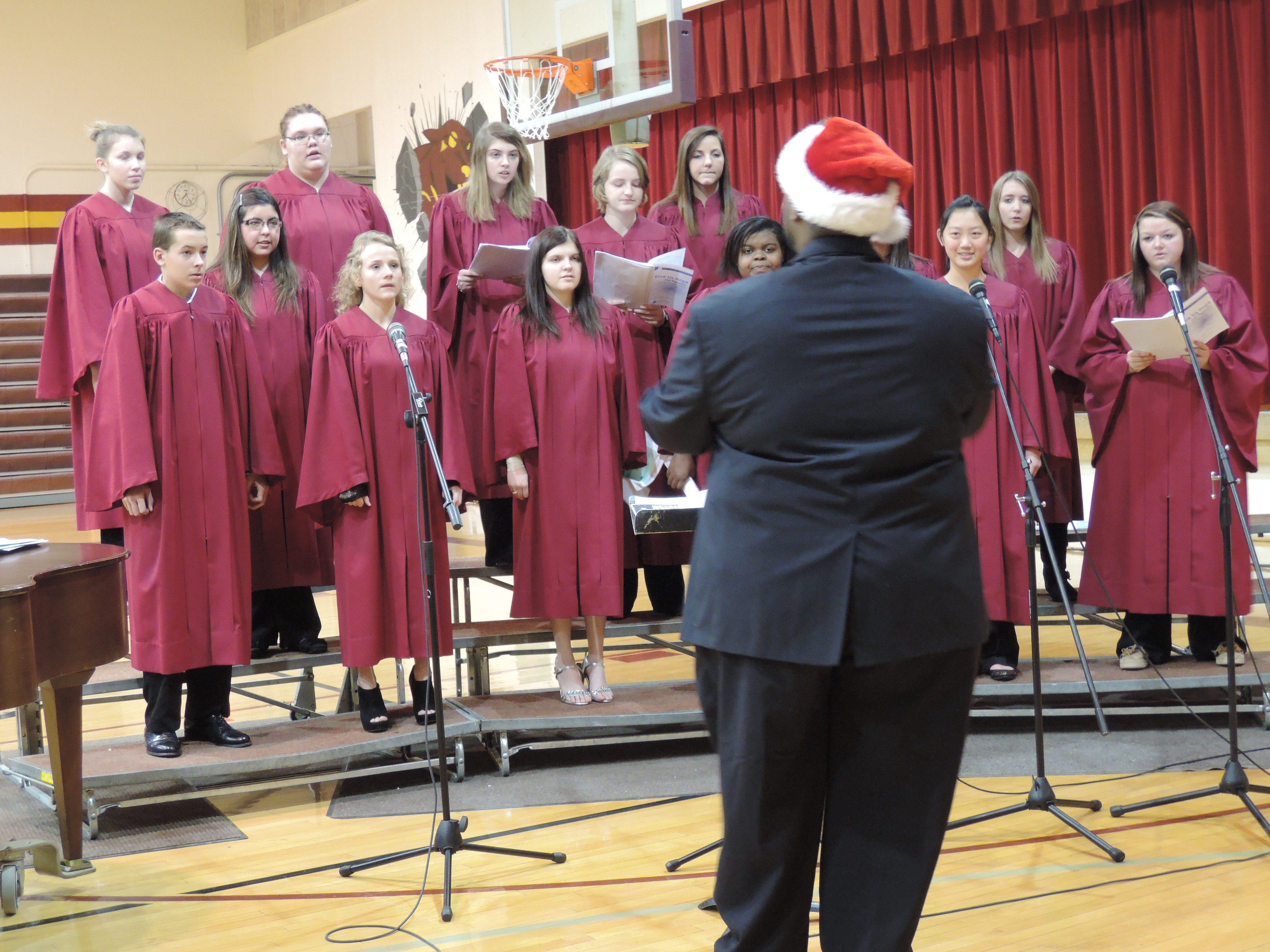
On Friday, December, 6th the high school had their Christmas concert. The High school Choir started the concert by singing “All I Want for Christmas is You,” “Christmas Time is Here,”and “Give us Hope.” The guitar Ensemble went next with their songs “Green Sleeves’, “Wanted dead or Alive”, and “Rock’n Around the Christmas Tree.” .
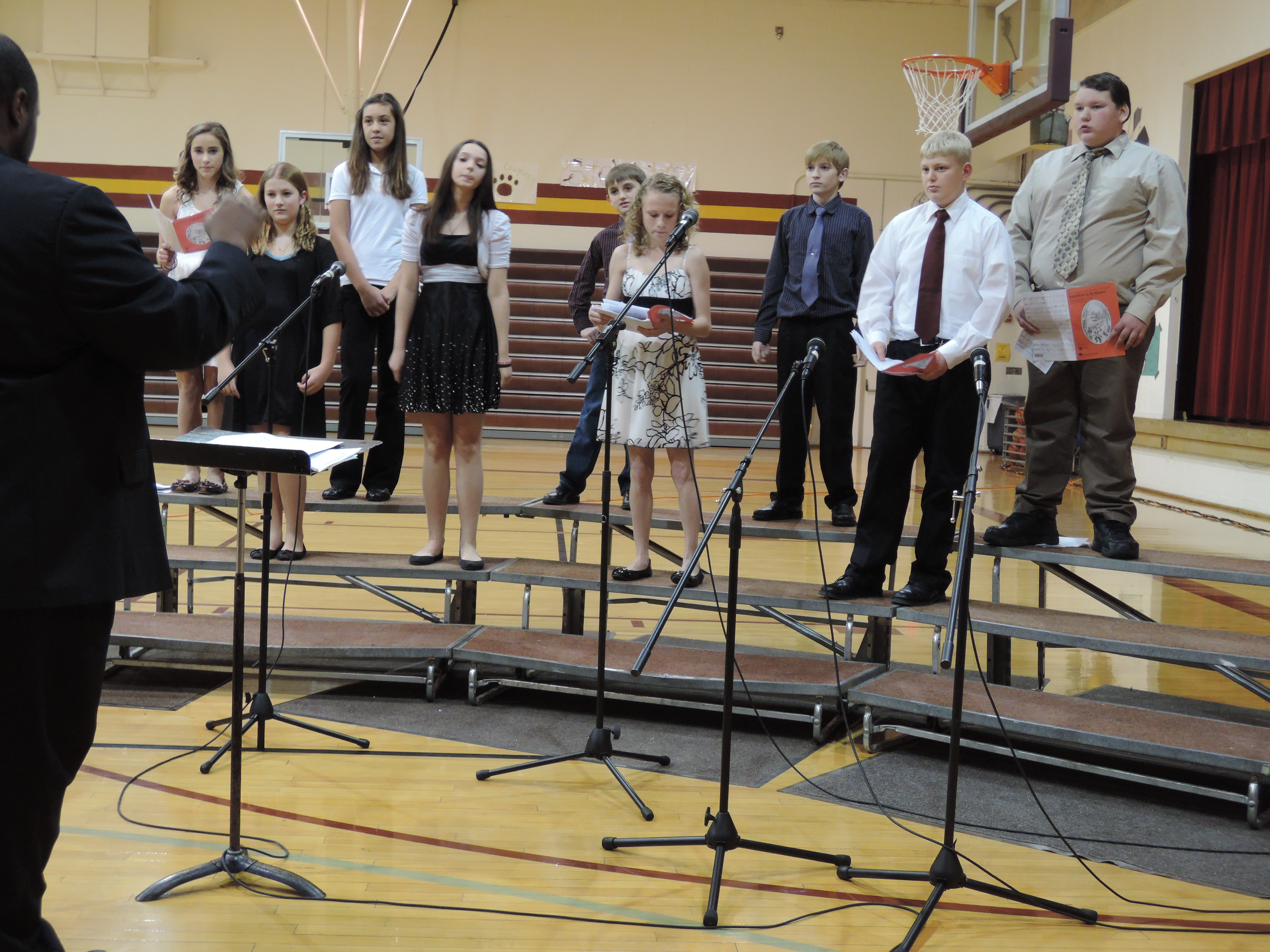
After that, the J.H. Choir went. They performed “Christmas in three minutes” and “ Somewhere in My Memory.”. The drumline went next playing the school cadence “ Northeast Swag.” After the drumline, The Ipad assembly went next with the song “Thriller.” Isn’t that a great Christmas song? The combined band came next with “The Christmas song,” and “ The Nutcracker.”

HS CHOIR: front row, Aaron Williams, Sarah Alford, Jesika Kramer, Tatiayana Harris, Sophie Hsu, and Brenna Taylor-Warren. Second row: Lupita Prieto-Garcia, Lena Horak, Natalia Castle-Gosh, and Cierra French. Back Row: Kayci Kramer, Jessie Mutum, Amelia Schlichting, and Blair Preston. Directed by John Mayo.Photo courtesy of LDNE.

JH CHOIR: front row, left to right: Cassidy Mentink, Janice Wuestewald, Amanda Alford, Layne Miller. back row from left to right: Brandi Simonsen, Kassandra Prieto, Ryan Payton, Mathew Hartley, and Jarret Bobenmoyer. Directed by John Mayo. Photo Courtesy of LDNE.
The Nutcracker included Arabian Dance, Chinese Dance, Dance of the Reed Flowers, Waltz of the Flowers, and the Trepak. The last group of the night was the LDNE Jazz Band. They performed “Louie, Louie.” After the concert, there was hot apple cider and cookies for everyone to enjoy. The music department wants to thank everyone who came and watched the performances.
January 16, 2014 Leave a comment
News Column
John Wilson
Extension Educator
December 20, 2013
Winter Tree and Shrub Care Tips for Homeowners
Winter brings frigid temperatures, icy winds, and usually plenty of snow. Just as people battle Mother Nature at this time of the year, so do trees and shrubs, with one major exception: trees and shrubs can’t avoid exposure to the elements.
While your trees and shrubs seem to be in a state of hibernation in the winter, exposure to tough conditions can cause them major stress. Minimize that stress by helping your trees and shrubs through the cold months. If you take care of them in the winter, you’ll be rewarded next spring.
First, if you haven’t done so already, put a ring of an organic mulch, such as wood chips, around your tree and shrubs in late fall or early winter to help retain water and reduce temperature extremes. A couple inches of mulch will act like a blanket and give the roots a little extra winter protection. Mulch rings should extend out a minimum of three feet in all directions from the trunk of a tree or base of a shrub.
One word of caution when mulching trees and shrubs. Leave an unmulched area about 6-8 inches wide directly outside the trunk of a tree or base of a shrub. This bare area discourages voles from tunneling under the mulch and feeding on the bark of the tree or shrub over the winter.
Second, give your trees and shrubs a drink… especially during warmer periods when the soil will allow water to infiltrate. Winter droughts require watering as much as summer droughts. An occasional watering during the winter on trees and shrubs can be a life saver. This is particularly important to prevent winter burn on the needles of evergreens. But be sure to water only when the soil is not frozen or the water will just run off instead of soaking in the soil.
The soil should be moist to a depth of 18 inches in the root zone of trees and 12 inches for shrubs. You can tell how deep the water has infiltrated by poking a large screwdriver or thin rod into the soil. It will slide in easily if the soil is moist, but provide more resistance if the soil is dry. If it won’t go in at all, the soil is probably frozen.
And finally, pruning is third on our list. Winter is actually one of the best times to prune because it is easier to see the structure of trees and shrubs without their leaves. But limit pruning to deadwood and poorly placed branches in order to save as many living branches as possible.
Remember low hanging branches will never get any higher so this is a good time to start removing the lowest branches if they interfere with mowing or other activities in the yard. However, we don’t want to remove more than about 20 percent of the tree’s total canopy at one time, so removing low hanging limbs may be a two or three year process.
Conversely, many shrubs such as spirea, lilac, privet, and others respond well to severe pruning. If possible, remove the oldest stems at the ground level and leave the younger growth. Often the best way to rejuvenate an old, neglected shrub is to use a chainsaw and remove all growth as close to the soil line as possible without getting the cutting bar in the soil.
You may sacrifice flowers for a year or two, but this will improve the health and appearance of neglected shrubs for years to come. Most evergreen and some broadleaf shrubs will be killed with this kind of severe pruning, so check to see how your shrubs will respond before cutting.
For more information on winter tree and shrub care, contact your local UNL Extension office.
January 16, 2014 Leave a comment
Personal Column
Mary L
oftis
UNL Extension Assistant
January 3, 2014
Your New Medicare Drug Plan – Now What?
You’ve got your new Medicare prescription drug plan card for 2014. You need to have a prescription filled…now what?
Changing Pharmacies:
If you decided when comparing plans it would be worth your time and money to change pharmacies you may need to plan ahead a little.
Going to the Pharmacy:
When you go to the pharmacy have your new Medicare prescription drug plan card with you and give it to the pharmacist. That way you can make sure the pharmacy has the correct information for your new plan. The pharmacist will check your information on the computer and there should be no problem filling your prescription. It’s a good idea to write on your new card 2014 so you remember it’s the new card since the plans rarely put the year on their cards. Also, you can clean out your billfold and get rid of any old prescription drug plan cards.
Picking Up Your Prescriptions:
When you pick up your prescription you may or may not have a co-pay to get your prescription depending on your drugs and your plan. If you have a deductible you may need to pay up to $310 of the full cost of your prescriptions before you start getting the good out of your drug plan.
Paying the Premium:
Paying the premium raises other questions:
It’s a new year with your Medicare prescription drug plan. If you have questions don’t be afraid to ask your pharmacist, or you may call the Senior Health Insurance Information Program at 1-800-234-7119 or SHIIP Volunteer, Mary Loftis at 402-374-2929.
Mary Loftis,
Extension Assistant
UNL Extension – Burt County
111 North 13th Street, Suite 6
Tekamah, NE 68061
Phone: (402) 374-2929
Fax: (402) 374-2930
Internet: mloftis2@unl.edu
January 16, 2014 Leave a comment
NEVA JEANETTE PETERSON, 93 years, formerly of Uehling, Nebraska, passed away at Hooper Care Center in Hooper, Nebraska.
MEMORIAL SERVICE: Services are pending with Pelan Funeral Services Oakland
January 16, 2014 Leave a comment
GEORGE LEE BRIEGER, 63 years of Tekamah, Nebraska, passed away Wednesday, January 15, 2014, at his home in Tekamah.
FUNERAL SERVICE: Services are pending with Pelan Funeral Services
January 15, 2014 Leave a comment
A high wind warning is in effect for Northeast Nebraska from 8:00 a.m.-8:00 p.m. tomorrow (Thursday). Strong winds will begin in the morning and increase late morning through the afternoon. Northwest winds of 30-40 mph with gusts of 55-60 are likely. Driving on Thursday will be difficult for all vehicles, especially high profile or light ones. Be careful of blowing debris. Secure or shelter outdoor objects such as garbage cans and lawn furniture. Tree damage and local power outages are possible. Be careful everyone.
Recent Comments