Simonsen Benefit Reminder
April 1, 2014 1 Comment

Northeast Nebraska's dependable news source
April 1, 2014 Leave a comment
Holy Cross Catholic Church in Bancroft hosted a Confirmation Retreat for both Holy Cross (Bancroft) and St. Joseph’s (Lyons) Catholic Churches. Nineteen students from Bancroft, Lyons and Oakland, along with their Confirmation teachers, participated in the day-long event on Saturday, March 29th.
Four youth ministers from Lincoln Nebraska, Tim, Tyler, Molly and Sarah guided the 2015 Confirmation class through a day-long faith filled journey. The day ended with a mass presided by Father Paul Ortmeier.
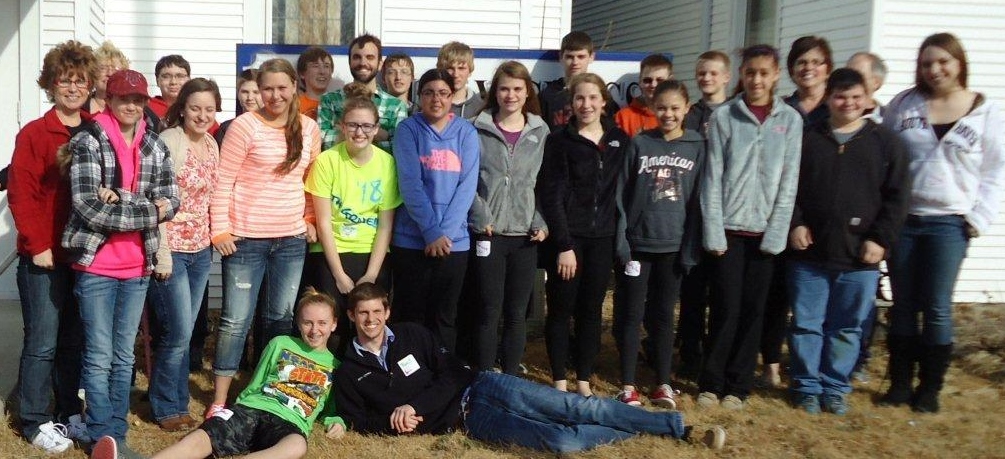
Laying on the ground:
Cydnee Bonsall, Tim
Front Row:
Shannon Johnston, Molly, Kennedy Schuttler, Teagan Steinmeyer, Lupita Prieto, Grace Maline, Meghan Fischer, Natalia McBride, Kassandra Prieto, Jacob Nelson, Sarah.
Back Row:
Barb Wagener, Deb Lund, Brock Vetick, Dean Gibbs, Ben Smith, Tyler, Jacob Whitaker, Nick Ronnefeldt, Joey O’Connor, Dustin Burgett, Cole Bures, Jane Olson, Mark Olson.
Not pictured:
Miguel Madrid. Photo Courtesy of Jane Olson.
April 1, 2014 Leave a comment
| Lyons, NE – The U.S. Department of Agriculture recently announced an extension for grant applications for the Value-Added Producer Grant program. The extension was made necessary by changes to the program included in the 2014 Farm Bill that was recently signed into law. The new grant deadline is April 8, 2014.“In rural and small town America, the best way to create jobs and expand economic opportunity is fostering entrepreneurship and small business,” said Traci Bruckner, Assistant Director of Policy at the Center for Rural Affairs. “On America’s country roads that means value added agriculture and niche marketing. Such entrepreneurship keeps wealth in rural communities, enhances farm and ranch profitability, revives rural mainstreets and helps young families get a start in agriculture.”
Bruckner encouraged farmers or ranchers needing planning or working capital funds in order to move their value-added ideas forward, to check out the Value-Added Producer Grants program. “In particular, we urge returning Armed Forces veterans to consider accessing these grants,” added Bruckner. The extension will allow those who have already submitted funding applications to revise their proposals if the new addition of returning Armed Forces veteran farmers to the program’s priorities is applicable to their proposal. According to the Federal Register, the term ‘veteran farmer or rancher’ means a farmer or rancher who has served in the Armed Forces and who has not operated a farm or ranch; or has operated a farm or ranch for not more than 10 years. Agricultural producers, businesses majority-owned by agricultural producers, and organizations representing agricultural producers are eligible to apply for Value Added Producer Grants for business planning or working capital expenses associated with marketing value-added agricultural products. Agricultural producers include farmers, ranchers, loggers, agricultural harvesters and fishermen that engage in the production or harvesting of an agricultural commodity. Farmers and ranchers can find a working proposal template for the Value Added Producer Grant Program at the following weblink –http://www.rurdev.usda.gov/bcp_vapg.html Additionally, in an effort to assist farmers and ranchers applying for a grant, the National Sustainable Agriculture Coalition just re-issued their Farmers’ Guide to Value-Added Producer Grant Funding. The guide (available free at http://sustainableagriculture.net/publications/) includes clear information on new program rules and contains a step-by-step description of the application and ranking processes, with helpful hints to improve a producer’s chances of obtaining funding from the highly competitive program. It also describes the program priorities for small and medium-sized family farms, beginning farmers and ranchers, socially disadvantaged farmers and ranchers, and mid-tier value chains (regional supply networks with active farmer participation). Bruckner encouraged applicants to contact their state USDA RD offices well in advance of the deadline to discuss their projects and ask any questions about the application process. While the extension may not offer much help to those just starting out on a proposal, there will be future funding rounds, and for applicants, especially first-time applicants, the additional time could make all the difference. “At the Center for Rural Affairs, we have a lock track-record of offering help to farmers and ranchers in accessing programs such as these. And there is other help available, because these grants are popular and quite competitive,” commented Bruckner. Bruckner went on to explain that the Center for Rural Affairs continues to offer as much help to producers as possible during the application period by operating a Farm Bill Helpline where producers can call (402) 687-2100 and ask for the Farm Bill Helpline to receive assistance in understanding the Value Added Producer Grants Program. “The Farm Bill Helpline provides a direct connection to Center staff with knowledge about the rules of these programs to help applicants and potential applicants understand if the program will fit their needs,” continued Bruckner. Potential applicants can also contact the Farm Bill Helpline via email by sending an email with “Farm Bill Helpline” in the subject line to tracib@cfra.org. The Value Added Producer Grant is not the only program covered by the Center’s Farm Bill Helpline. Assistance is also available for the Conservation Stewardship Program, the Environmental Quality Incentives Program Organic Initiative and a host of Beginning Farmer and Rancher provisions. The Center for Rural Affairs has also created Value Added Fact Sheets and other additional information, which can be accessed at http://www.cfra.org/node/2672. For more information visit: www.cfra.org |
April 1, 2014 Leave a comment
Traditionally, April Fool’s Day is an opportunity for playing jokes or tricks on one another. The stranger and the more absurd the better. The challenge is to carry out a trick that is believable, if only for a little while.
What is the best April Fool’s joke someone played on you?
April 1, 2014 Leave a comment
Cody Bachtell of Tekamah got in the spirit of the 4-H Snow/Snowless Sculpture Contest this year with his entry titled “Make a Lasting Impact, Roll on with 4-H.”
Mary Loftis,
Extension Assistant
UNL Extension – Burt County
111 North 13th Street, Suite 6
Tekamah, NE 68061
Phone: (402) 374-2929
Fax: (402) 374-2930
Internet: mloftis2@unl.edu
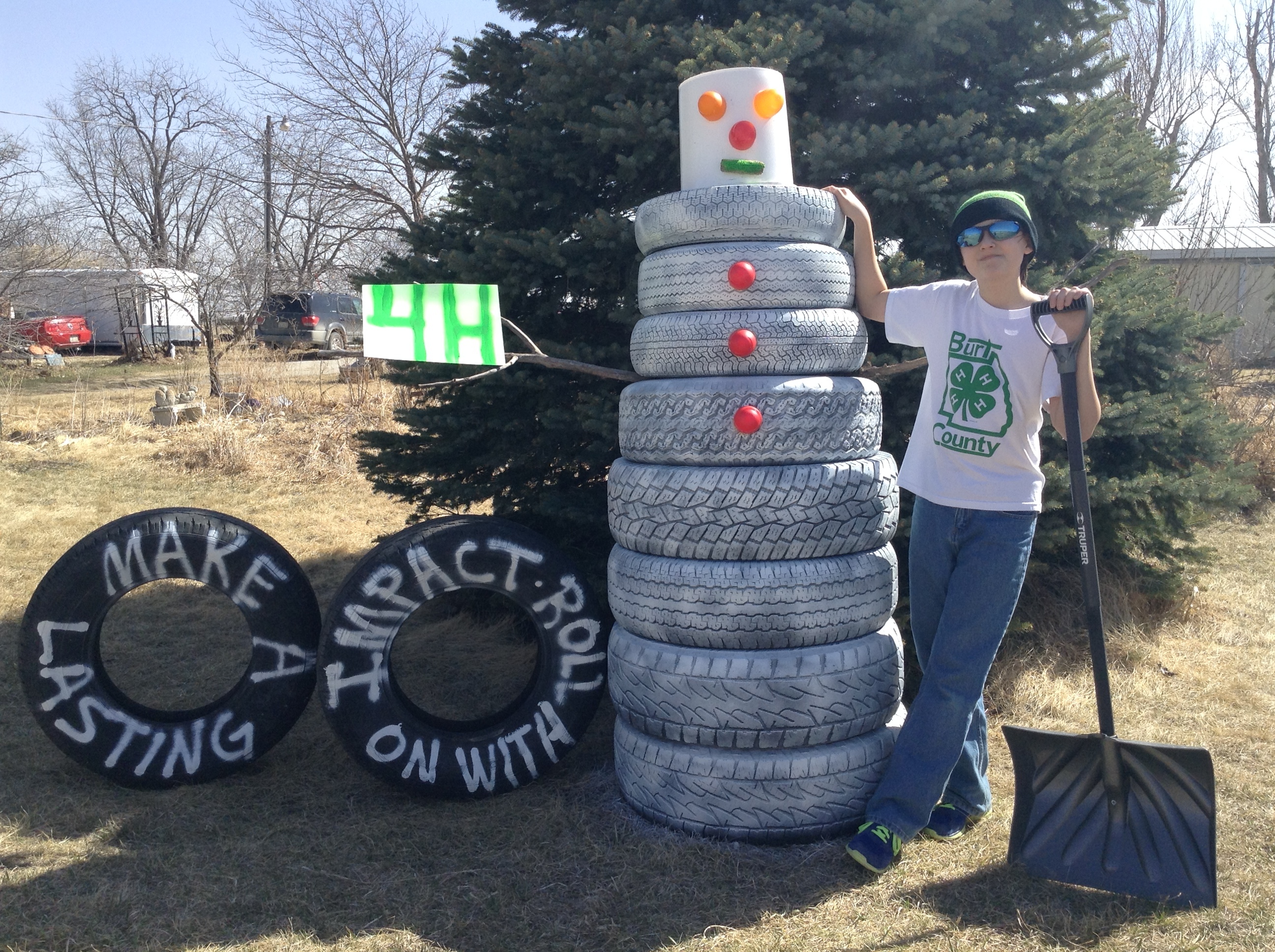
Photo Credit/Mary Loftis.
April 1, 2014 Leave a comment
| By Lu Nelsen, lucasn@cfra.org, Center for Rural Affairs |
| Many are blown away by the thriving wind industry in the Midwest. Neighboring states like Iowa and South Dakota have seen fantastic expansion, with each state getting 27 and 26% of their energy from wind respectively, and Kansas is fast-approaching the 20% mark. Besides affordable, renewable energy; wind energy brought new careers and revenue to these states.
While Iowa, Kansas, and South Dakota continue to expand wind energy; Nebraska is lagging far behind. We’re missing out on the local benefits that wind development brings with it. Incentives and renewable energy goals in other states have been a big part of getting them into the game, and one reason why Nebraska has so far remained on the sidelines. LB 402–a bill recently passed by the legislature– will remove barriers to wind development in Nebraska, and help us become competitive with our neighbors. This legislation doesn’t just provide a handout, but rewards developers for purchasing materials and services from Nebraska businesses. LB 402 ensures that any wind development in Nebraska would boost our rural communities, and that as much investment as possible stays in our state. This not only helps existing businesses thrive, but provides new opportunities for Nebraskans. The key to unlocking the greatest benefit to communities is to not just get development in our state, but to keep it local. By passing LB 402, the Unicameral has taken a good step in expanding wind development, creating jobs, creating new businesses, and helping us reinvest in communities across Nebraska. |
April 1, 2014 Leave a comment
Thursday, March 20 was the Fifty-First Day of this One Hundred Third Legislature, Second Session. Only nine legislative days remain of our sixty day session. On our daily agenda we now regularly have numerous bills in Consent Calendar and on Final Reading, which means many bills are moving through the legislative process quickly. We are moving forward to make our limited time in session count. The 17 senators who are term limited after eight years of service continue using every tool in their toolbox and their floor experience with spirited zest in an attempt to bring their long awaited legislation to fruition before this session ends.
Not only do we consider and debate legislation on the floor each day, but we also do our best to respond to numerous constituent emails, letters, and phone calls. The number of meetings and receptions being held in and around the Capitol are also winding down, where focus is primarily on pending legislation at hand.

Lydia Brasch
Thank you to Pastor Pastor Russ Foust of Grace United Methodist Church in Kennard for serving as volunteer Chaplain leading us in prayer on Wednesday, March 26. It is uplifting to have our district’s clergy join us during session in prayer before we convene.
Here are some updates on legislation from this week:
The annual Nebraska Agricultural Youth Institute is July 7-11, 2014, at UNL’s East Campus. “NAYI is a five-day conference for high school juniors and seniors to learn about career opportunities within agriculture. This includes: engaging speakers, workshops and panels, agriculture education, professional development, leadership experience, fun and new friends, networking with peers and industry leaders. All of these experiences come free of charge, thanks to generous sponsors.” Apply online at www.nda.nebraska.gov. Applications are due April 15.
We have heard from constituents on numerous issues, and I am always happy to hear from you! Please continue to contact me, my administrative aide, Katie Wattermann, or my legislative aide, Joe Neuhaus, with questions or thoughts at (402) 471-2728 or by email at lbrasch@leg.ne.gov; or stop by Room 1016 if you are at the Capitol.
Keeping the Good Life growing in Nebraska,
Senator Lydia Brasch, District 16

 Kat Country Hub
Recent Comments