Millipedes
October 5, 2014 Leave a comment
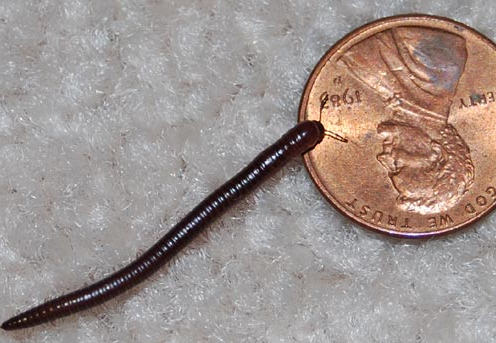
This must be a good year for millipedes. It is, by far, the number one call I’ve been getting. Millipedes are small, cylindrical arthropods (not insects) that will curl into a coil if disturbed or when they die. If you looked closely at a millipede with a magnifying glass, you would discover that they have two pair of legs for each body segment… giving them the nickname of “thousand legged worm.” They don’t actually have thousands of legs although one rare species can have up 750 legs. Most species have between 34 and 400 legs.
Millipedes live outdoors in damp areas such as under leaves, needles and dead plant debris, or in cracks and crevices. They feed on damp and decaying vegetable matter and are beneficial as “recyclers” of organic matter.
However, they become a pest when they migrate into buildings as accidental invaders. Millipedes are usually found in the garage, basement or lowest level although they may wander into other parts of the house. They are most active at night and usually hide during the day in cracks and other moist locations.
Millipedes are harmless; they do not feed on building structures or furnishings and they can not bite or sting. Millipedes can not reproduce indoors. All millipedes found inside wandered in by mistake. They will usually die in the first week inside because of the low humidity conditions.
Control for millipedes is aimed at keeping millipedes outdoors or reducing their numbers at the source. Cracks, gaps and other points of entry around windows and doors and in foundation walls should be sealed if possible. Removing organic matter such as tall grass or dead leaves from against the house may help, and damp conditions around the house foundation should be corrected.
Insecticides are of limited benefit in controlling millipedes because of the protected areas where they originate and because of the long distances they migrate. In warm weather when millipedes are actively wandering, residual insecticides can be applied in a 5- to 20-foot wide barrier around the building to reduce entry. If practical, also spray areas where the millipedes likely originate. Thorough application will aid in control, but reliance on chemical control alone is often unsatisfactory.
Millipedes migrate long distances during certain times of the year (commonly in spring or fall). Therefore, actions near the house may have no effect. Some sources of millipedes such as woodlands and grassy areas can produce extremely large numbers of millipedes that invade from distances of 50 feet or more.
The indoor use of household insecticides provides little if any benefit. Millipedes that wander indoors usually die in a short time because of the dryness, and spraying cracks, crevices and room edges is not very useful. Sweeping or vacuuming up the invaders and discarding them is the most practical option.
 About katcountryhub


 Kat Country Hub
Recent Comments