Legislature Enters Final 30 Days of Session


By Senator Lydia Brasch

With the end of the week, Friday, April 10, the legislature entered our final thirty days of session. This week also marked the third full week of all-day floor debate and, when not stalled, things are beginning to move in full force. We discussed a number of key concerns in debate this week such as tax relief, foster parenting, economic development, and Medicaid expansion.


The Medicaid Redesign Act (LB472) was debated on Wednesday afternoon. While the intention of LB472 to “increase economic efficiencies and better serve all Nebraskans in the medical assistance program” seems ideal, the floor debate exposed crucial bill flaws. LB472 would have added approximately 54,000 additional Nebraskans to Medicaid at a cost to the state of nearly half a billion dollars beyond the limited Federal funding. While I support the need to provide effective medical services at lower costs, LB472 is simply economically unsustainable. After it was clear LB472 had insufficient support, the bill was bracketed which means the issue can no longer be debated during this session.


LB414 also received significant attention. LB414 exempts fraternal benefit societies from property taxes. Discussion on this bill revolved around two issues. First, LB414 was criticized as special interest legislation to satisfy a fraternal benefit organization from Omaha, Woodmen of the World. Second, there was considerable conversation regarding the Legislature’s priority efforts on property tax relief. Many Senators, including myself, expressed the need to address property tax relief for our farmers and ranchers.


LB449 was also discussed and easily advanced to second round of debate. LB449 changes provisions of the Business Innovation Act and the Nebraska Visitors Development Act. LB449 was prioritized by the Appropriations Committee. It was also amended to include LB569 which is a bill I introduced. LB569 modifies certain provisions of the Business Innovation Act and gives the Department of Economic Development greater flexibility to fund several programs supporting development of Nebraska-based technology and innovation in both rural and urban communities.


Finally, LB623 was considered by the Transportation and Telecommunications Committee in an executive session. I serve as vice-chair of the committee. LB623 addresses granting a drivers license to those brought here by illegal immigrant parents as a child. These children are now teenagers and young adults and have been granted deferred action by an executive agency. LB623 would grant them ‘lawful status’ for the purposes of operators licenses and ID cards. Every other state has already extended some form of drivers license or state ID benefit. LB623 received the five votes necessary to advance to the whole legislature. I was present but did not vote because of my strong belief and support of legal immigration. However, due to sincere compassion for those in this situation I withheld strict opposition to the bill. I cannot fully support LB623 because I believe we have an obligation to pass state laws that uphold legal paths of immigration which many others lawfully and patiently follow.


As always, please contact me, administrative aide, Katie Wattermann, or legislative aide, Tom Venzor, with questions or thoughts at (402)471-2728 or e-mail at lbrasch@leg.ne.gov.


Keeping the Good Life Growing in Nebraska,

Senator Lydia Brasch, District 16

Senator Lydia Brasch

Senator Lydia Brasch

NPPD Moves Past Coal at Sheldon Station


The Center for Rural Affairs released the following statement in response to news that Sheldon Station, the coal-fired power plant north of Hallam, Nebraska is undergoing a major transition from coal to an exciting and innovative power generation technology. Nebraska Public Power District (NPPD), which owns and operates the plant, plans to replace an existing coal-fired boiler at its Sheldon Station plant with one that uses hydrogen fuel. The hydrogen will be produced by Monolith Materials as a co-product from its production of carbon black using natural gas as a feedstock. Plans for the second of two boilers were not made clear.
“We applaud the Nebraska Public Power District’s staff and board of directors for taking steps to invest in a power source that can benefit the local community, while reducing the amount of harmful toxins released into the environment,” said Johnathan Hladik with the Center for Rural Affairs. “This is leadership Nebraska has been waiting for. However, today’s announcement marks only the halfway point. It’s a ‘job half-done.’ We expect NPPD to carry this momentum forward and continue this commitment to rural economic development by investing in the vast resources we have here in Nebraska for energy production, create well-paying jobs for skilled workers, and protect our most vulnerable populations – children and the elderly – from a range of health issues exacerbated by harmful pollutants released by burning coal.”
Research by the Center for Rural Affairs and Synapse Energy Economics shows that continuing to operate Sheldon Station as it has been in the past would have incurred cumulative economic losses of over $1.3 billion by 2042. These are costs that would have been shifted to NPPD’s ratepayer-owners. Continuing to burn coal at both Unit 1 and Unit 2 at Sheldon Station would also have prevented NPPD from investing in the very alternatives, like renewable energy and energy efficiency, that have the potential to produce considerable economic benefits in rural Nebraska.
Center for Rural Affairs findings also show that, Sheldon Station, too old to produce more than 60 percent of the 225 megawatts of energy it was once capable of, is past-due for a transition. The power plant has quickly become a financial liability to NPPD and its ratepayers, becoming operationally uneconomical after 2020.
“Continuing to burn coal at Unit 1 and Unit 2 of Sheldon Station would have required costly updates to protect Nebraskans from exposure to harmful toxins and comply with new environmental regulations,” added Hladik.
The Center’s research predicted that NPPD ratepayers and those in the Lincoln Electric System, which contracts with NPPD for one-third of Sheldon Station’s capacity, would have picked up the tab for hundreds of million of dollars in retrofit capital costs that would be necessary for Sheldon to comply with significant, new environmental requirements.
“NPPD’s announcement at Sheldon Station today begins to reflect the values of many rural Nebraskans, who believe that we have a special responsibility to be good stewards of our natural world: to use only what we need, make smarter choices and pass on to our children the wildlife, water and natural resources we have here in Nebraska,” Hladik continued. “We encourage NPPD to adhere to these principles and seek out public involvement as future decisions are made.”
We are encouraged by the changes that NPPD has announced, and urge continued investments in renewable energy and energy efficiency that benefit rural and small town Nebraskans, and keep electricity affordable, concluded Hladik. Nebraska ranks 7th among the states for energy consumption per capita, and consistently ranks in the bottom third among states for its efforts to use energy more efficiently. Serious investment in energy efficiency will go a long way in keeping NPPD ratepayer-owners’ bills affordable.

Work to Begin on Highway N-94 East of Walthill


Weather permitting, construction work is scheduled to begin the week of April 20, on the North Blackbird Creek bridge, located on Highway N-94, east of Walthill, according to the Department of Roads. Highway N-94 will be closed on April 20, between Highway US-77 and Highway US-75, during the bridge deck replacement. Traffic will be detoured on Highway US-77 and Highway US-75. Anticipated completion date is fall of 2015.

Visit the 511 webpage at http://www.511.nebraska.gov or dial 511 or 800-906-9069 to get the most current updates on highway conditions.

Canadian Geese Flying Over Logan Creek


Two Canadian Geese flying over the Logan Creek in Oakland NE. Photo Credit/Denise Gilliland, Editor and Chief, Kat Country Hub.

Two Canadian Geese flying over the Logan Creek in Oakland NE. Photo Credit/Denise Gilliland, Editor and Chief, Kat Country Hub.

Creating Jobs and Self Sufficiency Through Self-Employment


By Jeff Reynolds, jeffr@cfra.org, Center for Rural Affairs 

Microenterprise and microfinance have the power to empower people and transform lives. The concept was pioneered in 1976 by Muhammad Yunus, founder of the Grameen Bank in Bangladesh and Nobel Peace Prize winner. The bank was established for the purpose of making small loans to the poor − predominantly women – to help them obtain economic self-sufficiency.
The fundamental principle behind the Grameen Bank is that credit is a human right. This strategy was highly effective as the bank grew from 15,000 borrowers in 1980 to 7.67 million at the end of 2008. An astounding 97% of the 9.4 million Grameen Bank members today are women.
A Center for Rural Affairs’ study in the 1980s demonstrated high rates of self-employment in rural areas, but no economic development strategies to help in this area. Influenced by Yunus and Grameen, the Center created the Rural Enterprise Assistance Project in 1990 to fulfill the need uncovered by that research (www.cfra.org/reap).
Microenterprise development recognizes the fundamental ability of people to apply individual talents, creativity and hard work to better their lives. Microenterprise programs build on the unique ideas and skills of entrepreneurs by providing business assistance through micro-credit, one-on-one counseling, and specialized training to small businesses employing 10 people or fewer.
Microenterprises often struggle to qualify for traditional lending services. Microenterprise Development Organizations like the Rural Enterprise Assistance Project create jobs, build assets and overcome barriers of income and discrimination, all through small business development.

Protect Public Safety


By Governor Ricketts

Events over the past two years have resulted in a renewed focus on the importance of public safety and the role of state government in administering justice and upholding the rule of law. From errors that resulted in the early release of convicted murderer Nikko Jenkins and sentencing miscalculations to incendiary comments made in a committee hearing by State Senator Ernie Chambers, public safety has been at the center of conversations at the State Capitol and across Nebraska.


These events and conversations have served as the basis for a variety of reports and advocacy for a number of approaches to address concerns about the way our corrections system has operated in the past. Groups ranging from the Council of State Governments (CSG) to the American Civil Liberties Union (ACLU) have made policy recommendations to the Legislature to address concerns they have about overcrowding in our prisons, the utilization of solitary confinement, and the availability of mental health services to inmates. Several senators have introduced legislation generated from these advocacy groups this year. In the final eight weeks of this legislative session, senators will be considering what new resources they may provide to our corrections system and which policy recommendations are worthy of adoption.


During this upcoming discussion, it is imperative that any changes in policy are motivated by a desire to put public safety first. Nebraskans tell me that they want to see an approach to reform that is tough on criminals. Some of the proposed policies under consideration in the Legislature, however, are out of step with the desire of Nebraskans to be tough on crime. For example, the Legislature’s Judiciary Committee has advanced a plan introduced by Senator Ernie Chambers to do away with mandatory minimum sentences for certain classes of felonies, and to provide for more lenient sentencing guidelines. If the Chambers plan is adopted, some sex offenders could end up receiving early parole for which they are not currently eligible.


Senator Chambers’ plan to repeal the death penalty is another troubling proposal. The death penalty remains an important tool for Nebraska’s prosecutors when seeking proportional punishment for the most heinous crimes.  Some have tried to argue that the death penalty is too costly; however, the costs of litigating the appeals that are filed in death penalty cases are negligible to the state and in no way offset the death penalty’s usefulness in sentencing the worst criminals. In fact, the fiscal note for the death penalty repeal shows no cost savings to taxpayers should this repeal effort succeed. As I have said before, I will veto any attempt to repeal the death penalty here in our state. This proposal is the wrong direction and would soften our state’s approach to dealing with criminals.


While the Unicameral considers legislation, Nebraska Department of Correctional Services (NDCS) Director Scott Frakes has already been hard at work making critical changes to his agency’s policies and programs. Within weeks of his appointment, Frakes ended a furlough program that had previously given violent offenders early release. Recently, my office announced with NDCS that important software upgrades will be made to sentence calculation software to eliminate manual processes that had previously resulted in sentence calculation errors. Additionally, I am working with both NDCS and the Attorney General to develop alternative protocols to ensure that the State of Nebraska can effectively carry out the death penalty. These first steps represent a commitment from my administration to continually seek new ways to put public safety first.


There is more to be done and my administration will continue to work closely with the Legislature to ensure that reforms that are made to our corrections system protect public safety. If you share these concerns about the future of our corrections system, I would urge to you to have a conversation with your state senator about the importance of supporting policies that protect Nebraskans. You can find all the information you need to contact your state senator at www.NebraskaLegislature.gov.

Governor Pete Ricketts

Governor Pete Ricketts


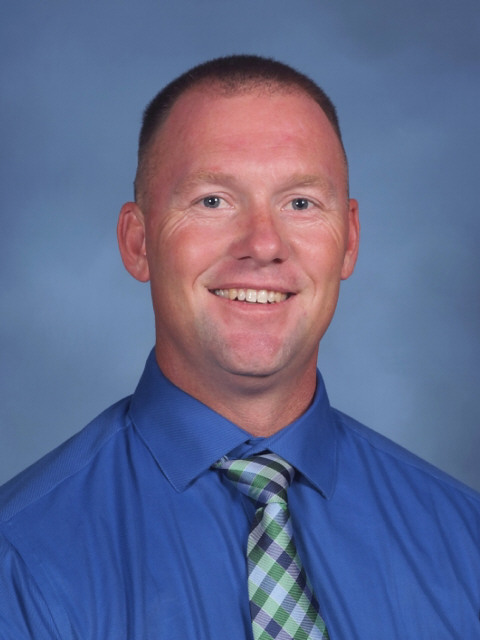
Tekamah-Herman Superintendent on Future of School


Since the Board of Education approved hiring Educational Consulting Services and Jerry McCall to help guide them toward a decision concerning the future facilities of our district, there has not been a lot of information to report. What I can definitively share is that he is extremely thorough in his craft and will certainly have a multitude of information he is able to share with the Board.

Mr. McCall has the ability and resources at his disposal to gather far more information and predictive data, and in turn interpret those facts, more adeptly than any single body or organization (superintendent, Board of Education, community committee) could possibly imagine. He has been in contact with the leadership in both Tekamah and Herman, Burt County officials, economic development, community colleges, regional planners, staff members at within the district, and others to accrue as much information as possible before developing some of his own thoughts. He will be sharing with a Board committee as he works through the process, with goal to being for the Board to come to a consensus, based on facts and professional input, as to the best solution for Tekamah-Herman Schools. Mr. McCall is expected to be done with his work no later than September 1st, though may be completed sooner.

While I understand the public interest, and encourage that to be sustained, this is a process that must be completed. Following the failed bond election in November, the Board has continued to work toward a solution to our facility concerns. The issues are significant and have not been “placed aside”, but there may not be something to report on progress every week or even two. The Board is excited to have Jerry contributing his expertise and continues to focus on moving forward with addressing the facility needs as appropriately as possible.

I am available to provide tours of our facilities at any time for those that are interested. As is always recommended, please communicate with Board members about any questions, concerns, or conversations you may have regarding the district. The most effective school districts are those that have great teachers, wonderful students, good facilities, and positive public support from the patrons within the communities. We certainly have the ability to be a great district and hope each of you strives for the same.

Brandon Lavaley

Brandon Lavaley

Reminders for This Evening


The Oakland Women’s Club is having their salad luncheon tonight. Doors open at 5:15 p.m., dinner is served at 6:30 p.m., entertainment is at 7:00 p.m. featuring Midland University’s Treble Clef an A Capella group.

Oakland Heights Waffle Supper is tonight at 5:30 p.m.

Happenings at Oakland Heights


Oakland Heights News

By Nancy Silvey Activity Director


It’s was nice to see everyone up here for the Volunteer appreciation coffee that we had last Saturday, and I would like to thank Collin Warren for the entertainment he provided. This week on Thursday April 16th is the monthly Waffle supper serving from 5:30pm to 6:00pm. On Saturday April 18th the Rusty Buckets will be here at 2:30pm.

Next Week on Tuesday April 21st is funny hat day and at 2:30pm we will be having Banana floats. And on Thursday April 23rd we will be having the General Store opened for the resident from 1:30pm to 3:30pm.

Church Service for April 19th at 2:30 pm will be given by St. John Lutheran Church with a luncheon served afterwards.

Activities for the week of April 20th to April 24th , are as followed, Reading with Marilyn, Manicures, Reminiscing Group, Sing a Long, Coffee and Conversation, Bingo w/Methodist, Bible Fellowship, Reading the Local Paper,     Let’s Play Ball, Friday Bingo, and Saturday morning movie.

Volunteers signing in last week were; Judy Nelson, Betty Hanna, Bonnie Fleischman, Donna Baldwin, Patty Miller, Mary Donavon, Anne Anderson, Mary Alice Pearson , Di Ruwe, Cathy McMurtry, Dani Moseman, Pat Anderson, and Sly Rouse.

Activity Department Memorial Fund

A donation was made by Mary Alice Pearson in memory of Dorothy Brader.

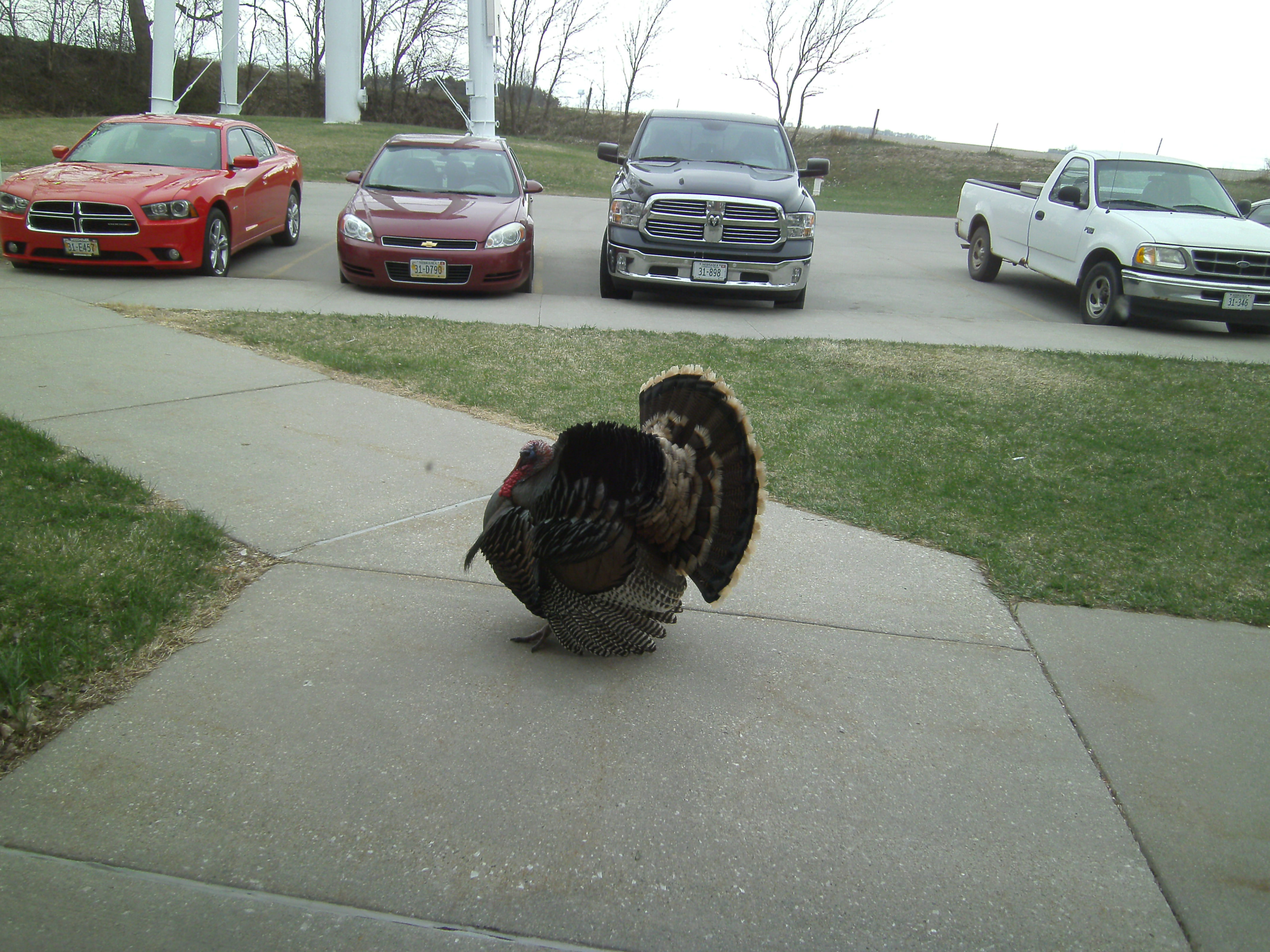
Look who stopped in for a visit at Oakland Heights last week. Photo credit/Nancy Silvey.

Look who stopped in for a visit at Oakland Heights last week. Photo credit/Nancy Silvey.

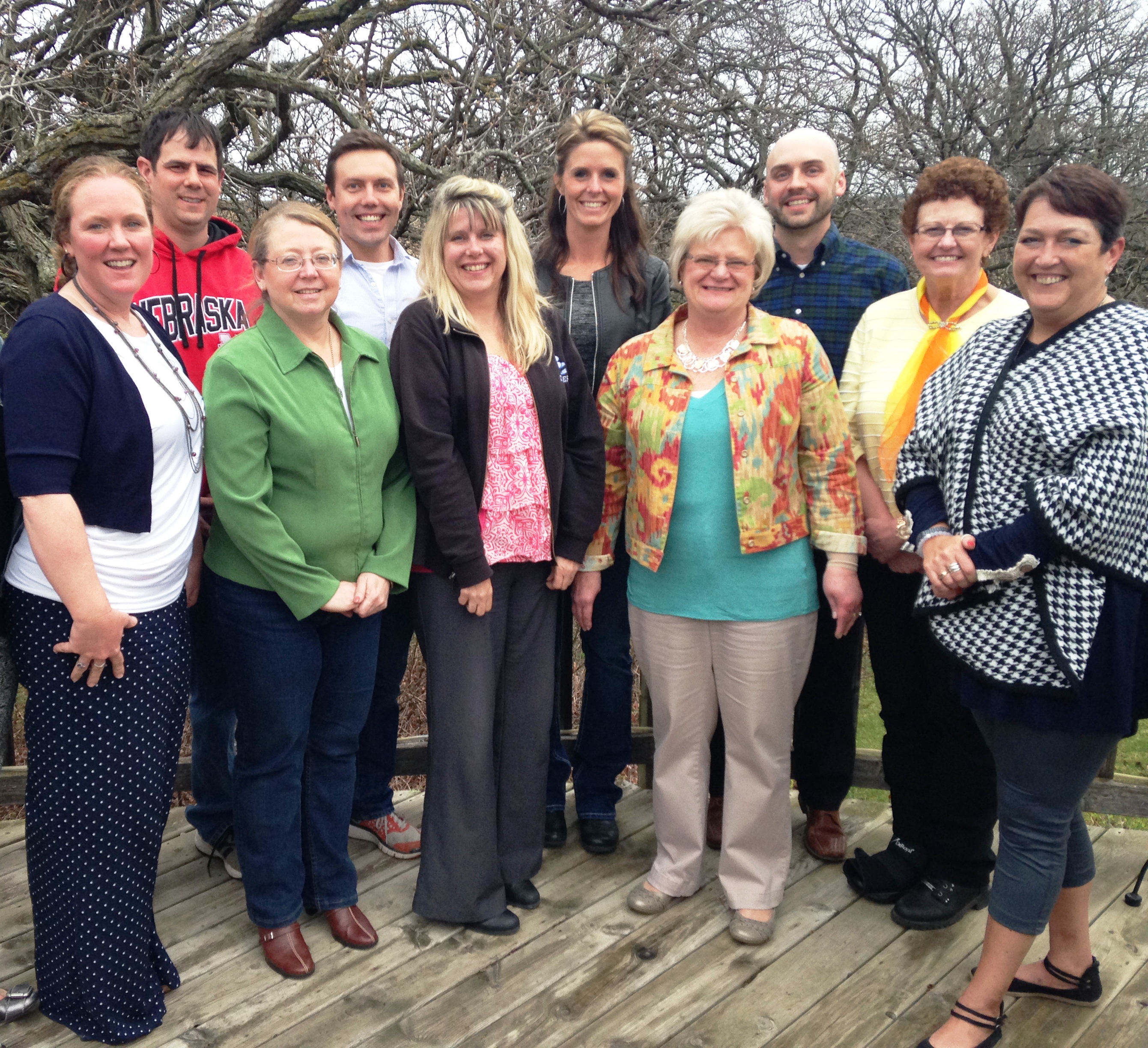
Leadership Burt County Graduating Class


Leadership Burt County is a program designed to motivate and empower citizens committed to building vibrant, prosperous communities and workplaces for today and the future.  This class marks the fifth class to graduate from the seven-month program,  which consisted of a day-long class each month.  The class covered the latest leadership trends, county and state information, and tours of local businesses and also the State Capitol.


Since its beginning in 2009, the program has graduated fifty-six potential local leaders.  The sponsors of the program are Burt County Economic Development Corporation and UNL Extension.

Never doubt that a small group of concerned citizens can change the world.  It is, indeed, the only thing that ever has.”  -Margaret Mead

Pictured: Front L-R Laurie Elliott, Karolyn McElroy, Kristine Haber, Cynthia Petersen, Lisa Skinner.   Back L-R Lucas Cameron, Judd Bogseth, Shara Johnson, Ben Kreifels, Lisa Anderson. Photo Courtesy of Patty Plugge, Executive Director of the Burt County Economic Development Corporation.

Pictured:
Front L-R
Laurie Elliott, Karolyn McElroy, Kristine Haber, Cynthia Petersen, Lisa Skinner.
Back L-R
Lucas Cameron, Judd Bogseth, Shara Johnson, Ben Kreifels, Lisa Anderson.
Photo Courtesy of Patty Plugge, Executive Director of the Burt County Economic Development Corporation.