High Algae Levels Detected at Smith Lake


Hunters should be aware of high levels of blue-green algae that were recently detected at Smith Lake Wildlife Management Area in Sheridan County.

It is recommended that visitors to the lake, especially waterfowl hunters, avoid contact with the water and should not let dogs or other pets drink from the lake, as high levels of blue-green algae can be lethal if ingested. Non-contact activities such as boating, fishing and camping are not affected by this caution.

The area and lake are not closed to any activities, but visitors are encouraged to use caution when coming into contact with the lake water.

Setting the Policy Story Straight!


By Rachel Wise, District 3, Nebraska State Board of Education (October, 2015)

After a busy October Nebraska State Board of Education meeting, I have narrowed my article for this month to three topics. Two relate to board policy and one involves the vision and direction for the State Board.

In 2010, the Nebraska State Board of Education first adopted a policy for Coordinated School Health and reaffirmed it in 2013. Why is the Coordinated School Health policy important? The premise for this policy is that health children learn better. The policy supports the Coordinated School Health approach, which coordinates services and emphasizes partnerships with the overarching goal of promoting the physical, social and cognitive development of children leading to increased academic success. The policy also states that preventable health risk behaviors formed in childhood persist into adulthood and are frequently interrelated. The policy states: The Nebraska Board of Education believes that the education system, in partnership with families and communities, should work together to address these health risk behaviors which, if unattended, can lead to serious health problems and disabilities that are costly on families and the entire state of Nebraska.

I sometimes think that email and the Internet are like the old telephone game where one person whispers something to another person and the message continues around a group of people until, at the end of the line, you find out if the message was the same when it started.

Recently, a legislative hearing was held to gather information about the risky behaviors of youth. This hearing led some individuals to believe that there would be a push in the Legislature to mandate a sex education curriculum. Yes, this hearing involved a great deal of discussion about teen pregnancies and the epidemic of sexually transmitted diseases in some parts of Nebraska. Yes, people testified passionately about the need for youth to receive medically accurate information about sex and sexually transmitted diseases and people testified that the Legislature should not mandate curriculum to address these issues. The Nebraska State Board of Education has not and in my opinion, will not mandate a sex education curriculum. As stated in our policy, the State Board encourages each school and district to develop, adopt and implement a comprehensive plan for coordinated school health.

Onto the next topic. The Nebraska State Board of Education adopted in October its policy on Accountability for a Quality Education System, Today and Tomorrow (AQuESTT). Since 1953, the State Board of Education has had the statutory responsibility of being the evaluation body for the state school program. This policy states: The State Board believes that the opportunity to integrate components of accountability, assessment, accreditation, career education and data into a system of school improvement and support is imperative for the good of Nebraska students and for the state to have a vibrant and economically successful future.

The third topic important to the future of education in Nebraska is a step the State Board has taken to start down the pathway of strategic planning. The Board is seeking a vendor to facilitate its strategic planning process. The selected vendor will be expected to facilitate a process that leads to the development of a shared vision for the State Board, the Nebraska Department of Education and the state education system. This process will include setting goals, indicators and measures for the State Board, NDE and the education system as a whole. I believe the strategic plan will benefit not only the State Board and the Nebraska Department of Education but also local school districts, their communities and provide citizens with a clearer understanding of the vision and priorities for education in Nebraska.

This article represents my personal view, not that of the State Board of Education or my role as president. Feel free to contact me at rachel.wise@nebraska.gov. Search the Nebraska Department of Education website at http://www.education.ne.gov to learn more about education in our state.

Rachel Wise

Rachel Wise

Family Awareness and Monitoring Diabetes Risk are Important


By Mary Loftis, Extension Assistant

Diabetes is a chronic illness, and so far there is not cure for it.  But with careful monitoring, a person with diabetes can maintain good health and live a full and productive life.


While there is still much that remains unknown about diabetes, one thing that is known is that diabetes has a genetic component.  That is, blood relatives of people with either Type 1 or Type 2 diabetes have higher-than average risk of developing the same type of diabetes as their family member.  People with a family history of Type 2 diabetes are also at risk for prediabetes, a condition in which blood glucose is higher than normal but not high enough for a diagnosis of diabetes.  Prediabetes is considered a risk factor for Type 2 diabetes and also for cardiovascular disease.


Women with a history of Type 2 diabetes in the family are at risk for gestational diabetes, a type of diabetes that can occur during pregnancy (usually between the 24th and 28th week.)  Additionally, women with a history of gestational diabetes are at increased risk for developing Type 2 Diabetes and children whose mothers had gestational diabetes while pregnant with them are at increased risk for obesity and Type 2 Diabetes.


While you cannot change your family history knowing your family history, knowing that you have a family history of diabetes allows you to be proactive about monitoring your health and, if there’s Type2 diabetes or gestational diabetes in your family, lowering your risk.


During the November 9 session of “Control Diabetes for Life” we invite you to learn how important it is to share your family history of diabetes with your family members and medical team.  The program will help you learn how to protect your family members and what information to share with your medical team.  During the program you will also learn now making healthful eating and staying active as a family a high priority will help in prolonging the development of diabetes.  Healthy eating and staying active benefits your entire family.    Feel better and stay healthy for years to come by exercising and lowering your blood glucose level.

The program “Control of Diabetes for Life” will be held on Monday November 9 from from 7:00 – 9:00 p.m. in the Tekamah Herman High School distance learning classroom.

“Control Diabetes for Life”, is a program to help participants learn to control diabetes and prolong the onset of complications. The program is a joint project, sponsored by University of Nebraska-Lincoln Extension, Franciscan Care Services of West Point and cooperating schools, and is offered free-of-charge.

Participants are asked to pre-register for “Control Your Diabetes for Life” by calling the Nebraska Extension office in Burt County at 402-374-2929. Please register by Friday November 6, so the proper number of handouts may be prepared. The Nebraska School Food Service Association has approved this session for two hours of continuing education credits for food service staff attending.

Control your diabetes for life! Start by attending the November 9 distance education program.


Estimating Corn and Soybean Yields


By John Wilson, Extension Educator

Each year about this time I get calls from farmers wanting to estimate their yields and each year I look it up, print off a sheet or two, put it in the mail or try to explain it to someone over the phone. I struggled with math in school when it was on a paper in front of me so trying to explain it over the phone is really stretching my comfort zone… and the person on the other end of the line’s ability to comprehend what I’m trying to explain.

Anyway, if you google it, there are dozens of websites that detail various methods on how to do this. I’m going to try to summarize a couple of those that I thought were easier to follow here. I must give credit to my colleagues at Purdue for this information.


Estimating Corn Yields

  1. Calculate the row length in 1/1,000th of an acre. Divide 43.56 by the row spacing (in feet) to get the feet of row in 1/1,000th of an acre. For 30″ row spacing (2.5′), that’s 17′ 5″ of row. (43.56/2.5 = 17.4′ or 17′ 5″)
  2. Count and record the number of ears on the plants in the 1/1000th acre of row that you deem to be harvestable. Don’t count nubbins, dropped ears, or severely lodged plants the combine won’t get.
  3. For every fifth ear in the 1/1,000th of an acre, record the number of complete kernel rows per ear and average number of kernels per row. Then multiply each ear’s row number by its number of kernels per row to calculate the total number of kernels for each ear.
  4. Calculate the average number of kernels per ear by adding the number of kernels for all the sampled ears and dividing this total by the number of ears.
  5. Estimate the yield for each site by multiplying the number of ears (#2) by the average number of kernels per ear (#4). Here comes the tricky part! Divide this total by an estimate of the number of kernels per bushel.

On average, a bushel of corn with a test weight of 56 pounds and 15.5% moisture would have about 85,000 kernels per bushel. Since our calculation is for 1/1000th of an acre, divide by 85. This number can vary greatly depending on the growing conditions and hybrid genetics. It might be as low as 65,000 or as high as 100,000 kernels per bushel (divide final figure by 65 to 100).

For example, assume you had 30 harvestable ears in 1/1,000th of an acre; had an average of 510 kernels/ear on the ears your counted; and you assumed the kernel size was average. Your estimated yield would be 180 bu/A [30 ears x 510 kernels/ear = 15,300 / 85 (factor) = 150 bu/A]

  1. Repeat this process at several representative spots in the field to get a better estimate for the yield in that field.


Estimating Soybean Yields

  1. Count the number of pods in 1/10,000th of acre. If in 30″ rows, count the pods on plants in 21 inches of one row, for 15″ row spacing count the pods on plants in 21″ of two rows; for 10″ row spacing count the pods on plants in 21″ of three rows; and for 7.5″ row spacing count the pods on plants in 21″ of four rows.
  2. Estimate an average number of seeds/pod. A good starting point is to estimate 2.5 seeds per pod, then increase or decrease that average by your observations in the field.
  3. Calculate the number of seeds in 1/10,000th of an acre by multiplying the number of pods (#1) by the average number of seeds per pod (#2).
  4. Estimate your yield by dividing the number of seeds in 1/10,000th of an acre by a seed size factor. For averagesize soybean seeds (3,000 seeds/pound), divide by a factor of 18; for large soybean seeds (2,500 seeds/pound), divide by a factor of 15; for small soybean seeds (3,500 seeds/pound), divide by a factor of 21.

For example, if you estimated 360 pods in 1/10,000th of an acre; an average of 3 seeds per pod; and you estimated the seed size to be average, your estimated yield would be 60 bu/A. [360 pods x 3 seeds/pod = 1,080 / 18 (factor) = 60 bu/A]

  1. Repeat this process at several representative spots in the field to get a better estimate for the yield in that field.

Happenings at Oakland Heights


Oakland Heights News

By Nancy Silvey Activity Director

This week on Thursday October 8th at 2:30 pm Charlie Davis will be here to play his harmonica. Next week on Tuesday October 13 at 2:30 PM we will be serving a fall treat, Apple Cider and pumpkin Donuts. Then on Thursday October 15th is the monthly Waffle Supper, serving from 5:30 pm to 6:00 pm.

We have a few residents celebrating their birthday this week and next, Joan Pullen on October 10th, Margaret Benne on the 15th and Marcella Hennig on the 17th.

Church Service for October 11 at 2:30 pm will be given by Salem Covenant Church with a luncheon served afterwards. On Tuesday at 9:30 am is Catholic Mass given by Father Paul, and on Wednesday October 14th is communion with Pastor Hoden at 1:00 pm.

Activities for the week of October 12th to October 17th, are as followed,  Reading with Marilyn, Manicures, Trivia, Sing a Long, Coffee an Conversation, Bingo w/Evang. Free, Bible Fellowship, Reading the Local Paper, Crafts, Let’s Play Ball, Crafty Cooking, Friday Bingo, Nebraska Football, and Saturday morning movie.

Volunteers signing in last week were; Marilyn Baker, Judy Nelson, Betty Hanna,   Mary Donavon, Marge Maller, Dani Moseman, Nadine Anderson , Di Ruwe, Lola Bridgeford, and Sly Rouse.

Guests’ signing in the guest book last week was: Lynn Goracke and Janelle Van Scoy to see Dale and Jeanette Johnson. Also visiting was Erica and Andrea Marburger, Gene and Naoma Quist.

Activity Memorial Fund

A Memorial was given in memory of Betty Krutilek by Ray and Virginia Simpson.


News From Bancroft Senior Center


The senior center provides Information and Assistance to any individual who is looking for services for themselves or another person 60 years and older, the center manager and/or center participant can provide information to individuals on services available within the community. We link individuals to the services and opportunities that are available within or beyond the community itself. We will then establish adequate follow-up procedures to see that their needs were met. For more information call 402-648-3387.

*If you are 60 years and older and need information on programs designed to help keep you in your home longer or if you need legal help, contact Connie at 402-648-3387 or in the evening at 402-648-7648.

* We have the following medical equipment to loan out on an as need basis, wheel chair, bath seats, toilet seat riser and portable toilet chair, crutches or walkers. Call 402-648-3387 during office hours.

Meals on Wheels

*Would you like to get Meals on Wheels? Anyone over the age of 60 years and lives within the city limits are eligible for these meals. You may sign up anytime for the Meals on Wheels program; you can get the meals delivered however many times you want them each week. You must call 402-687-2332 before 8:30 a.m. if you want a meal that day. The suggested donation for the meals is $4.00.

Weekly Activities:

Wed. Oct. 7: The melody chime group will practice at 9:00 am. Come for coffee at 10:00 am. Fun bingo will be played at 2:00

Thurs. Oct. 8: Rolls and coffee served from 9:00 am. until noon. Tai Chi class at 9:30 am. and the walking ex class at 10:45 am. Flu shots will be given at the center between 12:15 and 1:15 pm. Sign up to play in the pitch tournament at 1:30 pm. Make your reservation for tomorrows meal.

Fri. Oct. 9: The Farmers Market is open today from 9:00 – 11:00 am. Baked spaghetti will be served at noon. There is a pinochle and hand & foot tournament at 1:30 pm.

Mon .Oct. 12: Stop in for coffee and visit. The golf card game will be played 1:30 pm.

Tues. Oct. 13: Tai Chi class is at 9:30 am. and walking ex. class at 10:45 am. Stop in for coffee at 10:00 am. Hand and foot will be played at 1:30 pm.

Wed. Oct. 14: The melody chime group will practice at 9:00 am. Join us for coffee at 10:00 am. Sign up to play 5-handed pinochle at 1:30 pm.


*Please note that flu shots will be given Oct. 8 from 12:15 – 1:15 pm. The incorrect date was printed in the monthly newsletter.


Medicaid Myth Buster #2: Source and Quality of Care


By Jon M. Bailey, Guest Writer

A constant complaint about Medicaid is that fewer healthcare providers take patients on public insurance programs, and the resulting quality of care suffers.
The facts, however, tell a different story. According to the Commonwealth Fund Biennial Health Insurance Survey nearly all Medicaid (95%) and private coverage patients (94%) have a regular source of health care. The quality of care (rated excellent or very good) is higher for Medicaid patients (55%) than for those with private insurance (53%).
Unfortunately, uninsured people are severely disadvantaged in both respects. Only 77% of those without insurance have a regular source of health care. And only 40% of uninsured rate their care as excellent or very good, compared to 55% of those with Medicaid.
Those with private insurance are slightly better able to schedule a same day or next day medical appointment (58%) compared to those on Medicaid (53%) or uninsured (43%). But those on Medicaid have physicians and physician staff who know their medical history; 86% for those on Medicaid compared to 84% for those with private insurance and 77% of the uninsured.
Those who oppose expanding Medicaid, as provided in the Affordable Care Act, use these myths to support their arguments. But the facts tell us that the right choice, the only moral choice, is to extend Medicaid coverage to the hundreds of thousands who fall into the Coverage Gap, where working Americans who don’t currently qualify for Medicaid and whose income is too low to participate in the new health insurance marketplace.

Jon M. Bailey is a rural policy and research expert and former Center for Rural Affairs Policy and Research Director. Contact him at jonmbailey1@gmail.com.

Happenings at Oakland Heights


Oakland Heights News

By Nancy Silvey Activity Director

We have started a new month this week and to kick it off we will be showing the Nebraska Football Game on Saturday October 3rd at 2:30 pm. Then on Monday October 5th is our monthly Volunteer Executive meeting at 2:30 pm, on Thursday October 8th Charlie Davis will be here to play the Harmonica.

Church Service for Oct.4th at 2:30 pm will be given by St. John Lutheran Church with a luncheon served afterwards. There has been a change for Communion with Pastor Hoden it has been canceled for this week and moved to next week October 14th.

Activities for the week of October 5th   to October 10th , are as followed,  Reading with Marilyn, Game Day, Sing a Long, Reading Group, Bingo w/WOW, Bible Fellowship, Reading the Local Paper, Let’s Play Ball, Crafty Cooking, Friday Bingo, Nebraska Football, and Saturday morning movie.

To all the Volunteers who come up and assist with activities, we would like to thank you and let you know how much you are appreciated.


News From Bancroft Senior Center


The senior center provides Information and Assistance to any individual who is looking for services for themselves or another person 60 years and older, the center manager and/or center participant can provide information to individuals on services available within the community. We link individuals to the services and opportunities that are available within or beyond the community itself. We will then establish adequate follow-up procedures to see that their needs were met. For more information call 402-648-3387.

*If you are 60 years and older and need information on programs designed to help keep you in your home longer or if you need legal help, contact Connie at 402-648-3387 or in the evening at 402-648-7648.

* We have the following medical equipment to loan out on an as need basis, wheel chair, bath seats, toilet seat riser and portable toilet chair, crutches or walkers. Call 402-648-3387 during office hours.

Meals on Wheels

*Would you like to get Meals on Wheels? Anyone over the age of 60 years and lives within the city limits are eligible for these meals. You may sign up anytime for the Meals on Wheels program; you can get the meals delivered however many times you want them each week. You must call 402-687-2332 before 8:30 a.m. if you want a meal that day. The suggested donation for the meals is $4.00.

Weekly Activities:

Wed. Sept. 30: The melody chime group will play at Colonial Haven at 2:00 p.m. Join us for coffee at 10:00 am. Sign up to play in the pitch tournament at 1:30 pm.

Thurs. Oct. 1: Rolls and coffee served from 9:00 am. until noon. Tai Chi class at 9:30 am. and the walking ex class at 10:45 am. There will be board games at 1:30 pm.; you decide what you would like to play.

Fri. Oct. 2: The Farmers Market is open today from 9:00 – 11:00 am. There is a pinochle and hand & foot tournament at 1:30 pm. St. Joe’s Retirement Community will bring lunch at 3:30.

Sat. Oct. 3: Join us for the music jam at 7:00 pm. Bring a food item for lunch when the entertainers take a break.

Mon .Oct. 5: Don’t eat at home alone bring your food and eat with friends at lunch time. Please bring a meat, vegetable, salad or dessert dish; the senior center will not be furnishing any meat that day. Cards will be played after lunch.

Tues. Oct. 6: Tai Chi class is at 9:30 am. and walking ex. class at 10:45 am. Stop in for coffee at 10:00 am. Sign up to play in the pitch tournament at 1:30 pm.

Wed. Oct. 7: The melody chime group will practice at 9:00 am. Join us for coffee at 10:00 am. Golf will be played at 1:30 pm.


GPS Workshops Held in West Point


By Mary Loftis, Extension Assistant

GPS Workshops

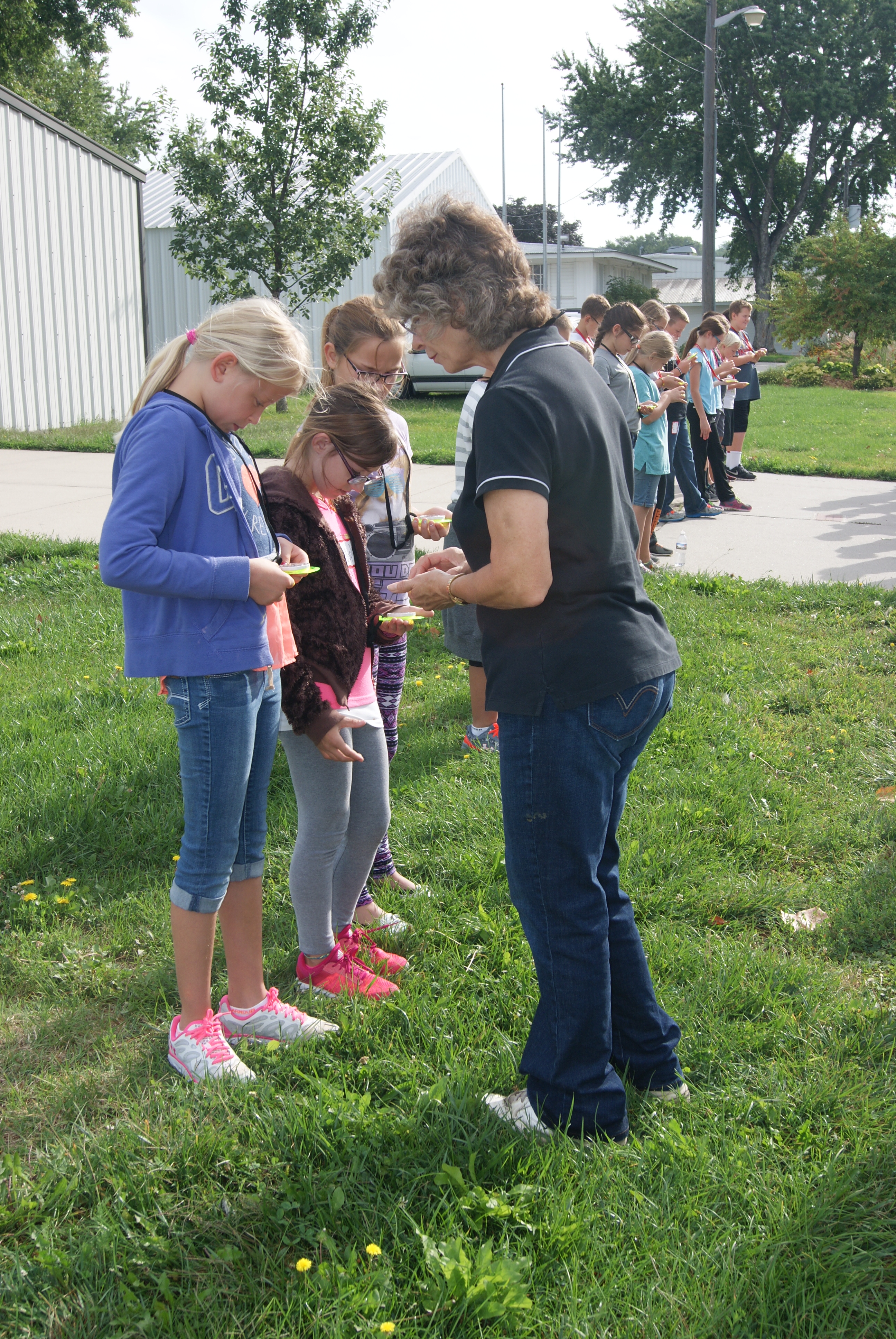
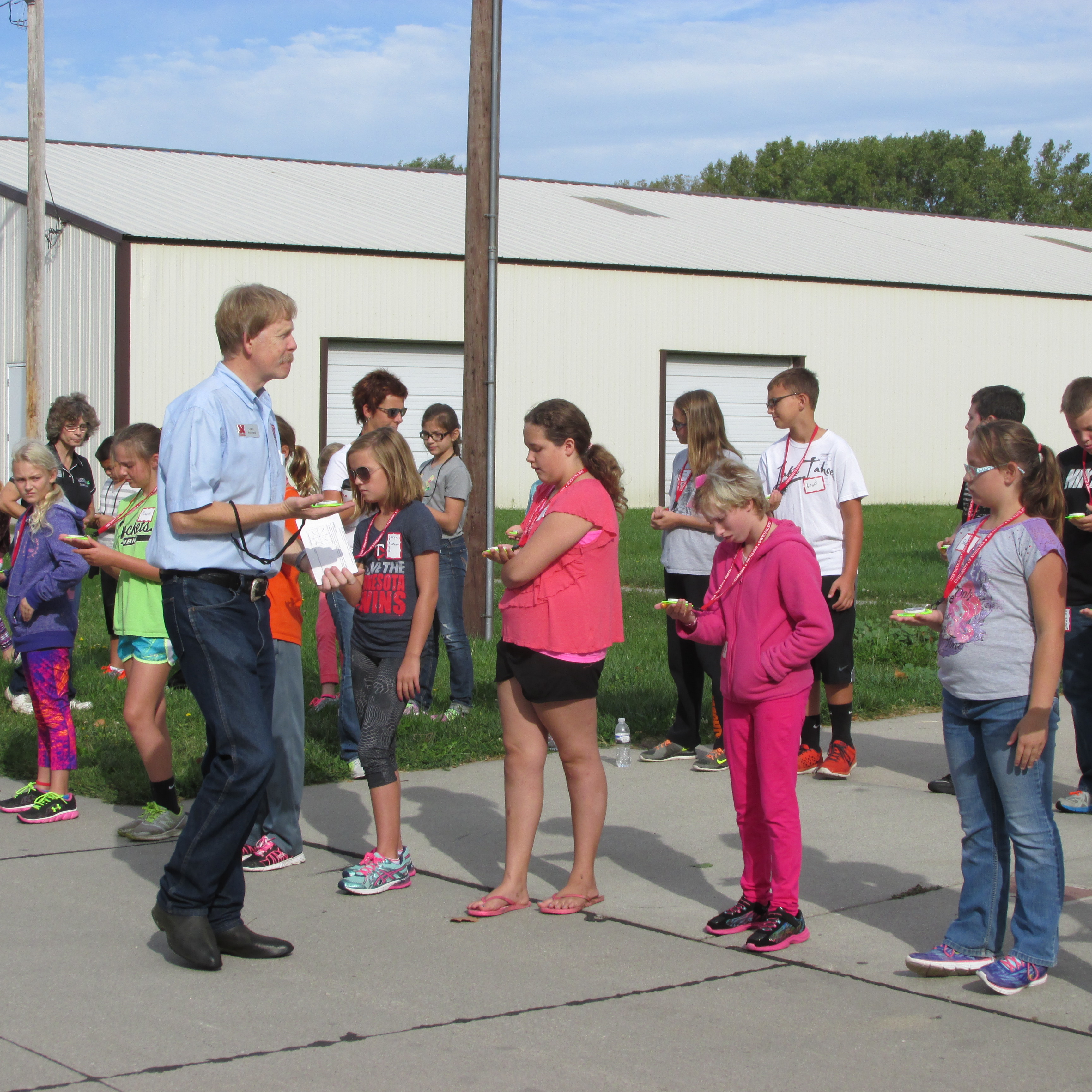
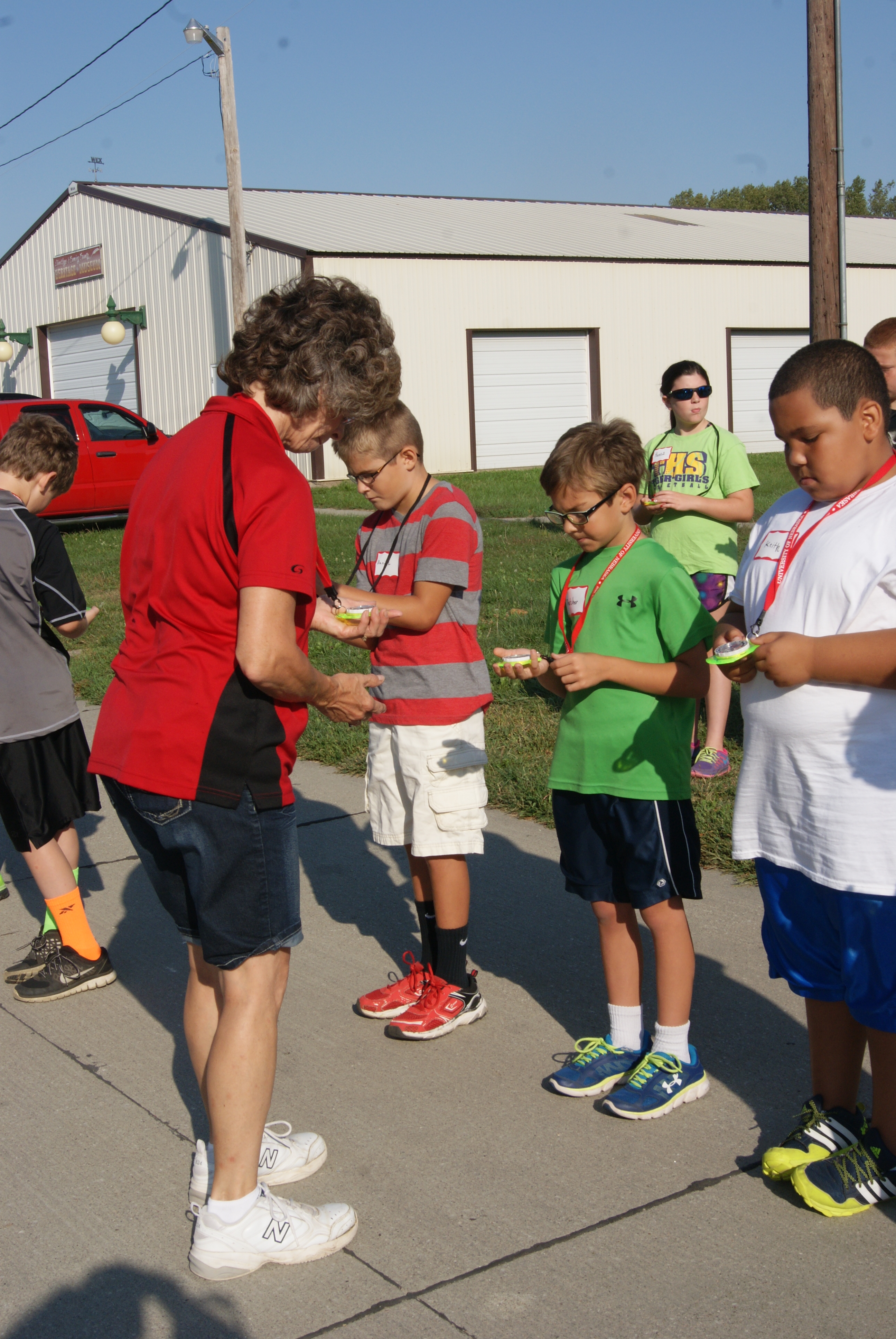
          Two of Burt County’s 5th grade classes recently took part in the GPS (Global Positioning System) workshops held in West Point. This is a combined program presented by Nebraska Extension in Burt and Cuming Counties. Oakland Craig and Tekamah-Herman’s 5th graders had a great weather days for this event which makes the learning even more fun.

In the morning the workshop teaches the students how to use a compass and make a map. In the afternoon they had a quick review of latitude and longitude and then moved on to higher technology as they learn how to use a hand held GPS unit to navigate.  The grand finale of the day is the GPS Geocache hunt where they use the latitude and longitude coordinates to find their group’s hidden cache. It’s a great day as the students experience the fun of science, technology and math through the various activities.


Experience the Power of Red

High school students and their parents are invited to explore opportunities available to help them prepare for a future in agriculture and natural resources. University of Nebraska-Lincoln College of Agricultural Science & Natural Resources (CASNR) is hosting “Experience the Power of Red” on Saturday, October 3, on the East Campus of the University of Nebraska-Lincoln. Activities will begin at 9:00 a.m. in the East Campus Union and conclude at 2:00 p.m. Lunch will be provided for pre-registered participants.


“Power of Red” will provide you with an opportunity to learn more about the 30 majors and two pre-professional programs within CASNR, interact with the Deans, faculty and staff, experience East Campus life, explore career opportunities as well as connect with current and future students. There will be an opportunity to register for a $500 scholarship and other cool prizes. This is an outstanding way to explore a variety of career options and see what CASNR has to offer.


Academic interest areas featured at the open house include: agribusiness/agricultural economics; agricultural education/agricultural journalism/hospitality, restaurant and tourism management; agronomy; animal science; applied science; biochemistry; food science and technology; food technology for companion animals; forensic science; grazing livestock systems; horticulture; insect science; mechanized systems management/agricultural engineering/biological systems engineering; microbiology; natural resources, including applied sciences, environmental restoration science environmental studies, fisheries and wildlife, grassland ecology and management, natural resources and environmental economics and water science; PGA golf management; plant biology; turfgrass and landscape management; veterinary science; and the Engler Entrepreneurship program.


The Extension staff in Burt County encourage high school students to continue their career preparations by becoming a student in the College of Agricultural Science & Natural Resources at the University of Nebraska-Lincoln. Take the first step by attending “Experience the Power of Red”. To pre-register before the September 24 deadline call 1-800-742-8800 (Ext 2541) or register on-line athttp://casnr.unl.edu/openhouse. Don’t miss this great opportunity.


#4HGivesBig

Round up your friends, select a project your community needs and complete the project on October 3-4 in order to take part in the #4HGivesBig event. Results of your project can be reported to: www.4h.unl.edu/4hcommunityserviceprojectmap  The examples on the web page show projects bigger than a one or two day event, but they can give project ideas for your group to consider from little ones to very BIG ones! This would be a great kickoff for National 4-H Week which is October 4-10. See what your club and/or friends can come up with!
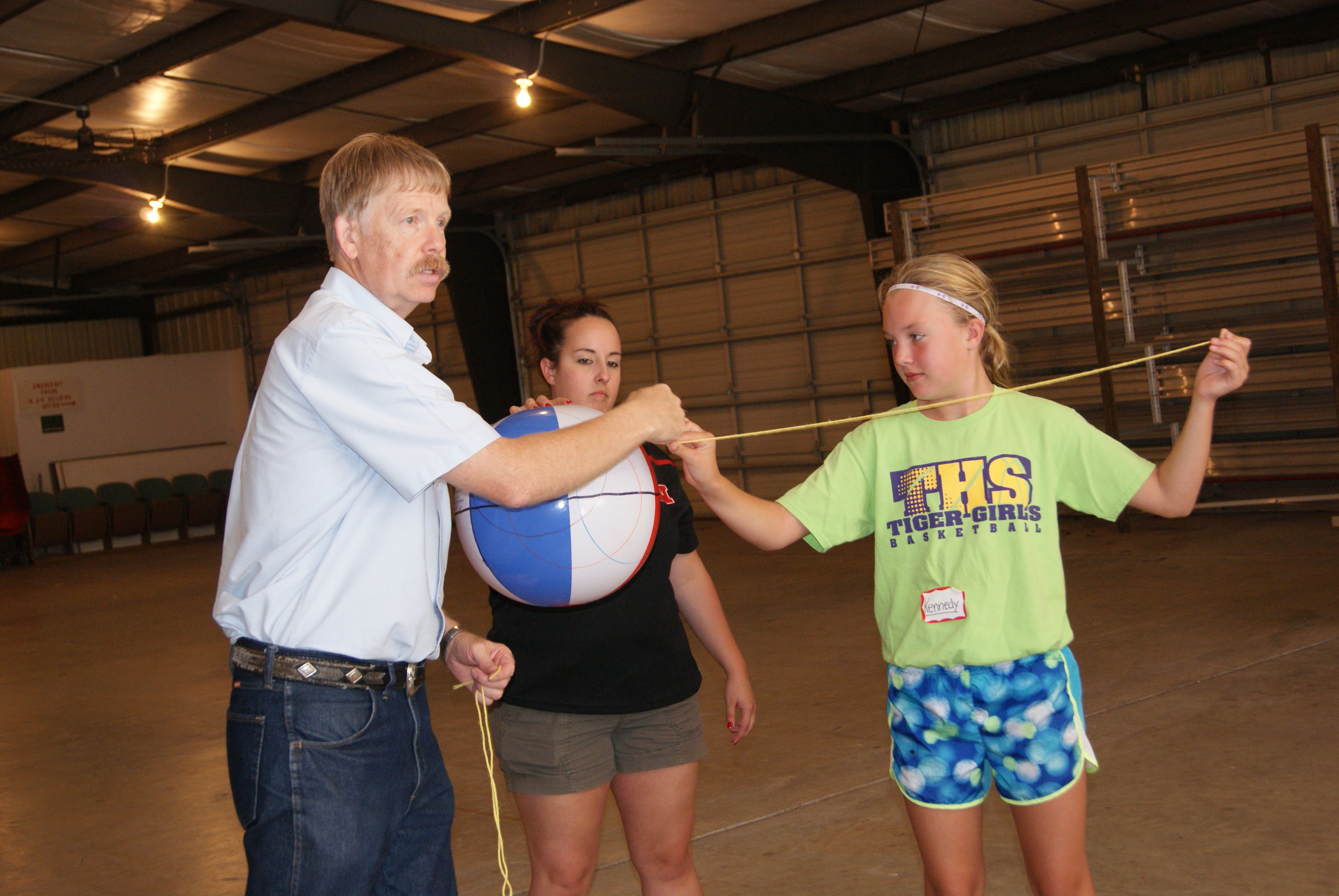
Kennedy Pagels demonstrates how one GPS satellite orbit picks up the GPS signal while Larry Howard, Nebraska Extension Educator and Julie Crandall, Extension Assistant in Cuming County explain that at least 3 satellites need to pick up your signal in order to triangulate your position.
Kennedy Pagels demonstrates how one GPS satellite orbit picks up the GPS signal while Larry Howard, Nebraska Extension Educator and Julie Crandall, Extension Assistant in Cuming County explain that at least 3 satellites need to pick up your signal in order to triangulate your position.

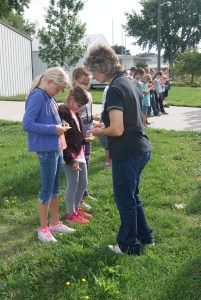
Nebraska Extension Associate, Mary Loftis helps Oakland-Craig 5th graders understand how to use a compass at the GPS workshop in West Point.
Nebraska Extension Associate, Mary Loftis helps Oakland-Craig 5th graders understand how to use a compass at the GPS workshop in West Point.

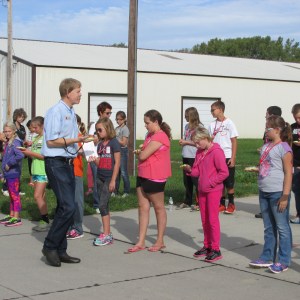
Larry Howard, Nebraska Extension Educator in Cuming County explains how to use a compass to these Oakland-Craig 5th graders during the GPS workshop in West Point.

Larry Howard, Nebraska Extension Educator in Cuming County explains how to use a compass to these Oakland-Craig 5th graders during the GPS workshop in West Point.

Mary Loftis, Nebraska Extension Associate works with Tekamah-Herman 5th graders on how to use a compass at the GPS workshop in West Point.

Mary Loftis, Nebraska Extension Associate works with Tekamah-Herman 5th graders on how to use a compass at the GPS workshop in West Point.