Annual Easter Bazaar at Oakland Heights
March 27, 2015 Leave a comment
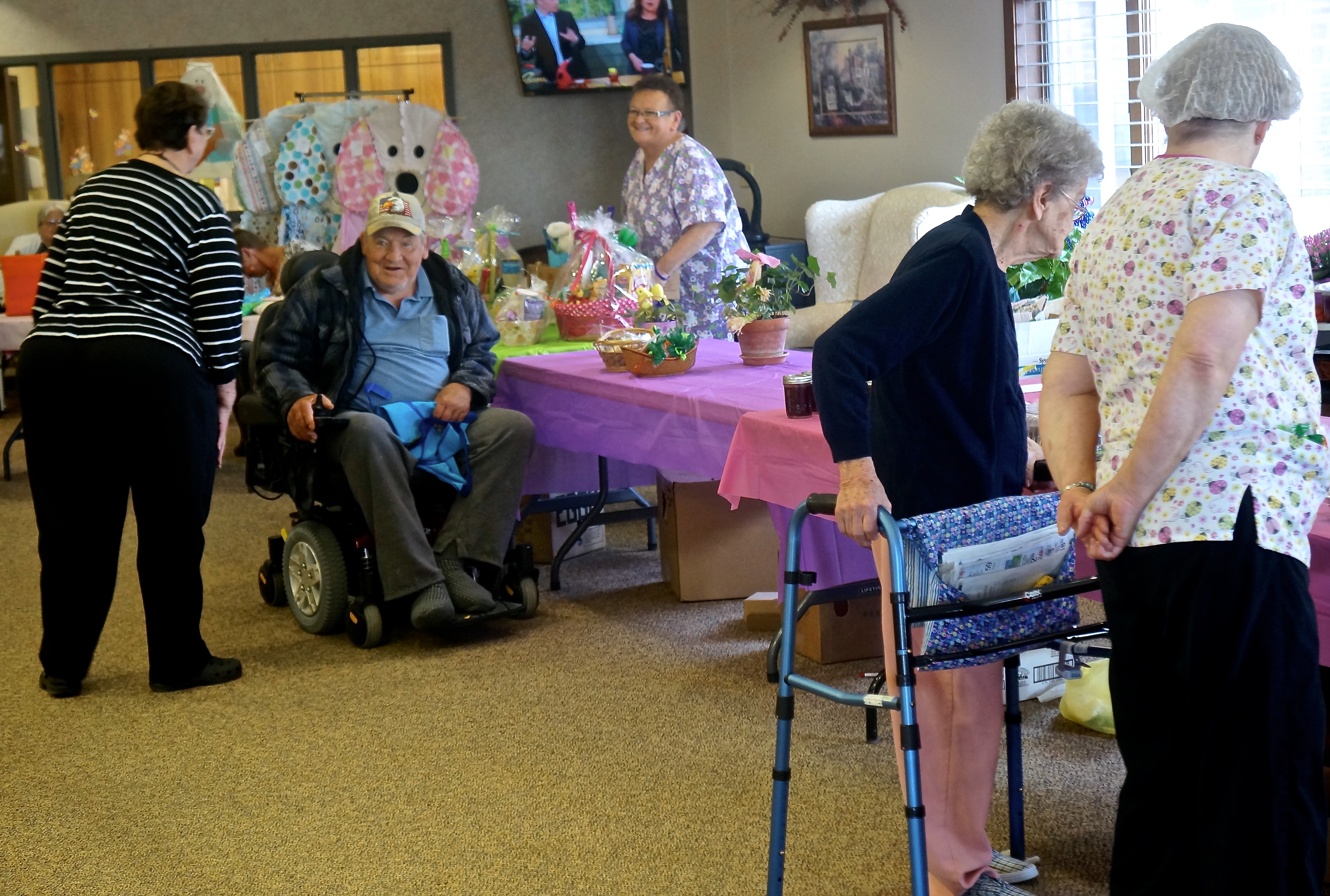
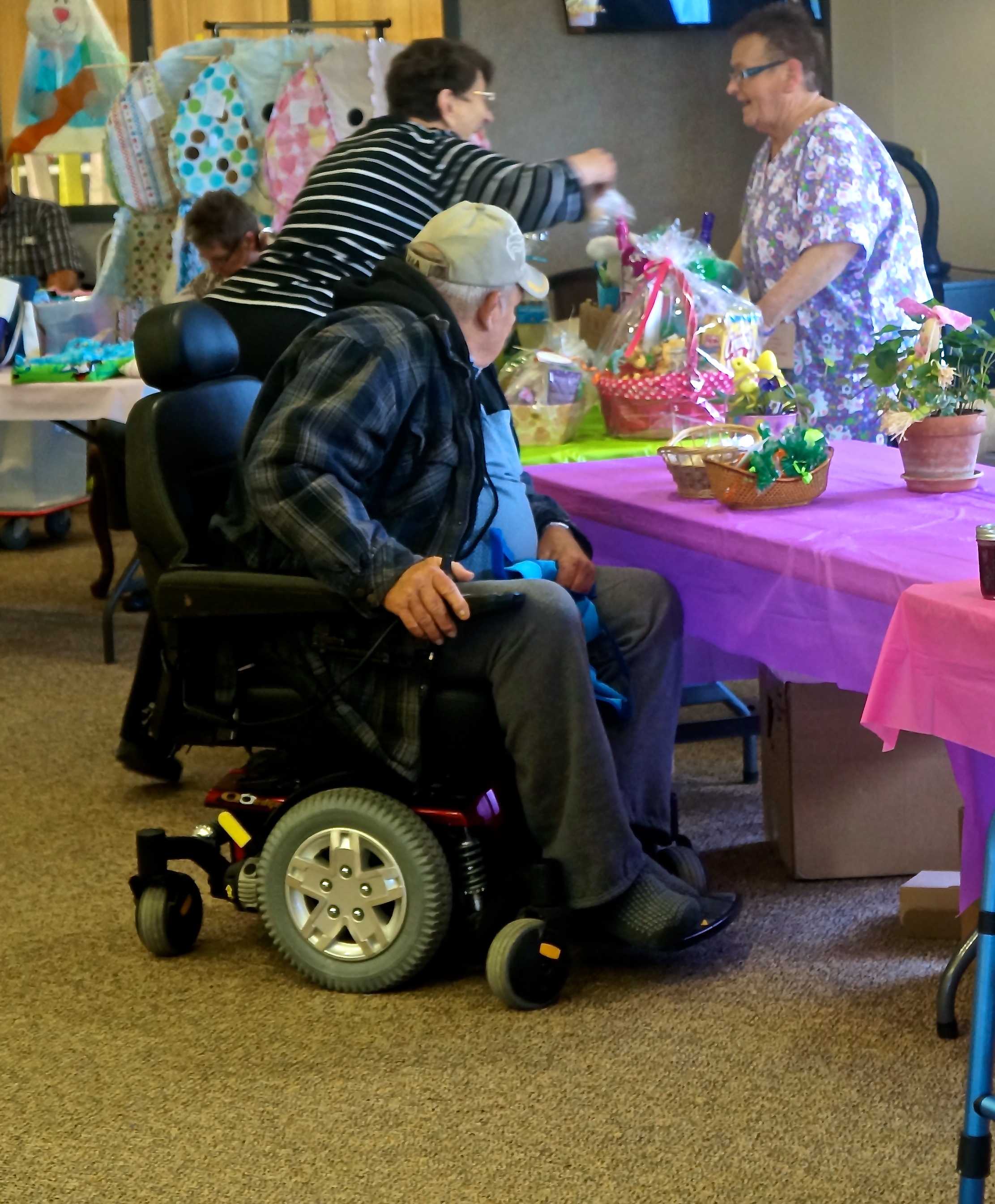
There were many Easter goodies on hand at the annual Oakland Heights Easter Bazaar. Photo Credit/Denise Gilliland, Editor and Chief, Kat Country Hub.
Northeast Nebraska's dependable news source
March 27, 2015 Leave a comment
There were many Easter goodies on hand at the annual Oakland Heights Easter Bazaar. Photo Credit/Denise Gilliland, Editor and Chief, Kat Country Hub.
March 27, 2015 Leave a comment
Twelve members of the Oakland Garden Club met in the Rosen room at the Oakland auditorium at 2:00 p.m., on Thursday March 12.
Hostesses Tammy Waters and Cathi McMurtry decorated with a shamrock table runner on front desk with green candle with wrapper at base with Irish symbols, green & white butterflies and served a green poke cake cake with green whipped cream.
Members gave pledge to the American flag and read the Garden Club Creed from their handbooks. Each member answered roll call by naming a blue flower they had grown. Bachelor button and iris were the most frequently mentioned.
Cathi McMurtry read the minutes from the February meeting. Treasurer Audrey Unwin the treasury balance as the same as February but with membership dues not yet deposited.
For old business, Audrey Unwin reported that she had provided coffee for this meeting but would buy a decorated canister of ½ caffeine coffee, mark it and put in the kitchen for Garden Club.
In new business, Lela Heineman announced a change in the schedule. The April lesson will be moved to September, and the April meeting will feature Ina Glaubius who will give tips and tricks for photographing flowers, birds, and insects, She has won awards for her work at the NE State Fair and will be bringing some of her works for display. The public is invited to attend this activity.
Debbie Rosenboom reported on a meeting of representatives of organizations in Oakland planning for the 150 anniversary in 2018 of the founding of Oakland. They are looking for a catchy slogan to promote it and also want each organization to plan how best to prepare for it. The big promotion will be for Memorial Day weekend when many people traditionally return for family and school reunions. The suggestion for the Garden Club was that with advance notice they could have the park beds looking fantastic by the end of May in 2018. Audrey Unwin suggested that that meant planting tulips. Rosenboom reminded members that this was separate from the Swedish festival and did not need to include Swedish flowers. Also, she reminded them to be thinking of possible slogan or slogans.
It was reported at the Chamber of Commerce meeting of the expense of insurance for the gator for watering pots on the main avenue. Deb Rosenboom wondered if the Garden Club could use it for watering at the park as the many hoses were heavy to drag to flower beds. We will ask Michael Nissen about insurance cost for that. Audrey Unwin moved and Tammy Waters seconded that we donate $100.00 to the Chamber of Commerce for the pots and their watering on Oakland Avenue. The motion carried.
Audrey Unwin reported that Sean Linder wondered if we could put sprinklers in the park flower beds. Audrey Unwin will ask Linder to check into cost for doing so.
Members commented on the bed next to the gazebo originally built by Boy Scouts who tended it for about two years. The entire bed needs torn apart and rebuilt. It might possibly have a layer of RR ties underneath it.
Lela Heineman moved and Laverne Osterndorff seconded that we provide a single rose in bud vase at the funerals of Doris Anderson and Laurine Bush, long members of Garden Club. The motion carried.
Audrey Unwin reported that the Burt County Fair may be requiring all entries to the fair be made on Thursday night so that the judges could complete judging Friday morning and the exhibits be open to the public on Friday afternoon.
Laverne Osterndorff and Lela Heineman gave a $10.00 donation for Lorine Bush.
Marie Daubert presented an old clipping mentioning blackberry lily some had asked about. It has now been classified as an iris, but after blooming its fruit and berry look like a blackberry. It dates back not just to George Washington’s estate but also is found in Chinese literature of 25 A.D. A hot new trend is planting succulents. Mix up types and shapes in your planters for attractive gardens.
She read about buying newer plants disease resistant and mildew resistant, and also said that butternut was more resistant to squash bug infestation than other squashes because of their strong stems squash vine borers couldn’t penetrate. A looming threat is the emerald ash borer. Its infestation is nearly impossible to detect until it is too late to save the tree. It is spread by people moving trees and firewood. The beetles can fly about ½ mile. A professional preventative treatment for an average size tree would cost about $100.00.
Members read the Garden Club Benediction, and Audrey Unwin gave the lesson on Swedish flowers. The national flower of Sweden is the Linnea Borealis or Twinflower, a delicate wildflower about 1 inch high, smelling of vanilla, and growing in the forests which cover over half of Sweden. The flower is named after Swedish Carl Linnaeus, the man who 300 years ago developed the taxonomy or system of classifying plants and animals, a taxonomy used today relatively unchanged.
Sweden has big countryside with the landscape wide and open even in cities with fruit, vegetable and nursery stock in the open. Pot plants, cut flowers, and bedding plants and herbs are grown under glass. Sweden historically had 25 provinces that now have no administrative function, but remain historical legacies and the means of cultural identification and used in colloquial speech while administration is reduced to a lower number of counties.
Each province has two flowers or plants representing it. Each was assigned one, but in cases where they did not like the assigned one, they picked another. Eventually, each province gained two representative plants—assigned or chosen. By seeing the English common name, you will recognize most of them as plants or flowers growing here. Listed first is the traditional province name, then the plant. Blekinge: English oak and great mullein. Bohuslan: honeysuckle. Dalarna: Scottish blackbell and spreading bell flower. Dalsland: true forget-me-not. Gotland: English ivy. Gastrikland: lily of the valley. Halland: creeping broom gold. Halsingland: common flax. Harjedalen: pasque flower and Alpine yellow violet. Jamtland: black vanilla orchid. Lappland: white dryad. Medelpad: Norway spruce and globe flower. Norrbotten: Arctic raspberry. Narke: cowslip. Skane: oxeye daisy. Smaland: twinflower. Sodermanland: European white water lily. Uppland: Kings meadow lily. Varmland: chickweed & Arctic starflower. Vasterbotten: lousewort. Vastergotland: shrub heather. Vastmanland: European mistletoe. Angermanland: viola tricolor. Oland: hoary-rock rose. Ostergotland: cornflower or bachelor button.
Cathi McMurtry, Secretary
March 25, 2015 Leave a comment
By John Wilson, Extension Educator
Last Saturday, while she was at work, I tried to earn a few points with my wife by addressing a perennial problem at our home. She has this vile hatred of multicolored Asian lady beetles. I wouldn’t want to say for sure, but I think it has something to do with the time one flew into her coffee cup and she found it the hard way. It took me forever to get the coffee stains out of our carpet!
With warmer temperatures this past week, our house, like many, has seen an increase in the activity of these pests along with boxelder bugs. I probably get 10 lady beetle questions to every one about boxelder bugs.
Multicolored Asian lady beetles and boxelder bugs seem to plague homes in the spring. However, they actually invaded homes last fall and have overwintered under siding and between walls. With warm weather, they become active and accidentally move indoors instead of returning to the outdoors.
While they may be a nuisance in the home, and lady beetles can bite, they are harmless to people, plants or pets… and their bite is harmless, too. Neither of these insects will survive or reproduce in the home. They are frequently drawn to sunny windows as they look for a way to return outdoors. Once outside, lady beetles are beneficial because they feed on a major crop pest, soybean aphids, as well as other aphids and insect pests that may attack gardens, trees, shrubs and other ornamentals.
If you have many lady beetles or boxelder bugs in your home, sweep or vacuum them up to control them. If you use a vacuum, here is a suggestion. First, cut a leg off a pair of pantyhose or use a knee high nylon to trap them before they reach the container on your vacuum. Stick the toe end of the nylon down the hose with the open end folded over the outside of the end of the hose. Then put the attachment you’ll use on the end of the vacuum hose to hold the nylon in place so it is not sucked into the bag or canister. Then, as soon as you are done vacuuming these six-legged pests, remove the nylon and release them outside or flush them down the toilet.
This works great, although I don’t know if I’ll lose any points I gained when my wife discovers I used one of her good knee high nylons! The reason to trap them before they reach the bag or canister of your vacuum is twofold. First, if the ride didn’t kill them, they may crawl back out when you are done using the vacuum. The second problem is, they do give off an odor. Even if they die in the vacuum, each time you use it you will notice their odor until you dump the canister or change the bag.
Spraying or fogging with an insecticide indoors is not effective nor recommended for controlling either of these pests. Once their coming-out-of-winter hibernation period ends, these pests will not be much of a problem until next fall when they look for a protected place to overwinter.
To keep them out of the home next fall, caulk cracks, crevices, and around conduit; use weather stripping around windows and doors, and keep screens in good repair. This should reduce the pests entering your home and also help reduce your heating bill. If these pests seem to be concentrated in a particular room this spring, focus your inspection on the wall and foundation outside this room.
For more information on controlling multicolored Asian lady beetles or boxelder bugs in your home, contact you local Nebraska Extension office.

John Wilson
March 25, 2015 Leave a comment
By Rachel Wise, District 3, Nebraska State Board of Education (March, 2015)
The State Board of Education moved forward this month on two very important steps for Nebraska schools. The first step was to authorize the Commissioner of Education to submit a waiver from certain No Child Left Behind (NCLB) requirements. NCLB is the accountability system imposed by federal law. I wrote an article last July on this topic urging the U. S. Congress to do its job and, with a new Congress in place, one would hope for action. However, in the case of reauthorizing ESEA—currently known as NCLB—there seems to be “talk” but still no real action!! Because Congress has not reauthorized ESEA—action that should have occurred in 2007—it is time to pursue the NCLB waiver. The Commissioner of Education will submit a waiver request to support our schools that are still saddled with an unrealistic federal accountability system and start negotiations with the U. S. Department of Education to allow Nebraska to establish a system of accountability that is clear, transparent and a system that benefits Nebraska’s children, families and communities!
Before I continue, I again urge you to contact your Congressional representatives to encourage bipartisan collaboration on the reauthorization of ESEA. We may be moving forward with the NCLB waiver request, but I believe my colleagues and I are on the same page—reauthorization of ESEA needs to occur!
The other important step taken by the State Board of Education was to approve four levels of school classification for Nebraska’s a new accountability system, AQuESTT—Accountability for a Quality Education System, Today and Tomorrow. AQuESTT was developed as a result of the Nebraska Quality Education Accountability Act, state legislation passed last year.
Under AQuESTT this first year, student growth and improvement on state tests as well as high school graduation rates, will be the primary indicators used to classify each school and district as Excellent, Great, Good or Needs Improvement. Within the Needs Improvement classification, the three schools in greatest need of assistance to improve will be designated as priority schools. The Nebraska Department of Education will develop intervention teams to help improve student achievement for priority schools and will share those strategies and interventions with all Nebraska schools.
The AQuESTT tenets and examples of possible future indicators include:
The State Board will continue to refine AQuESTT and seek additional input on from individuals across the state.
This article represents my personal view, not that of the State Board of Education or my role as president. Feel free to contact me at rachel.wise@nebraska.gov. Search the Nebraska Department of Education website at www.education.ne.gov to learn more about education in our state.

Rachel Wise
March 25, 2015 Leave a comment
By Senator Lydia Brasch
The 104th, First Session of the Nebraska Legislature is officially halfway done with its 90-day session with Friday marking the close of Day 49. Up to now, we have spent our first half of the day in floor debate and the other half in committee hearings. With only occasional exception moving forward, we will no longer hold public afternoon hearings since all 663 bills introduced have been heard. As of Monday, Day 50, we began all day floor debate and stop only when the Speaker adjourns us. Our legislative day must not end later than 11:59 p.m. as midnight would begin the next official legislative day. Thank you to everyone who came to testify on legislation, as well as those contacting our office through e-mail, phone calls, or personal visits. The next notable day for our legislative process is Day 70 when the Appropriations Committee must introduce a budget proposal to the body of the Legislature.
As you may know, my priority bill, LB350, which provides a reduction in the valuation of agricultural and horticultural land from 75 to 65 percent, did not originally have enough support to be voted out of the Revenue Committee. Nevertheless, I have continued to work diligently in an effort to gather the five committee votes necessary to advance this bill for floor debate. My staff and I spent a good deal of the week compiling further statistical information on the impact of LB350 as well as talking individually to senators from the Revenue Committee to gather more support. My hope is the voice of Nebraskans from across the state will not go unheard. Continue doing your part to urge the Legislature to address this issue.
This week’s floor debate was mostly on LB31. Introduced and prioritized by Senator Bloomfield, LB31 repeals the motorcycle helmet law and provides the operator the choice to wear a helmet or not. Much debate revolved around individual liberties versus government regulation of public health and safety, as well as the positive economic impact LB31 would bring from enthusiasts nationwide. In the past, I supported this bill when amended to prohibit young children as passengers. While I certainly support the operators individual liberty to decide whether to wear a helmet or not, this year’s original bill as introduced did not provide important safety provisions of last session with regard to child passengers and inexperienced operators. For this reason, I have not been able to offer my full support.
A special thanks to this week’s visitors: former-Senator Matt Connealy and his wife, Judith (Decatur); Bob Jones and Rod Giese (Beemer); and LeRoy and Anita Bray (Rosalie). Finally, while we have had a number of pastors from the District serve as Chaplain of the Day, we would like to encourage those pastors who have not served to consider this great opportunity to provide God’s blessing and grace over the Legislature.
Please contact me, administrative aide, Katie Wattermann, or legislative aide, Tom Venzor, with questions or thoughts at (402)471-2728 or e-mail at lbrasch@leg.ne.gov.
Keeping the Good Life Growing in Nebraska,
Senator Lydia Brasch, District 16

Senator Lydia Brasch
March 25, 2015 Leave a comment
March 25, 2015 Leave a comment
By Jon Bailey, jonb@cfra.org, Center for Rural Affairs
LB 472 is a no risk way to provide health insurance to those in the Coverage Gap.
One of the major arguments against LB 472, the Medicaid Redesign Act, is that the federal government cannot be trusted to maintain the funding to states for an expanded Medicaid program. The argument goes that since the federal government cannot be trusted to maintain funding, LB 472 would cause the state to pick up the tab for this initiative.
Distrust of the federal government to maintain the contribution to state initiatives to expand Medicaid has been a consistent theme of opponents in Nebraska and throughout the nation. However, federal participation rates to states for Medicaid have varied little since Medicaid’s inception in 1964.
This argument also involves a fundamental misunderstanding or misreading of LB 472. According to the Affordable Care Act, from 2020 onward the federal government will provide 90 percent of funding for the LB 472 initiative. Specific language in LB 472 states that if federal funding ever drops below 90 percent, Medicaid coverage for those eligible under LB 472 will terminate and the LB 472 initiative will automatically cease.
This provision in LB 472 is a no risk proposition for the state. The Medicaid provision in the Affordable Care Act is essentially a pilot program for the state. Future trust of the federal government is irrelevant – it is the implementation by the state and the performance of the initiative created by LB 472 that is most important.
March 24, 2015 Leave a comment
The senior center provides Information and Assistance to any individual who is looking for services for themselves or another person 60 years and older, the center manager and/or center participant can provide information to individuals on services available within the community. We link individuals to the services and opportunities that are available within or beyond the community itself. We will then establish adequate follow-up procedures to see that their needs were met. For more information call 402-648-3387.
*If you are 60 years and older and need information on programs designed to help keep you in your home longer or if you need legal help, contact Connie at 402-648-3387 or in the evening at 402-648-7648.
* We have the following medical equipment to loan out on an as need basis, wheel chair, bath seats, toilet seat riser and portable toilet chair, crutches or walkers. Call 402-648-3387 during office hours.
Meals on Wheels
*Would you like to get Meals on Wheels? Anyone over the age of 60 years and lives within the city limits are eligible for these meals. You may sign up anytime for the Meals on Wheels program; you can get the meals delivered however many times you want them each week. You must call 402-687-2332 before 8:30 a.m. if you want a meal that day. The suggested donation for the meals is $4.00.
Weekly Activities:
Wed. March 25: Melody chimers will practice at 9:00. If you want t make the ladder necklace, bring a scissors and ruler, class starts at 2:00 today.
Thurs. March 26: Stop in for fresh baked cinnamon rolls and coffee for $2.00 starting at 9:00 a.m. Tai Chi class at 9:30 and walking ex class at 10:30. Sign up to play in the pitch tournament at 1:30.
Fri. March 27: There will be a pinochle tournament at 1:30.
Mon. March 30: Join us for coffee at 9:30. Sign up to play in the pitch tournament at 1:30.
Tues. March 31: Tai Chi class at 9:30, and walking ex. class at 10:30. Stop in for coffee at 10:00. We will bingo at 2:00.
Wed. April 1: Melody chimers will practice at 9:00. Sign up to play 5-handed pinochle at 1:30.
March 23, 2015 Leave a comment
We would like to thank first National Bank for sponsoring the Gary Weldon show. The residents sure enjoyed having him do the entertainment for the St. Patrick’s party.
Activities for the week of March 23rd to March 28th are: Reading with Marilyn, manicures, reading group, sing-a-long, Catholic Mass, crafts, bingo with Methodist Church, game day, bible fellowship, word games and the Easter Bazaar from 8:30 a.m.-1:00 p.m. on Friday, March 27th.
Volunteers signing in last week were: Marrilyn Baker, Betty Hanna, Judy Nelson, Donna Baldwin, Mary Donovan, Patty Miller, Dani Moseman, Mary Fritts, Cathi McMurtry, Connie Fager and Sly Rouse.
Visitors signing the guest book were Pat and Kristie Peters to see Dale and Jeanette Johnson and Linda Brown to see LaVern Johnson.
March 23, 2015 Leave a comment
By John Wilson
Extension Educator
Record highs last week and very comfortable weather predicted for the near future has many farmers thinking about preparing to plant their 2015 crop. While warmer temperatures are a welcome relief, they also pose some problems for last year’s crop.
This time of year can be a challenge for folks with on-farm stored grain in a normal year, but great temperature swings can potentially reduced the quality of stored grain. We never want the condition of grain to deteriorate while it is in storage, but that is even more important when commodity prices are already low. It will be more important than ever to monitor and manage grain stored on the farm to reduce or eliminate further deterioration in its condition.
Periods of warm weather like those we had last week and are predicted in the week ahead will warm grain near the bin walls, particularly on the south and west sides of the bin… while grain on the north side and near the center of the bin remain cooler. This uneven warming causes moisture movement within the grain and condensation in the cooler parts of the bin.
If the grain temperature is below freezing, moisture will freeze between the kernels, forming a block of frozen grain. When the bin is aerated, air will move around, rather than through, these frozen areas. When that grain eventually thaws, it will create a wet area in the grain mass and increase the likelihood of spoilage.
So how do you avoid this problem when you can’t control the weather? Every couple of weeks you should check the grain temperature with a probe thermometer. Check the temperature of the grain around the bin walls and also near the center of the bin. If there is more than a 10 degree difference between any of the readings, turn on the fans to push a temperature front through the grain and equalize the temperature.
As the grain is gradually warmed this spring, try to keep the grain temperature within about 10 degrees of the average outside temperature. Whenever you turn on the fan, use this as a time to monitor grain condition. Have someone else turn on the fan while you are positioned by a roof vent or opening in the roof.
If that first blast of air coming out the vents is musty, more humid, or warmer than the outside air, this indicates a problem developing in your grain. You need to run the fan continuously to reduce the problem, monitor this bin more frequently, and then use or sell this grain as soon as possible.
Two important safety consideration. First, before entering a bin, be sure you have a safety harness or rope connected to yourself and have someone outside the bin that can pull you to safety if you should break through a crusted area. Grain can bridge and form air pockets below the surface. If you break through the bridge, it is likely you will not be able to get out on your own.
Second, there was a lot of mold in corn when it was harvested last fall. This can’t get better while the grain is stored, but it can get worse. If you are monitoring the exhaust air when ventilating a bin or if you are entering a bin to check the grain temperature, wear a respirator to prevent inhaling mold spores. Failure to protect yourself from inhaling mold spores can lead to Farmer’s Lung, a debilitating respiratory disease common among farmers.
For more information about on-farm grain storage, contact your local Nebraska Extension office.
John Wilson

 Kat Country Hub
Recent Comments