Giving Thanks for Unexpected Things


By John Crabtree, johnc@cfra.org, Center for Rural Affairs

Thanksgiving is when, as a nation, we give thanks for the important blessings in our lives. For many, that likely includes family, good health, a decent job, and the like. And we should be thankful if we enjoy any or all of those things.


For some in our society, however, working hard doesn’t always produce enough income to make ends meet. And many rural and small town Americans depend on something that the rest of us don’t likely think about that often, the Earned Income Tax Credit (EITC), to help get through some of the tough times.


The EITC is a credit against federal personal income taxes for working people who have low to moderate income, particularly those with children. The Census Bureau estimates that in 2012 the EITC kept an additional 5.4 million Americans, including 3 million children, above the official poverty line.


A recent Center for Rural Affairs report (http://www.cfra.org/news/141107/impact-earned-income-tax-credit-rural-people) found that the EITC has become a rural program, vital to rural people and their well-being and important to the economies of the small towns they live in. Over one in five rural Americans claimed the ETIC, a greater percentage than among our urban neighbors.
Being thankful for the EITC may seem odd to those who have never used it, but to one out of every five of my rural and small town neighbors, it has made all the difference, and for that I am truly thankful.


News From Bancroft Senior Center


The senior center provides Information and Assistance to any individual who is looking for services for themselves or another person 60 years and older, the center manager and/or center participant can provide information to individuals on services available within the community. We link individuals to the services and opportunities that are available within or beyond the community itself. We will then establish adequate follow-up procedures to see that their needs were met. For more information call 402-648-3387.

*If you are 60 years and older and need information on programs designed to help keep you in your home longer or if you need legal help, contact Connie at 402-648-3387 or in the evening at 402-648-7648.

* We have the following medical equipment to loan out on an as need basis, wheel chair, bath seats, toilet seat riser and portable toilet chair, crutches or walkers. Call 402-648-3387 during office hours.


Meals on Wheels

Would you like to get Meals on Wheels? Anyone over the age of 60 years and lives within the city limits are eligible for these meals. You may sign up anytime for the Meals on Wheels program; you can get the meals delivered however many times you want them each week. You must call 402-687-2332 before 8:30 a.m. if you want a meal that day. The suggested donation for the meals is $4.00.


Weekly Activities:

Wed. Nov. 26: Melody chimes practice at 9:00. Sign up for the pitch tournament at 1:30.

Thurs. Nov. 27 and Fri. Nov. 28: Center is closed for the Thanksgiving holiday.

Mon. Dec. 1: Potluck noon meal, bring a covered dish and join us. Will play cards in the afternoon.

Tues. Dec. 2: Tai Chi class at 9:30 and the walking ex. class at 10:30. Stop in for coffee at 10:00. Sign up to play in the pitch at 1:30.

Wed. Dec. 3: Melody chimes practice at 9:00. Will play chicken foot dominoes at 1:30.

Sat. Dec. 6: The cookie walk starts at 11:00 at the Community building. Remember to have your cookies, breads, candy and Carmel popcorn at the site by 10:30 a.m. Music jam will start at 7:00 and that will be at the senior center.


.

The Great American Smokeout


The American Cancer Society marks the Great American Smokeout on the third Thursday of November each year by encouraging smokers to use the date to make a plan to quit, or to plan in advance and quit smoking that day. By quitting — even for one day — smokers will be taking an important step towards a healthier life – one that can lead to reducing cancer risk.

Tobacco use remains the single largest preventable cause of disease and premature death in the US, yet about 42 million Americans still smoke cigarettes — a bit under 1 in every 5 adults. As of 2012, there were also 13.4 million cigar smokers in the US, and 2.3 million who smoke tobacco in pipes — other dangerous and addictive forms of tobacco.

Loess Hills RC&D Scrap Computer and Electronics Collection a Success


The Nebraska Loess Hills Resource Conservation & Development (RC&D) Council recently partnered with the Lower Elkhorn NRD, Papio-Missouri River NRD and the City of West Point to sponsor a scrap computer and electronics collection in West Point at the Nielsen Center. The collection provided the opportunity for area residents and businesses to dispose of up to four complete computer systems and small electronic devices at no cost. One hundred seventy two area households and businesses disposed of items at the October collection. The RC&D was able to collect over 22,000 lbs of materials during the three hour collection. Participants drove in from six Nebraska counties to dispose of items at this once a year event. Many thanks to the volunteers who devoted time and energy to unloading, directing traffic, and handling paperwork during the collection. The collection was made possible through a grant from the Nebraska Department of Environmental Quality.

For more information about the collection, or the RC&D Council and its projects, contact Jean Schultz at the Nebraska Loess Hills RC&D Council office, (402)685-4020, or, visit the RC&D website at www.nlhrcd.org The RC&D Council exists to improve the quality of life in your community.

Jean Schultz

Program Assistant

Nebraska Loess Hills RC & D Council

P O Box 24

Oakland, NE    68045

402-685-4020

Thanksgiving History


Do you know when the first Thanksgiving was celebrated? Here are some of the details of the first Thanksgiving.

In November 1621, after the Pilgrims’ first corn harvest was a success, Governor Bradford held a celebratory feast with the colony’s Native American allies, including the Wampanoag chief Massasoit.

This is known as American’s “first Thanksgiving.” The festival lasted for three days. There isn’t a record of the banquet’s menu, but  the Pilgrim chronicler Edward Winslow documented in his journal that Governor Bradford sent four men out for food in preparation for the event. The Wampanoag guests came to the event bearing five deer.

Historians believe the Thanksgiving meal was prepared using traditional Native American spices and cooking methods.

Because the Pilgrims didn’t have an oven and the Mayflower’s sugar supply had dwindled by the fall of 1621, traditional desserts, such as pies and cakes were not prepared as are traditionally done today.

Finding Balance Between State and Local Control


Rachel Wise, District 3, Nebraska State Board of Education (October, 2014)
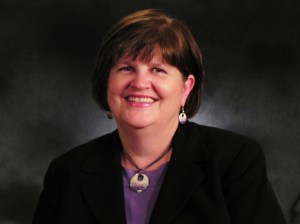
Rachel Wise

Rachel Wise

State Board of Education members in October spent a great deal of time on an issue that I believe illustrates the challenge of finding a balance between state and local control of PreK-12 education.

The issue sweeping the country and brought forward to the state board regarded the College Board’s Advanced Placement U.S. History course, APUSH. A state board policy committee took this issue up and put forward a resolution that generated quite a bit of discussion that was covered by several newspapers.

The College Board is a not-for-profit organization founded in 1900 with a mission to help students transition successfully to college. It provides opportunities for students to take SAT, a college entrance exam and to participate in Advanced Placement or college level courses. The APUSH course is considered a college-level course in U. S. History. It is a part of a host of courses approved by the College Board to allow students an opportunity to “test out” of various college courses while still in high school. Typically, students as freshmen or sophomores take high school level courses in subjects such as biology, chemistry, history, English, etc., and then, in some school districts, they take an Advanced Placement course in one or multiple subject areas as juniors or seniors. To put APUSH in perspective, 1,371 Nebraska students enrolled in AP U.S. History compared to 26,133 students enrolled in other U.S. History courses offered in Nebraska schools during the 2013-2014 school year. That means the proposed resolution focused on a course that only 5 percent of Nebraska students take.

So, you may be wondering, what is the controversy?

Recently, the College Board rolled out the new APUSH framework which contained gaps in what some people consider essential historical information. I am not going to delve into the content of the framework, but instead share with you why I believe this issue should be discussed and resolved at the local school district level rather than the state level. In my view, this issue is an excellent example of the balance that needs to be established between state and local control.

First, school districts follow the Americanism statute (79-724) which is in Rule 10, a rule that provides the foundation for school accreditation. Secondly, school districts use the Nebraska social studies standards to develop curriculum and purchase materials to augment courses such as APUSH. Finally, on issues regarding specific courses, it is hard for me to understand why the Nebraska State Board of Education would step into an arena in which citizens across the state have elected 1,560 local school board members to make such decisions.


I do think it is important for the State Board of Education to establish and adopt standards, frame accountability for a quality education system and accredit schools. However, I think we should continue to work to find and respect the balance between state control and support for local school district authority in decisions related to curriculum, materials and instructional practices.


In my opinion, the proposed resolution and subsequent board discussion was important. However, this is an example of overreach that really does not benefit the students of this state; locally elected officials understand the needs of their communities. After much discussion, the State Board of Education did not vote on the resolution at the October meeting. The policy committee, however, will review, discuss and possibly bring the resolution forward again at a later date.


This article represents my personal view, not that of the State Board of Education or my role as president. Feel free to contact me at rachel.wise@nebraska.gov. Search the Nebraska Department of Education website at www.education.ne.gov to learn more about education in our state.

 

Thanksgiving Trivia


Thanksgiving Trivia: The first department store to hold a Thanksgiving parade was:

(a) Montgomery Wards
(b) J.C. Penney’s
(c) Gimbel’s
(d) Macy’s
(e) None of the above.
It was a non-commercial event.

Retirement of Colors at Veterans Day Ceremony


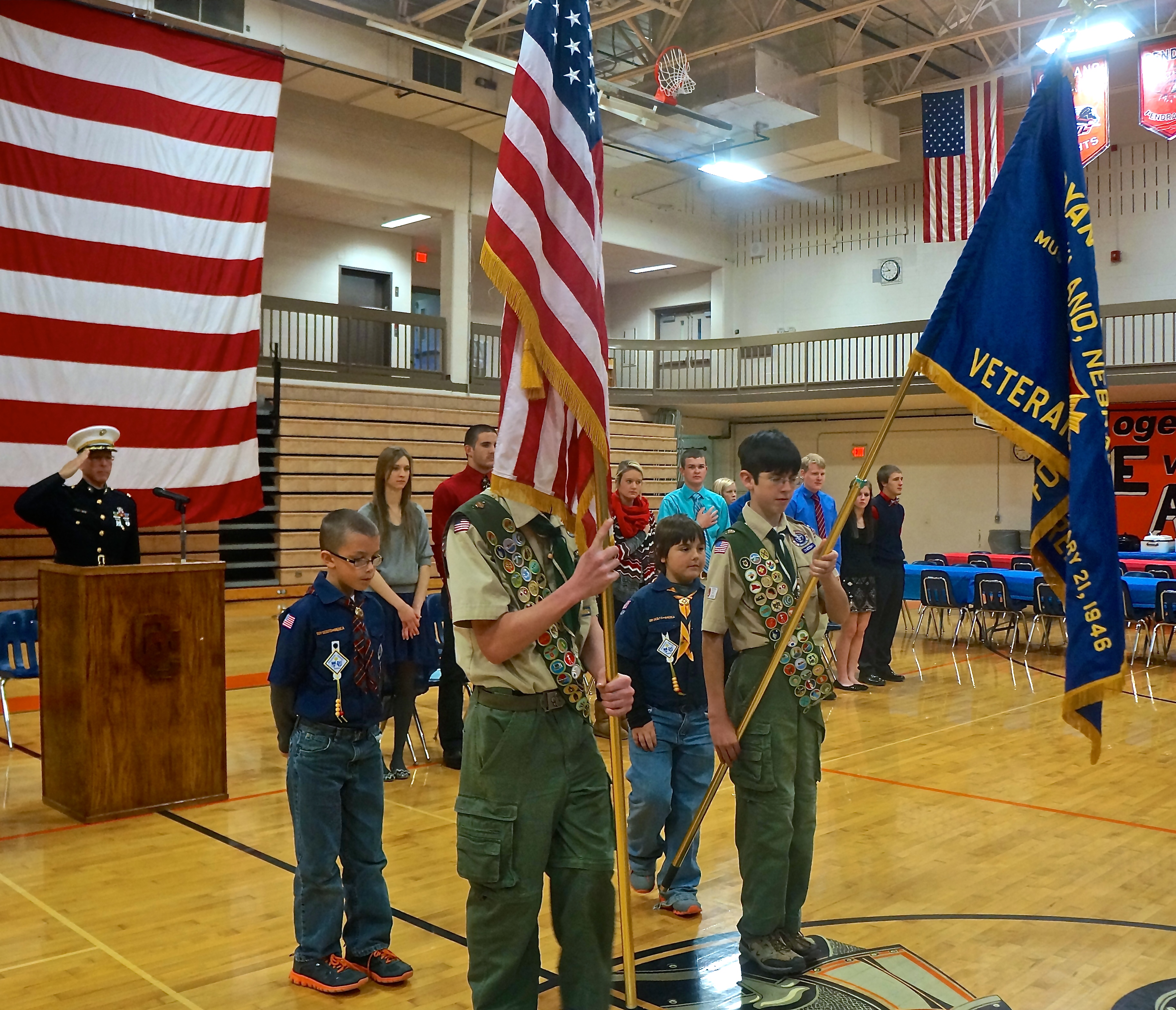
The Scout Troop retires the colors at the Veterans Day Ceremony in Oakland. Photo Credit/Denise Gilliland, Editor and Chief, Kat Country Hub.

The Scout Troop retires the colors at the Veterans Day Ceremony in Oakland. Photo Credit/Denise Gilliland, Editor and Chief, Kat Country Hub.

Farm Bill Education Meeting


Farm Bill Education Meeting – Monday, November 24

University of Nebraska-Lincoln Extension and the Farm Service Agency (FSA), are teaming up to provide educational meetings about the 2014 Farm Bill. The meeting in Burt County will be held on Monday, November 24, 9:00 a.m. to noon, at the city auditorium in Tekamah.


All farm operators and land owners are invited to attend. FSA will inform participants about the sign-up process for the Farm Bill including the documentation needed and the deadlines for sign-up. UNL Extension will provide information about the decisions that will need to be made for base acre reallocation, yield updates, and for the Agricultural Risk Coverage (ARC) vs. Price Loss Coverage (PLC) program selection.


It will be helpful to attend one of the meetings to get insight on the options everyone has with the 2014 Farm Bill. Farm Operators and Land Owners will have three main steps to signing up.


  • One is to review their current base acre allocations which is occurring at this time.
  • Secondly, a decision about re-allocation of base acres will need to be made.
  • Finally, the program selection will involve the ARC or PLC program.


ARC is the revenue safety net program similar to the recent ACRE program and PLC is the price safety net program. With ARC, the options will be an Individual ARC coverage vs. a County ARC coverage. With PLC, the available Supplemental Coverage Option (SCO) will be discussed. Decisions made for this Farm Bill sometime in 2015 will be final for the duration of the Bill.


Farm Bill Education Meetings are being held in most Nebraska Counties. Each meeting will last approximately three hours. Other meetings in our area include:

Date                            Time               Town              Location

Monday, Nov. 24        1:00 p.m.         West Point       Nielson Center

Tuesday, Dec. 2         9:00 a.m.         Pender            Fire Hall

Thursday, Dec. 11      1:00 p.m.         Arlington          Fairgrounds

Monday, Dec. 15        9:00 a.m.         Scribner          Mohr Auditorium


For more information or assistance contact your local FSA or UNL Extension Office. For more information about the 2014 Farm Bill, go to www.farmbill.unl.edu or www.fsa.usda.gov/farmbill.


Keep Looking Up!


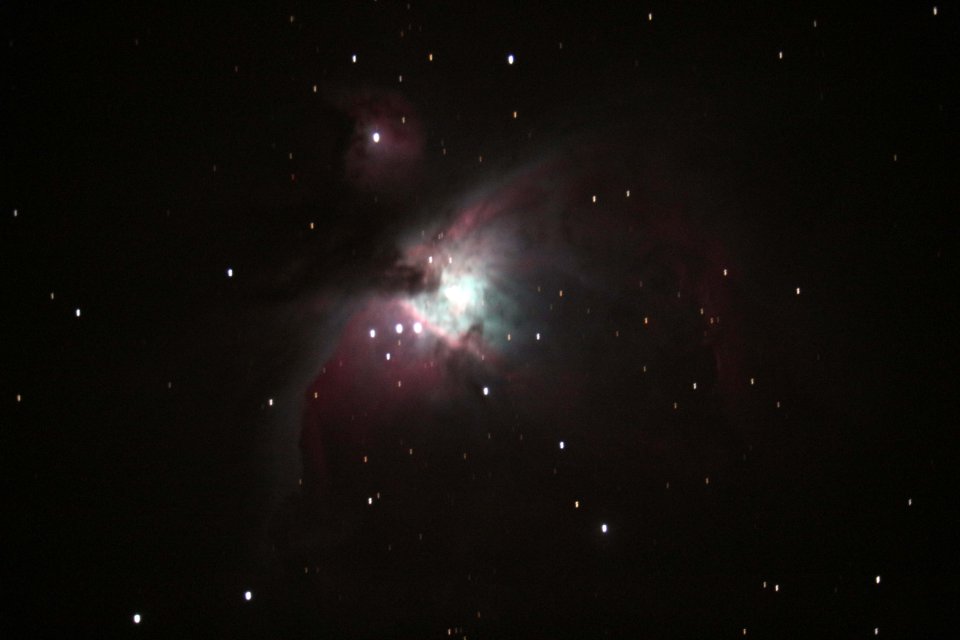
“Christmas Gift Guide for Your Local Astronomer!”
Photo courtesy of Nenacstars/Gary Fugman

Photo courtesy of Nenacstars/Gary Fugman

Northeast Nebraska Astronomy Club (NENAC) this fall has had 29 of its members join the Astronomical League!  Joining the Astronomical League opens up all kinds of certified observing programs to local amateur astronomers.  Many of the new League members are looking for star atlases, binoculars and sturdy, sensible telescopes to begin these observing programs.  With Christmas just after Thanksgiving, what are the best gifts for enthusiastic amateur astronomers?
The public is invited this Friday, November 21 at 7pm to the Lyons Library and Saturday, November 22 at 7pm to the Decatur Sears Center.  There Pastor Gary Fugman will present and discuss examples of quality star atlases, binoculars and telescopes for your star gazer.  An emphasis will be made to bring you to know about great telescopes for under $200.  These are not cheap, flimsy telescopes you see in department stores.  These are solid instruments with good optics, all for under $200!  Also, outlines of 5 Astronomical League observing programs to get you “star”ted in astronomy will be discussed.  These programs will include the “Sky Puppy Program”, “Lunar Program” and “Deep Sky Binocular Program”.  Wow!  What fun with getting to know the night sky!
Then, weather permitting, after discussing free star charts, Friday at 9pm we will observe the evening sky at Bill Hedges’ Lost in Space Observatory in Lyons and Saturday at 9pm at Fugman Observatory in Decatur.  You are encouraged to bring your binoculars or telescope to these observing sessions.  Please dress warmly for our colder evenings.
For more information on this and future NENAC presentations, including NENAC’s 2015 calendar of events, google “nenacstars” or call Pastor Gary Fugmanat 349-1953 and Keep Looking Up!