Lace Bugs
September 5, 2014 1 Comment
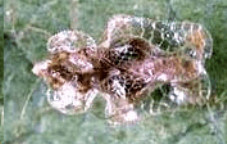
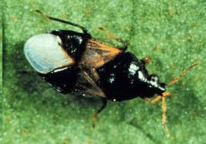
Lace bug photos, courtesy of John Wilson.
Last weekend at a picnic, we were inundated by a small insect, maybe 1/8″ long, that would bite people. Although they were called many things, some I can’t repeat here, the real name for these pests is lace bugs. There are common pests of a variety of ornamental trees and shrubs in Nebraska, but the most common one is the hackberry lace bug.
Lace bugs use their sucking mouthparts to feed on plant sap. Damage ranges from many small white spots or stipling on the leaves to distortion or complete destruction of plant tissue and leaves falling early. Some lace bugs feed on many different types of plants while others feed only on a narrow range or single species. For example, in addition to hackberry trees, the hackberry lace bug is frequently found on oak, linden and sycamore.
Adult lace bugs are about 1/8″ long x 1/16″ wide. They are somewhat rectangular in outline and have highly ornamented wings and a hood-like structure covering the head. The entire surface is covered with veins that look like lace. The nymphs are oval in outline and some species will be covered with long spines. Most lace bugs move rather slowly when disturbed but the hackberry lace bugs tend to drop from the leaves that are touched.
Lace bugs are usually detected when their damage to the leaves of host plants becomes evident. The nymphs and adults live on the lower surface of leaves and suck juices through slender, piercing mouthparts. This produces yellow or whitish spots on the upper surface of the leaf. As the insects feed, they deposit a hard, varnish-like excrement onto the leaf surface. These are called tar spots or resin spots. Once the damage is noticed, you can check for adults and nymphs by turning over affected leaves and looking on the under side of the leaf.
Most lace bugs spend the winter as eggs that hatch in early spring. There are usually two generations during a growing season. Often the numbers of insects and feeding damage early in the season is so small that feeding symptoms may not be noticed. Populations peak in late summer and results of their feeding can make plants unsightly.
Rarely do lace bugs do damage that permanently injures a plant and therefore rarely warrant control. This is good because trying to adequately treat a large tree would be expensive and is not practical. Also, lace bugs can fly and could reinfest a treated tree in a few days to a week, depending on the insecticide used. The exception is if they attack a young, newly transplanted tree or a tree that is under other stress. Then it may be feasible to treat a smaller tree to reduce the stress.
During the late summer, another small insect known as the minute pirate bug cause painful bites that seem out of proportion with their size.The minute pirate bug is similar in size to a lace bug, about 1/8-inch long, oval to triangular in shape, flattened and black with whitish markings on the back. Normally, they are predators and feed on insect eggs and small insects. They feed by impaling their prey with their short blunt beak and sucking the juices.
Minute pirate bugs are found throughout the summer in fields, woodlands, gardens and landscapes. In the late summer, they begin the unpleasant behavior of biting humans. They do not feed on blood or inject a venom or saliva.
People differ in their response to pirate bug bites. Some people have no reaction to the bite, but others have bites that swell like a mosquito bite or turn red. Because the bite is noticeable and the pirate bug doesn’t fly quickly, the victim is usually able to successfully smash the offending insect.
Control of minute pirate bugs is not practical. Repellents are generally not effective, although some people have found applying baby oil or suntan oil liberally to the skin may prevent some bites. For more information on either of these biting insects, contact your local UNL Extension office.

 Kat Country Hub
Recent Comments