Governor Ricketts State of the State Address


President Foley, Speaker Hadley, Members of the Legislature, Tribal Chairmen, Distinguished Guests, Friends, Fellow Nebraskans, and of course, our First Lady, my lovely wife Susanne, it’s great to be a part of the second session of the 104th Legislature.


Folks, we live in the best place in the world.  You have heard me say that before and I’ll continue to say it because it remains true.  The reason we live in the best place in the world is because of our people.


Nebraskans give to their communities.  We share a common set of principles.  We treat each other with dignity and respect.  And we care about each other.


I’m proud of the fact that Nebraska is one of the top states in the nation for volunteerism.  The kids of Cub Scout Pack 190 picked up trash on Highway 7 last year.


When the floods slammed DeWitt, I saw firsthand how the community pulled together—neighbors helping neighbors.  I met volunteers, like John Long from Omaha, who were cleaning houses with basements filled to the ceiling with mud and water.  Thank you John for joining us here today and for your service.


There is no better example of service than the heroes of our Nebraska National Guard.  They help their neighbors here at home and defend our freedom overseas.  Last year, I met Lt. Eric Otte and the members of the 192nd Law and Order Detachment as they were being deployed.  They were among the more than 150 Nebraska National Guard soldiers who were deployed last year.  I’m pleased to say that Lt. Otte and his soldiers all returned home safely last month.


We are so grateful to the Nebraskans who put themselves in harm’s way to defend our freedoms.  Sixty-one Nebraskans have been killed in action since 2003—12 from our National Guard.


We’ve also lost a Nebraska hero in the act of performing a humanitarian mission.  On May 12th last year, Marine Corps Helicopter Pilot and Kearney native Captain Dustin Lukasiewicz saved three people in Nepal on a rescue mission after an earthquake struck.  He was flying back to save more people when his helicopter crashed in the mountains.  He left behind a wife, a daughter and a son on the way.  He was known as Dusty to his friends and we salute his service.


Even if one of our best and brightest leaves Nebraska, their Nebraska spirit defines them.  Joe Lemm played High School Football in Beemer, graduated, and joined the Air Force.  After the service, he became a New York City cop.  When terrorists knocked down the Twin Towers, Lemm worked for weeks, even when off duty, with his fellow officers, digging through the rubble, looking for survivors.


After 9/11, being one of New York’s finest wasn’t enough service for Joe.  He joined the Air National Guard.  Last month, on his third combat deployment, this time in Afghanistan, he was killed near Bagram Air Force Base by a suicide bomber.  Joe’s mom Shirley is here.  We salute Joe’s service and your sacrifice.


Where do we get such people?  Thank God for Dusty and Joe and our Nebraska National Guard and for all the men and women who serve this country at home and abroad.


We lost another hero this spring, Omaha Police Officer Kerrie Orozco who was shot and killed while trying to apprehend a violent fugitive, leaving behind a new baby, a husband and two children.


Law enforcement officers have been receiving a lot of broad-brush criticism lately and it’s just not right.  They put on their blues every day to protect us.  Kerrie Orozco spent her time serving the families of Omaha as a volunteer coach and mentor in addition to being a police officer.  The community she patrolled was an extension of her family and she paid the ultimate sacrifice to protect them.  Here in the heartland, we appreciate Officer Orozco and all of the heroic police officers protecting us.  Officer’s Orozco’s husband, Hector, is here today.  We recognize you for your sacrifice.


On a lighter note, did you see the video of Deputy Sergeant Todd Volk of the Madison County Sheriff’s office?  He sped past an out-of-control truck, jumped out of his vehicle and leapt onto the moving semi in order to bring it safely to a stop.  To most of us, it looked like a scene from an action movie, but that was just real life for Sergeant Volk.  And have no fear, Sergeant Volk is here, can you stand up please!


Whether it’s cleaning up our highways, patrolling our streets, or serving overseas, our people are everyday heroes.


That’s why this is the best place in the world.  Nebraska is what America is supposed to be.


When it comes to public service, being a state senator is also a high and noble calling.  I am grateful for the sacrifices you and your families make to serve our fellow Nebraskans.  As I begin my second year as Governor, delivering my second state-of-the-state address, it feels like a family reunion and I’m not kidding.


Most of you know, I come from a big family and as kids I fought with my brothers and sister.  As adults, we still disagree on important topics, but I love them and I love working with them.  And I love the work we do here and working with all of you.


Sure, we’ve had our moments.  But we’ve accomplished great things together.


In the last session, we cut the growth in state spending nearly in half, from 6.5 percent in the last budget to 3.5 percent in our current budget.  I want to thank Chairman Mello and the Appropriations Committee for all their fine work.


We also enacted the nurse practitioner bill to increase access to healthcare—particularly in our rural areas.


Together we addressed the cliff effect for childcare with Senator Tanya Cook’s bill.


And Senator Kathy Campbell and I reached an agreement to increase Aid to Dependent Children in a responsible way.  These are just a few of the many bills on which we found common ground.


Sometimes there was a natural tension.  But it’s an honor to be a part of our work here in our state capitol.  Thank you for your dedication, for the long hours you put in, and for the service you provide this state.


Because of our accomplishments together and the strength and character of our people, I am proud to report today that the State of our State is strong.


Forbes Magazine rates us the third most business-friendly state.  Health.com says Nebraska is among the ten healthiest states and Livability.com says Lincoln and Omaha are among the most livable cities in America.  Meanwhile Nebraska’s government enjoys a Triple-A rating from S&P.  We are in a strong position, but we also have our challenges.  Those challenges pose opportunities for us to work together to respond and Grow Nebraska.


Agriculture is our largest industry—representing nearly 25 percent of the state economy.  But our farm economy is facing challenges.


Right now, commodity prices are flat or down.  Corn is around $3.50 a bushel, a significant drop from the $8 a bushel price in 2012.  Cattle prices are down 17 percent over the last year.


And while farm incomes are subject to fluctuations each year, property taxes go up and up.  Last year, I told you about Roger Brandt, who is a farmer in Wayne County.  His assessments for three parcels of farmland increased between 36-to-nearly-50 percent in just one year.


We checked in with Roger on this year’s property taxes and they went up again, nearly $2700 and that’s after the property tax credit relief we passed last year.  While commodity prices stayed flat or declined, his property taxes rose nearly 10 percent.


Folks, those increases put our farmers and ranchers under tremendous pressure and in turn, the largest part of our state’s economy.


Last year, we successfully worked together to provide $408 million in direct dollar-for-dollar property tax relief to Nebraskans through the Property Tax Credit Relief Fund.  This year, we must make structural changes to property taxes.


Working with Chairwoman Kate Sullivan, Chairman Mike Gloor, and their committees, we have crafted a proposal for property tax relief.  You will see in the bill that we propose to tighten spending and levy limits and we limit the statewide aggregate growth of agricultural property valuations to three percent.


Senators, I look forward to working with you to bring relief to our taxpayers.  We must prioritize property tax relief, it’s my number one priority this year.


We’ve talked about growing Nebraska.  And indeed, we grew our population faster than any other state around us except Colorado and added 13,000 people.


But our economic growth rate is sluggish.  We are 28th in the nation in employment growth. Our rankings for GDP and personal income growth are also in the middle of the pack.  There is nothing competitive about being in the middle of the pack.


We need to grow Nebraska’s economy, create more and better paying jobs, keep our kids and grandkids here, and attract people from all over the country to come and make Nebraska their home.  Our three largest industries are agriculture, manufacturing, and tourism and they all require a strong transportation infrastructure to expand.


We can spur our economic growth by ensuring we have 21st-century roads and bridges to grow our industries.


Once again, we’ve been working with you to address this critical need.  Over the last several months, Chairman Smith and Department of Roads Director Kyle Schneweis have traveled the state, working on ideas on how we can accelerate infrastructure investment.


Last week, we announced a proposal for a transportation infrastructure bank to speed up expressway construction, improve county bridges, and assist companies with economic development.  Also included are new tools to increase the efficiency of our construction process.  Our businesses transport our goods and services.  Our farmers and ranchers deliver the food to feed our world on our roads and bridges.  We get to work each day on our highways.  We drive our children to school over our county bridges.  Let’s help local leaders keep and attract businesses.  Let’s pass the transportation infrastructure bank.


As I said, S&P gives us a Triple-A rating and we have a very strong financial position at the state. However, we can’t rest on our laurels.  The Forecasting Board revised our revenue forecast downward by $154 million.


We have to work together to manage taxpayer dollars wisely.  The budget I’m proposing manages this shortfall by tightening our belts in the state agencies, returning re-appropriated funds to the state’s general fund, and transferring money from the banking and insurance cash funds into the general fund.  As a result, no money will be taken from the cash reserve—and none is needed—to fund ongoing operations.


We must also make government work for the people.


We all know in 2014, before I took office, the Omaha World-Herald broke the story of dozens of convicted criminals, many of them violent, being released from prison early because of errors in sentencing calculations at the Department of Corrections.


I know this is a topic everyone here cares about deeply.  The Legislature worked hard on this issue since it came to light.  I appreciate your dedication to the safety of Nebraskans.


Over the last year, the three branches of government have worked together on issues such as LB605 from the Council of State Governments, dealing with sentencing and corrections reform.


Last year, we brought in Director Scott Frakes to lead the Department of Corrections.  Director Frakes is bringing about a culture change to one of accountability and excellence.


To address mistakes in inmate releases, he is instituting a new automated system to perform sentence calculations.


We also know that further investment is needed.  In November, Director Frakes unveiled the first phase of his strategic plan—including a $26 million investment in the Community Corrections Center in Lincoln.


This investment will allow us to expand our capacity for re-entry programming.  We will provide job training, work release, and counseling.  Our goal is helping offenders avoid becoming repeat customers and ultimately reduce recidivism.


We must make this wise investment.


One of the biggest long-term risks we face to the budget is Medicaid expansion.  This body has wisely rejected Medicaid expansion three times in the past three years because it is an unreasonable risk to Nebraska taxpayers.  The most recent iteration of expansion would have cost Nebraska taxpayers $158 million over six years.


Medicaid has already grown from 2.9 percent of Nebraska’s budget when it started to where it is today: 19 percent of our budget and growing.  This government entitlement crowds out investments in tax relief, education, and roads—things we need to grow our state.


We also know that we cannot trust the federal government to keep the commitments it makes when it comes to spending.  A 90 percent federal match is not sustainable in the federal government budget.


When the federal budget gets tight, or priorities change in Washington, that commitment will disappear.  History shows, the federal government changes the rules at any time.  For example, the federal government promised to pay 40 percent of the cost of the expansion of special education for our schools.  Today, the federal contribution is less than 20 percent.


From denying people their choice of doctor, to rising premiums and now this unrealistic promise of federal matching dollars, Obamacare is an example of government that does not work.


Government needs to work for people and government service is a noble calling as well.  We have many great people in state government who show up to work every day to help our fellow citizens.


From the cabinet to our frontline teams, we have been able to make great strides over the past year on making government work—and helping with the business of life—for our people.  I want to highlight some of the great work of our people starting with the Nebraska Department of Health and Human Services (DHHS).  I’m proud of the progress that the team at DHHS is making under the leadership of CEO Courtney Phillips.


We are working to ensure a new level of transparency and accountability for taxpayers.  Our people are dedicated to giving vulnerable individuals the best possible experience in receiving assistance and creating a more customer-centric organization.


One example is ACCESSNebraska that serves our fellow Nebraskans who need our help—from nutrition, to child care, to assistance with energy bills.


As I traveled the state, I used to hear a lot of complaints about ACCESSNebraska. The average call wait time in August 2014 was almost 24 minutes.  Now, because of process improvements, the average wait time for the last three months is under five minutes.


Imagine being a low-income Nebraskan with a prepaid phone with 45 minutes on it and then you had to spend over half those minutes waiting on hold.  What does that do to your quality of life?  Not only have we reduced the average wait time but we also have improved the accuracy rate.


Nebraska’s national rank in processing SNAP applications was 48 out of 53 at the beginning of my term and now we are up to 32.  Now, nobody is happy about being in the middle of the pack, but we are showing improvement.  We are now 21st in payment accuracy and 10th for denial accuracy.  At the end of 2014, the average time to process applications was 40.9 days and now our average is 11.5 days.


Members of the ACCESSNebraska team are here with us today.  Please recognize them for all their efforts to improve this important system.


We have seen improvements in other areas as well.  In 2015, for the first time ever, our work in the child welfare system exceeded all six federal standards.  Three years ago we only met two of those six standards.


Other agencies have been innovating as well to make government more customer-focused.  The Department of Labor launched a first-in-the-nation reemployment program to help our state’s job seekers connect more quickly with good-paying jobs.  Individuals receiving benefits now participate in the program, which includes job coaching and creating a resume that is searchable by potential employers.  This helps give our job seekers a leg up.


Alan Holman of Lincoln was helped by our reemployment program to get a job at Sirius Computer Solutions.  Alan, his wife Becky, and his boss Kevin Langford are here with us today.  Alan and Becky congratulations.  And Kevin, thank you for giving Alan some time off to be here today.


Since I took office, our state agencies have made it a priority to identify cost reductions.  Chief Information Officer Ed Toner found $5 million in cost savings for taxpayers.


We are now able to pass along an additional $3.3 million in roads funding annually to cities and counties.


In every agency of state government, we’ve worked to create a customer-focused culture of accountability and excellence.  We are embracing new ideas to make government work and to make the business of life happen for our citizens.


In the session ahead, I very much look forward to working with each of you to take advantage of the opportunities we have to meet the challenges head on and Grow Nebraska.


Let’s work together to:


  • Deliver property tax relief;
  • Grow Nebraska with a transportation infrastructure bank;
  • Manage our budgets by controlling spending; and
  • Continue to reform our prison system and invest in community corrections.


This session is also important for another reason, 11 members of the Unicameral are closing this chapter of their public service.


Among those leaving is Speaker Hadley.  Mr. Speaker, I value our friendship, your leadership and your advice and counsel not only regarding the work of the Legislature but your invaluable advice for the Chicago Cubs.  On behalf of the people of Nebraska, thank you.


And ten more of your colleagues are leaving at the end of the year.  Can you please stand up so that we may recognize you?


  • Senator Dave Bloomfield
  • Senator Kathy Campbell
  • Senator Colby Coash
  • Senator Tanya Cook
  • Senator Mike Gloor
  • Senator Ken Haar
  • Senator Heath Mello
  • Senator Beau McCoy
  • Senator Ken Schilz
  • Senator Kate Sullivan


Once again, our family here in the state capitol will have its moments this session—no doubt.  But I know, when the ice thaws, the snow melts, spring arrives and sports fans—and Speaker Hadley—turn to baseball, we will have accomplished much in this session for the people we represent.


The people of Nebraska are good, hard-working and courageous people.  They are the best of America and so we will give them our best.  God Bless you, God Bless America, and God Bless the great State of Nebraska.


A New Era for the National Guard


By Governor Pete Ricketts

Since 1854, the Nebraska National Guard has played a pivotal role in helping keep Nebraska safe and secure.  Through the years, members of the guard have deployed overseas, supported local law enforcement, and provided disaster relief among many other important duties.  For thousands of Nebraskans, the Nebraska National Guard has been a way to serve our state and country either full-time or while building a career in another field.


A couple of weeks ago, I joined Major General Daryl Bohac, Nebraska’s adjutant general, to announce the first major realignment of the Nebraska Army National Guard in 20 years.  These changes are the beginning of an exciting new era for the Nebraska Army National Guard, and will expand missions led by the guard in Central Nebraska and the Panhandle.  The restructuring will create new opportunities for roughly 1,100, or about one in three, Nebraska Army National Guard soldiers located in units in 16 Nebraska communities across the state.  This realignment is a part of a much larger national reorganization of the Army National Guard.


Realigning the National Guard in Nebraska is critical to ensuring that the guard’s force meets 21st-century priorities.  Over the next three years, the guard will dramatically expand opportunities for Nebraskans seeking to serve in the guard.  For example, the guard will add new military police, field maintenance, and distribution units in Central and Western Nebraska.  Previously, Nebraskans in these regions only had the option to serve in transportation companies – now, they’ll have more choices than ever before.  Expanded career opportunities are great not only for recruitment and retainment within the guard, but they will also enhance response readiness for state and national emergencies.


This realignment will affect units in Lincoln, Omaha, Beatrice, Columbus, York, Hastings, Kearney, Grand Island, Mead, O’Neill, Broken Bow, North Platte, McCook, Sidney, Scottsbluff, and Chadron.  During this realignment, existing armory and readiness centers are expected to remain open.  Maj. Gen. Bohac noted at the announcement that the force structure changes give the Nebraska Army National Guard the rare opportunity to reorganize itself to provide greater opportunities for soldiers to receive training, offer improved promotion opportunities closer to home, and better serve the citizens of our state.


As we celebrate the 161st anniversary of the Nebraska National Guard during this holiday season, let’s remember the service and continued sacrifice of the many Army and Air Guard members and veterans.  During this season, we pray for the safe return of those serving overseas.  I also encourage you to take the time to stop and thank the guard’s veterans for their service to our state.  As always, if you would like to share your thoughts or feedback on this topic or any other, you are welcome to email my office at pete.ricketts@nebraska.gov or call 402-471-2244.


Expanding Education Opportunities


By Governor Pete Ricketts

As I mentioned in last week’s column, I presented my budget recommendations and key initiatives about how we can Grow Nebraska in my first State of the State address to the Unicameral on January 22nd. This year, my priorities will focus on creating jobs, cutting taxes, easing regulatory burdens, and expanding educational opportunities. This column focuses on the second two priorities that I laid out in my remarks: easing regulatory burdens and expanding educational opportunities.


When we get a property tax bill we can see exactly how much we are paying. The cost of regulation, however, is hidden, but it is a job killer all the same. As governor, I will stand up to the overregulation forced on us by Washington, D.C.


Whether it is new health care mandates on employers, EPA overreach on carbon emissions and the Waters of the US Washington just does not get it.


Here in Nebraska, we want to set a good example. I will be asking all of my state agency directors to make it a priority to innovate ways to reduce regulatory burdens and bureaucratic delays. Proper regulation protects our health and safety. Overregulation delays progress and growth. We can do better and we will.


As we seek to create jobs, slow the growth of government, reduce taxes, and fight burdensome regulations, we must also continue to strengthen our education system. While balancing our budget, we must ensure we put a priority on proper school funding and improving educational outcomes.


In particular, I will focus on career and vocational training. There are great career opportunities all across the state. I visited Ash Grove Cement in Louisville and they were telling me if you get a 2-year electrician’s degree out of high school, you will start working for them at $22 or $23 per hour. Stay there a year and pass two tests and you will be making $28 an hour. That’s a 21-year-old making $56,000 a year plus full benefits and the start of a great career.


Every manufacturer I have talked to has said they can’t find enough skilled labor, and that is a barrier to expanding. To address this, I propose an investment in innovation.


My budget includes funding a pilot program with an investment of $250,000 each year to form a public-private partnership to create a career and vocational training program. Good-paying jobs in the skilled labor force, agriculture, and manufacturing are a great option for our young people.


As Nebraskans, we have a tradition of honoring the men and women who serve our country. My budget recommendation also includes an additional $120,000 per year for a total of more than $488,000 of tuition assistance for the patriots who serve in the Nebraska National Guard. We need to help them further their education as well.


As we work together, I want you to know about the culture we are fostering in my administration. Every day, I want my team to ask a couple of questions: How can I serve the people of Nebraska better today? What can we do to make Nebraska a place people want to be and grow our state?


If you have any questions of your own, you are welcome to contact my office at 402-471-2244 or pete.ricketts@nebraska.gov. Working together with your help and input, we can Grow Nebraska for the next generation.

Governor Pete Ricketts

Governor Pete Ricketts

Governor Ricketts State of the State


GOVERNOR RICKETTS’ STATE OF THE STATE REMARKS


“There is one consistent message I have heard in every corner of the state: property taxes are too high.”


“This property tax relief will help all Nebraskans: homeowners, small business owners, and our farmers and ranchers.”


“…together, we can take important steps toward providing tax relief.”


Lincoln – Lincoln – President Foley, Speaker Hadley, Members of the Legislature, Tribal Chairmen, Distinguished Guests, Friends, and Fellow Nebraskans.


Congratulations once again on the commencement of the 104th Nebraska Legislature. I want to commend all of you for your willingness to serve your constituents and our great state. I recognize your personal sacrifice as well your commitment to public service, which is a high and noble calling.


I look forward to working together in a spirit of collaboration, which is of course the tradition of Nebraska’s unique non-partisan institution.


Our future success as a state depends upon our ability to work together, and I look forward to continuing to work with each and every one of you.


Speaker Hadley, it’s a pleasure to work with you and I look forward to what we can do for this state. Congratulations on being chosen to serve as Speaker. The confidence your colleagues have in you speaks volumes and Nebraska is grateful for your dedication.


I also want to take a moment to recognize the Nebraska National Guard. The role of these men and women, who are truly citizen soldiers, has never been more important, has never put more pressure on families, and has never been more difficult or dangerous. We live in a dangerous world. They not only protect us by deploying to foreign regions, but they keep us safe here at home in situations like the tornados in Pilger and Beaver Crossing. We are grateful for their service and sacrifice.


Nebraska is a special place. We are more than just lines on a map. We are bound together by more than just our common geography. It’s a culture, it’s a way of life. It’s the way we treat each other with dignity, respect, and civility.


We have a great state, built by our ancestors who made Nebraska home for themselves and for their children and grandchildren. Like our ancestors before us, we have a duty to create an even better future for our kids and grandkids. And just as our ancestors before us, we have a duty to Grow Nebraska.


I’m excited to join you to take advantage of our opportunities. I am encouraged by the discussions I have had with many of you about how we Grow Nebraska.


As citizen legislators, you bring all of your life experiences to our work. I too have outside experiences, and I promised the people of Nebraska I would put my business experience to work for the state. To that end, I have worked to develop a budget, a blueprint that slows the growth of spending, provides for property tax relief, has room to make improvements in critical areas like corrections and HHS, and also funds the essential services of state government.


Let me take a moment to talk about my philosophy on the cash reserve. My budget recommendation for the next biennium does not draw down the reserves. However, right now, we have too much money there. My belief is we should work together to return more of that to the taxpayers. The remaining reserves should only be used for emergencies or one-time critical expenses.


It is easy to view a government budget as a collection of numbers in rows and columns next to agencies and programs, but behind the numbers are people’s lives. We must be mindful that every dollar is precious. The dollars that fund our budgets are dollars earned by hardworking Nebraskans. We must also be mindful that the agencies and programs are designed to serve our citizens—and many of them are people in need.


This session, we will meet, we will debate, and we will even compromise, as we set about to fund the important services for the people we represent. That is our job and we will do it with dedication and commitment.


Today, I am privileged to report on the condition of Nebraska. It should come as no surprise that I believe the state of Nebraska to be strong.


Here in the heartland we have major military installations, academic research centers, and we are at the heart of the nation’s agricultural system. Nebraska is on the front lines of bioterrorism preparedness. At the University of Nebraska Medical Center our medical professionals have made national headlines with their success responding to the Ebola outbreak. I want to recognize the members of that team who are here with us today for their success and bravery: Dr. Dan Johnson and nurses Kate Boulter and Shelly Schwedhelm. Thank you!


Our people, everyday heroes all across Nebraska, are the reason the state of our state is so strong. From teachers that prepare our kids for an ever-changing world to the medical professionals at UNMC treating Ebola patients. From the law enforcement officers and firefighters who put themselves at risk each and every day to farm families that feed the world. From the volunteers who build our communities to the crews at Offutt Air Force Base and our military families that answer the call. These Nebraskans love to serve and they make our state strong.


I have long said that Nebraska’s greatest resource is our people. I know from personal experience when you hire a Nebraskan you hire someone who has a great work ethic, is well educated, loyal, and will help your business succeed.


As I have said before: Nebraska is what America is supposed to be.


I traveled Nebraska from Chadron to Falls City and from Norfolk to Ogallala. I have listened to the people of Nebraska. I was privileged in my travels to connect with old friends like Senators Lydia Brasch, Bob Krist, Curt Friesen, and Jim Smith.


I also appreciated new friends, who supported me like Senators Dan Hughes and John Kuehn who served on my Ag Advisory Committee, and Senator Dave Bloomfield who was supportive throughout Northeast Nebraska.


Senators Campbell and Mello were gracious to meet with me about issues, and Senator Bolz came to a Lincoln event we had with Lieutenant Governor Mike Foley.


This budget, which is informed by my discussions with many of you—and by the fact that I grew up here—represents not only the priorities of Nebraskans, but their hopes for our shared future.


I’m eager to work with you on four major priorities to Grow Nebraska: First, strengthening our economy and creating jobs; second, reducing taxes; third, ease regulatory burdens; and additionally, expanding educational opportunities. All of these priorities are interconnected and are reflected in my budget recommendation.


Because it is so important that we boost our economic engine and create jobs, one of my administration’s first steps was to conduct a national job search for a new Director of Economic Development. I’m proud to have Brenda Hicks-Sorensen, join my team. Her expertise will help us realize the untapped potential in our state, and we will be well-served with her track record of recruiting businesses. We want the world to know Nebraska welcomes business investment and has good jobs in great communities, and Brenda will help get the message out.


But creating jobs is more than just a marketing focus or incentives. We need to evaluate what we are doing to encourage small business to expand and grow. We need to have a plan to attract business investment as well as business relocations. We need to be strategic and aggressive about trade opportunities.


And there is no better place to start expanding export opportunities than with agriculture.


Our farmers and ranchers are feeding the world. According to Ronnie Green at the University of Nebraska, by 2050 there will be two billion more people on the face of this earth and because of rising standards of living, we will have to produce one hundred percent more food. Seventy percent of that will have to come from productivity and innovation. Our farmers and ranchers are the most productive and innovative in the world. Nebraska is number one in cattle on feed, number two in ethanol production, number three in corn production, and we are the fourth largest state for overall agriculture production. And I look forward to working with Senator Johnson and the Agriculture Committee to expand upon these successes.


This budget provides additional funds for more export trade missions in both the Department of Economic Development and the Department of Agriculture, and under my administration these departments will work more closely together than ever before.


Job creation, in part, depends on a tax climate that encourages growth. We have a lot of work to do to stay competitive with neighboring states. And staying competitive is something that is often overlooked when we talk about jobs. We need to attract new individuals and families to Nebraska.


We have a great way of life and great jobs to offer. Now, we need to highlight that and invite people to make a home in Nebraska.  Unemployment in Nebraska is about 3 percent, which is a blessing and a challenge. A recent State Chamber study said retaining a skilled workforce is one of the top concerns of our business leaders. Wehave long discussed the problem of brain drain, and I can tell you as a dad that I want all roads to lead back to Nebraska. To do that we need to remove the obstacles.


Which is just one reason why we must reduce taxes.


According to one national business news network, we are the third overall highest taxed state behind only California and New York. Think about that for a second. We can do better.


Our high tax reality does not just hit the wallets of our citizens—it creates a reputation. It discourages new business investment. Our high taxes also discourage people from choosing Nebraska as a place to live, work and raise a family.


There is one consistent message I have heard in every corner of the state: property taxes are too high. My budget adds $60 million each year to the property tax credit relief fund—an increase of nearly 43 percent—for a grand total of $400 million in property tax relief this biennium. This property tax relief will help all Nebraskans: homeowners, small business owners, and our farmers and ranchers.


An example of someone we can help is Roger Brandt. Roger is a farmer from Carroll up in Wayne County who is here with us today. Last spring, Roger showed me his tax assessments for the three pieces of property he owns. His assessments increased between 36 to nearly 50 percent for each parcel in just one year. That is not sustainable. That is why I also want to work with you to reduce the ag land valuation. I have funded a phased in approach in my budget to reduce valuations from 75% to 65%.


We did not get to be a high tax state overnight, and we won’t get taxes down overnight either. But together, we can take important steps toward providing tax relief.


I do want to take a minute to talk about funding our priorities. One of the most important things we do in government is take care of our most vulnerable citizens. As elected officials we give a voice to the voiceless. In Nebraska, we can—we must—do better.


My administration is conducting a national job search for a new CEO of Health and Human Services. I am looking for a transformational leader to reform the culture. State government needs to work for the children who are in the care of the state, for individuals who are in state facilities, and for all those who rely on government services.


We need a culture in our state agencies that is people-centric. The people who need our help do not fit neatly into the silos we have created. We need a system that cares for the entire person, helps them reach their full potential and if possible helps them live a life free of public assistance.


There are people who will continue to need our help. We must serve them effectively and with dignity and respect. When we start getting better outcomes for people, our costs will come down too.


Many people who receive services just need a hand up to get back on their feet. We have to prevent government from getting in their way. Last year, I met Susanne Shald in McCook. Susanne is widowed and her three kids receive health insurance through Medicaid. She works hard and is intent on teaching her kids a strong work ethic like her father taught her. So when her 16-year-old daughter got a job and was informed that if she earned more than $6,000 a year, she would lose her health insurance, Susanne was infuriated. I don’t blame her. Susanne and her family have joined me here today. Susanne and her children put faces on our need for a common sense approach in government—one that does not create disincentives for people and families to work.


Next, it is time to pursue comprehensive reform in our corrections system, another department in need of a cultural change. Scott Frakes will be joining my administration as the new Director of the Department of Corrections. He brings over 32 years of experience starting as a corrections officer and working through the uniformed ranks before moving into management. I am confident that he will help chart a new course for this agency.


Inmates released early by mistake threaten not only the public safety, but also the public’s trust in their government. Nobody in corrections wanted these mistakes to occur, but they did, and we have got to do better.


Under Director Frakes, we will create a culture of accountability, common sense, and excellence. The Department of Corrections will seek to improve its rehabilitation and reentry programs to address recidivism. We will immediately evaluate our short term and long term needs and set out on a course of reform to this system.


This budget leaves room to address immediate reform needs in corrections.


Many of you here today have worked to tackle the issues in corrections. There is no branch of government that has cornered the market on good ideas or solutions for this issue. We have to work together, executive, legislative, and judicial for comprehensive reform that includes addressing sentencing and good time laws, mental health, and management of these facilities. I will work with Scott Frakes to get a full picture of what we need to do; and I look forward to sitting down with the leadership of this body to set a time table we can agree on to make substantive changes.


This budget holds the growth of our state spending to a little more than 3 percent over the next 2 years. That is a slower rate of growth than the approximately 6.5 percent in the last biennium.


We will fund our priorities, but in a way that is sustainable. We grow our revenues about 5 percent a year on average. If we can restrain government’s growth, we can afford to put money back in the pockets of taxpayers.  In turn, taxpayers will be able to afford more goods and services, businesses will expand and we will Grow Nebraska.


Another way I have taken action to drive operational excellence in every corner of state agencies is a private sector solution to create the position of Chief Operating Officer. Ihave hired Felix Davidson, United States Marine Corps Captain and a business executive with a proven track record of success in change management and process improvement.


I have one more tax relief proposal—an important one. Like many of you, I believe we need to eliminate the state income taxes on the retirement benefits of our military families. I have left room in this budget package to work with Chairman Gloor and the Revenue Committee to give our veterans relief. Chairman Gloor, I thank you for your service in the U.S. Air Force, and I know you understand how important it is to take care of our veterans. From the crews at Offutt Air Force Base to the National Guard Armory in Scottsbluff, we cannot thank our men and women in uniform enough, and we do not want to lose these treasured individuals to other states.


Besides high taxes and lost talent, our business leaders say overregulation is a top concern. We all want clean air, clean water, and safe working conditions, but we must also apply common sense so that we do not create barriers for our businesses creating jobs.


When we get our property tax bill we can see exactly how much we are paying. The cost of regulation, however, is hidden—but it’s a job killer all the same. As governor, I will stand up to the overregulation forced on us by Washington.

Whether it is new health care mandates on employers, EPA overreach on carbon emissions and the Waters of the US, or the delay of the Keystone XL pipeline, Washington just does not get it.


I have urged Congress and President Obama to swiftly approve the Keystone XL pipeline. It will bring much-needed tax revenue to Nebraska counties not only during construction, but for years to come.


And back here at home, we want to set a good example. I will be asking all of my state agency directors to make it a priority to innovate ways to reduce regulatory burdens and bureaucratic delays. Proper regulation protects our health and safety. Overregulation delays progress and growth. We can do better and we will.


As we seek to create jobs, slow the growth of government, reduce taxes and fight burdensome regulations, we must also continue to strengthen our education system.


As we balance our budget, we must ensure we put a priority on proper school funding and improving educational outcomes.


In particular I have talked a lot about career and vocational training. Every manufacturer I have talked to has said they cannot find enough skilled labor, and that is a barrier to expanding. To address this I propose an investment in innovation.


My budget includes funding a pilot program—$250,000 each year—to form a public-private partnership to create a career and vocational training program. Good-paying jobs in the skilled labor force, agriculture, and manufacturing are a great option for our young people. I visited Ash Grove Cement in Louisville and they were telling me if you get at 2-year electrician’s degree out of high school, you will start working for them at $22 or $23 per hour. Stay there a year and pass 2 tests and you will be making $28 an hour. Now think about that, that’s a 21-year-old making $56,000 a year plus full benefits. That’s the start of a great career.


As I mentioned before, we honor the service of our national guard. My budget recommendation also includes an additional $120,000 per year for a total of more than $488,000 of tuition assistance for the patriots who serve in the Nebraska National Guard. We need to help them further their education as well.


As we work together, I want you to know about the culture we are fostering in my administration. Every day, I want my team to ask a couple of questions: How can I serve the people of Nebraska better today? As well as, what can we do to make Nebraska a place people want to be?


While many of us in this chamber have differing political philosophies or come from different ends of the state, I know we are united. We are united in our desire to make Nebraska a better place for our communities and for our children and grandchildren. We are united in our desire to make Nebraska a place where people want to be.


From the Native Americans who nurtured our rich land; to the pioneer homesteaders; to the founders of our great businesses, universities, farms and ranches, our ancestors built more than a state.


They built a community that reflects the best of America.  Our ancestors made sacrifices for future generations, for the greater good of Nebraska. And so we too will focus on the future.


We will harness the spirit of our UNMC heroes and all the nurses and doctors across the state.


We will call upon the dedication of police officers and firefighters in Nebraska’s cities and towns.


We will harness the determination of Roger Brandt and Nebraska’s Veterans.


And we will call upon the hard work and aspirations of Susanne Shald and her family and all of the hard working families across Nebraska.


We will work together fueled by their strength and acting on their behalf. We will Grow Nebraska.


Thank you. God Bless you and God Bless the people of this great state.


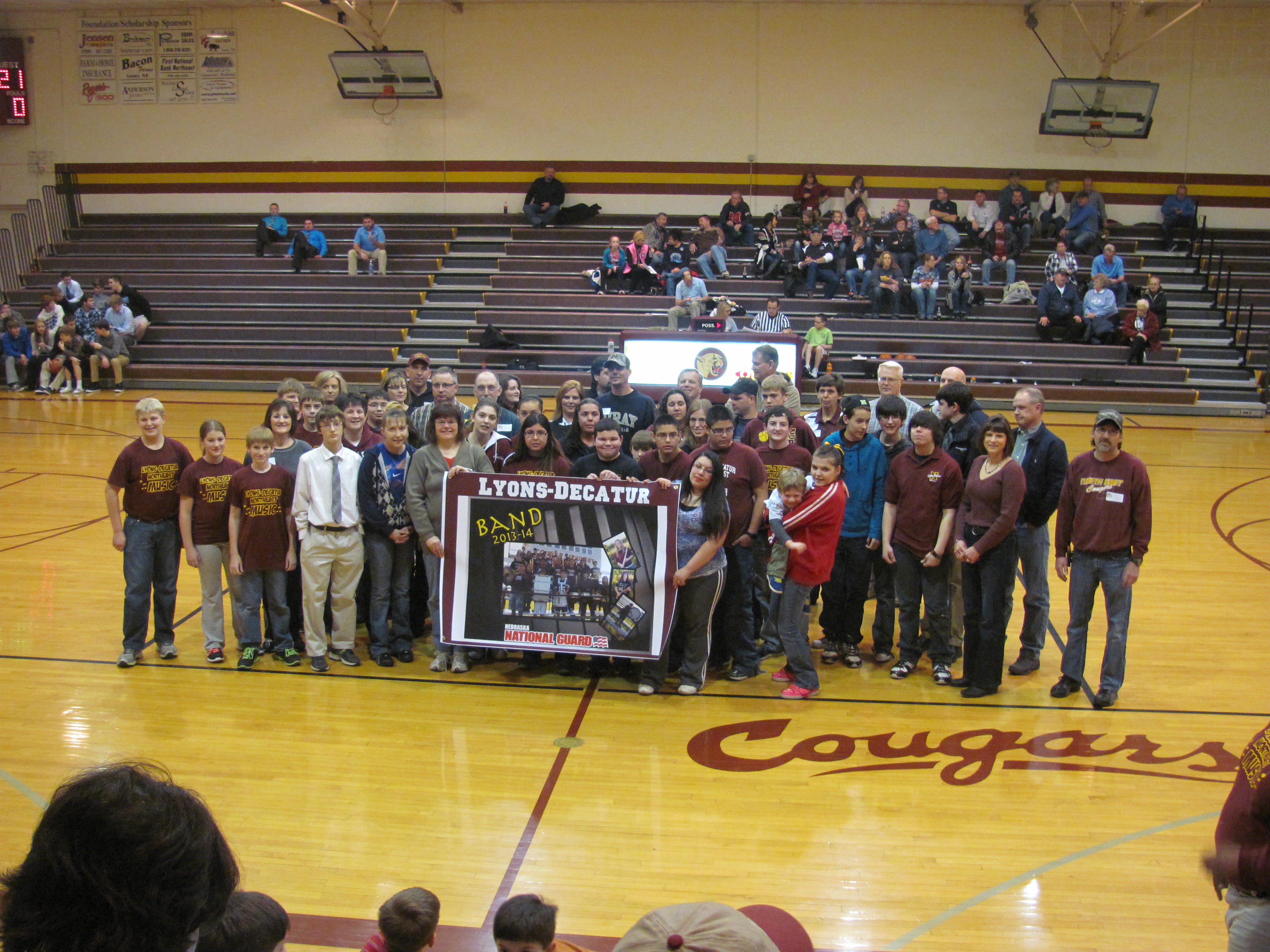
Love the Pep Band Parents


A very proud group at Parents Night at Lyons-Decatur Northeast. Photo Courtesy of LDNE.

A very proud group at Parents Night at Lyons-Decatur Northeast. Photo Courtesy of LDNE.


Got to love them Pep Band parents!

With all the love and support they bring, the Pep Band students wanted to show their love and appreciation for them and have a Pep Band parents night, on Tuesday, January 21, 2014.

Lots of love was shown with flowers, pop, candy, and just some good old fashion hugs and kisses. And that night the Pep Band was surprised to see their new banner that was donated by the National Guard. We thank all the parents for your love and support through everything we do. Also we want to give a big thanks to the Nebraska National Guard that graciously donated the wonderful banner, which was designed by Mrs. Seagren’s  graphic design class. Thank you again to all the parents and the Nebraska National Guard!