When it Rains, it Pours!


Rachel Wise, District 3, Nebraska State Board of Education (May, 2016)

As I am writing this article, I am looking out the window at the rain—again! Downpour is a good analogy for how I felt about the workload this past month with the State Board of Education! It was difficult to trim down a summary of the workload to just a page—so this month there are three major topics that I would like to touch base on. All three of these topics are important to the State Board of Education, to our schools and to ensure continued high-quality public education in Nebraska!

First, I want to touch base on standards, again! A review of the academic standards in science is now underway at the Nebraska Department of Education. As stated in previous articles, the primary authors of Nebraska standards are Nebraska teachers—elementary teachers, secondary teachers and faculty from community colleges, state colleges and universities. Nebraska’s standards development process includes a review of standards from other states and national standards before identifying broad standards, grade level standards and curricular indicators. Local school districts are responsible for developing their local curriculum based on state standards and for adopting appropriate instructional materials. The first step of the process started with a comparison of current Nebraska science standards with national standards including as the Next Generation Science Standards. This analysis provides the teacher-led writing team with good reference information as they start with the process for Nebraska. As a part of the standards update, a State Board committee participated in a science experiment. Needless to say, we did not blow up the Nebraska State Office Building!

Second topic: Nebraska State Assessments (NeSA), the statewide tests that look at student progress in writing, reading, math and science. As stated in previous articles, Nebraska had technical difficulties this year with just online writing. With changes in federal and state law and given the technical issues in writing, the State Board in June will recommend some changes for assessment in the 2016/2017 school year. The vision for assessment in 2017 and beyond will be designed with input from many stakeholders across the state. The vision will also incorporate the proposed changes in assessment at the federal level and the catalysts at the state level. One state level catalyst for change was the passage of LB 930, which requires schools to use a college entrance exam in lieu of state tests at 11th grade. In June, I will spend more time on the proposed assessment changes.

The third topic: strategic planning. In May, the State Board moved forward, spending time on a draft of the preliminary goals for the strategic plan. This plan will help guide the work of the State Board and the Nebraska Department of Education. During the May meeting, the State Board received an in-depth overview on federal changes. Elements of the new federal law—Every Student Succeeds Act—will be incorporated into the strategic plan. The new federal law is expected to place most of the responsibilities back into the hands of states and local schools districts. The federal changes will be aligned with our new strategic plan to provide direction for education in Nebraska. After reaching out for additional input on our goals, the focus will turn to setting specific measureable sub goals, targets and an implementation plan. I will write more about this topic in August.

This article represents my personal view, not that of the State Board of Education or my role as president. Feel free to contact me at rachel.wise@nebraska.gov. Search the Nebraska Department of Education website at http://www.education.ne.gov to learn more about education in our state.
 

Thinking About the Cost of College


Rachel Wise, District 3, Nebraska State Board of Education (April, 2016)

One of the highlights of serving on the Nebraska State Board of Education is attending a variety of activities and statewide events as well as those happening in District 3. On March 29th, I had the opportunity to attend two events that will continue to shape my thinking as a member of the State Board.

First, I attended a presentation and panel discussion hosted by the Buffett Early Childhood Institute. The theme—Nebraska should be the best state in the country for babies to grow up—an important goal that we should all strive to reach. The Buffett Early Childhood Institute shared a study conducted by Gallup that included a survey of more than 7,100 Nebraska residents, representing a wide array of citizens from across the state. The key findings showed Nebraskans: recognize the importance of early care and education; do not believe high-quality early care is available or affordable for all Nebraska families; report deficiencies in early care and education both in their area and in the state; want a greater investment in quality early care and education; and, support early care and education for children most in need. One of my “aha” moments was comparing the cost of early childhood care to the cost of college. Some families spend more per year on early child care than others do on the annual tuition of a student attending a public college or university in Nebraska. More information can be found at buffettinstitute.nebraska.edu.

The second event on March 29th was a presentation by University of Nebraska President Hank Bounds to Lincoln High School juniors on a new initiative called “Commit to Complete.” The purpose of this university-wide initiative is to help students understand that they can make college more affordable by graduating in four years. Estimates showed that college tuition debt increased 20 percent for every year of college beyond 4 years. President Bounds also noted that few students who attend college more than six years actually finish a degree. President Bounds encouraged students to visit with an advisor, make a plan, to stay on track and graduate sooner. He also encouraged students to take Advanced Placement classes and taking dual credit courses while in high school and to decide on a college major as soon as possible. He said the University of Nebraska is committed to student success, to making advisors available to help guide students to completing college in four years and to ensuring that classes are available when students need to take them. To learn more, go to committocomplete.com.

At the April Nebraska State Board of Education meeting, Commissioner Blomstedt provided an overview and update on Accountability for a Quality Education System Today and Tomorrow (AQuESTT), which is Nebraska’s accountability system. The Nebraska Department of Education will hold an April 18th and 19th conference to help schools across the state continue to improve by focusing on every student every day and by providing quality educational experiences aligned with a system of accountability. The Commissioner also provided a roadmap for the 2016-2017 transition year for assessment and state testing in Nebraska. In the coming school year, we will cut back on some state testing while continuing to meet requirements and develop a plan to meet new state and federal laws.

One final note, the State Board also adopted a resolution joining other state officials in proclaiming May 13, 2016 as State Fire Day in Nebraska. On this very windy day, I want to thank the many individuals who risk their lives and volunteer their time and talents to respond to fires and keep us safe!

This article represents my personal view, not that of the State Board of Education or my role as president. Feel free to contact me at rachel.wise@nebraska.gov. Search the Nebraska Department of Education website at www.education.ne.gov to learn more about education in our state.

Rachel Wise

Rachel Wise


Setting the Policy Story Straight!


By Rachel Wise, District 3, Nebraska State Board of Education (October, 2015)

After a busy October Nebraska State Board of Education meeting, I have narrowed my article for this month to three topics. Two relate to board policy and one involves the vision and direction for the State Board.

In 2010, the Nebraska State Board of Education first adopted a policy for Coordinated School Health and reaffirmed it in 2013. Why is the Coordinated School Health policy important? The premise for this policy is that health children learn better. The policy supports the Coordinated School Health approach, which coordinates services and emphasizes partnerships with the overarching goal of promoting the physical, social and cognitive development of children leading to increased academic success. The policy also states that preventable health risk behaviors formed in childhood persist into adulthood and are frequently interrelated. The policy states: The Nebraska Board of Education believes that the education system, in partnership with families and communities, should work together to address these health risk behaviors which, if unattended, can lead to serious health problems and disabilities that are costly on families and the entire state of Nebraska.

I sometimes think that email and the Internet are like the old telephone game where one person whispers something to another person and the message continues around a group of people until, at the end of the line, you find out if the message was the same when it started.

Recently, a legislative hearing was held to gather information about the risky behaviors of youth. This hearing led some individuals to believe that there would be a push in the Legislature to mandate a sex education curriculum. Yes, this hearing involved a great deal of discussion about teen pregnancies and the epidemic of sexually transmitted diseases in some parts of Nebraska. Yes, people testified passionately about the need for youth to receive medically accurate information about sex and sexually transmitted diseases and people testified that the Legislature should not mandate curriculum to address these issues. The Nebraska State Board of Education has not and in my opinion, will not mandate a sex education curriculum. As stated in our policy, the State Board encourages each school and district to develop, adopt and implement a comprehensive plan for coordinated school health.

Onto the next topic. The Nebraska State Board of Education adopted in October its policy on Accountability for a Quality Education System, Today and Tomorrow (AQuESTT). Since 1953, the State Board of Education has had the statutory responsibility of being the evaluation body for the state school program. This policy states: The State Board believes that the opportunity to integrate components of accountability, assessment, accreditation, career education and data into a system of school improvement and support is imperative for the good of Nebraska students and for the state to have a vibrant and economically successful future.

The third topic important to the future of education in Nebraska is a step the State Board has taken to start down the pathway of strategic planning. The Board is seeking a vendor to facilitate its strategic planning process. The selected vendor will be expected to facilitate a process that leads to the development of a shared vision for the State Board, the Nebraska Department of Education and the state education system. This process will include setting goals, indicators and measures for the State Board, NDE and the education system as a whole. I believe the strategic plan will benefit not only the State Board and the Nebraska Department of Education but also local school districts, their communities and provide citizens with a clearer understanding of the vision and priorities for education in Nebraska.

This article represents my personal view, not that of the State Board of Education or my role as president. Feel free to contact me at rachel.wise@nebraska.gov. Search the Nebraska Department of Education website at http://www.education.ne.gov to learn more about education in our state.
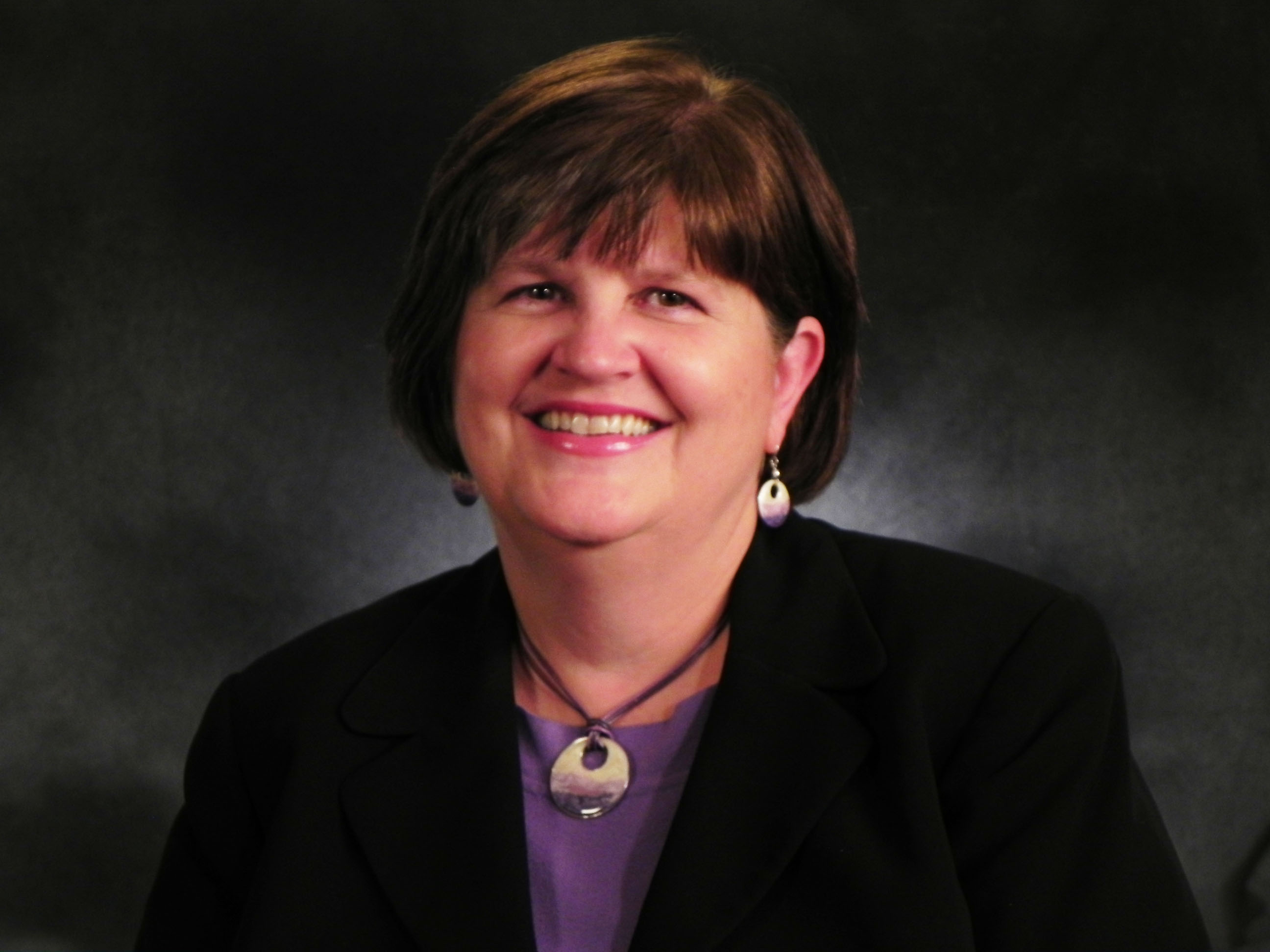
Rachel Wise

Rachel Wise

The 21st Century One-Room School House


By Rachel Wise, District 3, Nebraska State Board of Education (August, 2015)

August is all about county fairs and students going back to school! This summer I had the privilege of volunteering at a one-room school house located on the Burt County Fairgrounds. Some hardworking, dedicated teachers and retired teachers worked diligently to display artwork of students attending Burt County schools. The schoolhouse also showcases the history of 72 former one-room school houses. Yes, that is correct: at one time there were 72 one-room school houses in Burt County! You may be wondering where this article is heading….no, I am not advocating that we go back to one-room school houses, but I do believe — after hearing so many stories from former teachers and students who worked and attended school in these very small schools — that there are some great similarities between teaching and learning in a one-room school house and teaching and learning in a highly successful classroom today. It begins with the teacher — the heart and soul of the learning experience for every student every day.

At the August State Board of Education meeting, the Board started a new study committee on competency-based education. The first task of this study committee will be to define competency-based education. Typically, the definition includes a learner-focused education experience. Student progress is based on their ability to demonstrate proficiency or mastery of key concepts and skills. Competency-based education is typically very personalized, tied to individual learner needs. Hmm, sounds like the strategies used by teachers in one-room school houses. Teachers today have digital tools and resources to individualize and personalize learning for every student every day while the teachers in the one-room school houses had few resources, but used those limited resources to individualize and personalize learning for every student every day!

While I am on the subject of the heart and soul of teachers, one topic covered at the August board meeting was the breach of security in state testing in Nebraska. A story on this issue was recently published in the Omaha World Herald. Here is the rest of the story: Nebraska has had 8 serious testing security breaches since 2009. These are truly minimal breaches of testing security when you put it in perspective. Since 2009 over two million individual state tests in reading, writing, math and science have been administered in Nebraska. I believe the number of breaches is minimal is because Nebraska has great teachers who have strong ethics. Simply stated, Nebraska teachers just don’t cheat! Other states have created high stakes around testing and tied teacher performance to one state test score but that is not how we do business in Nebraska! In Nebraska, teachers are evaluated on multiple measures including student performance, but more than one test score. Nebraska also is moving forward with an accountability system that goes beyond a test score. Student success, teacher success and school success is more than one test score and Nebraska’s new accountability system called AQuESTT — Accountability for a Quality Education System Today and Tomorrow — is about more than one test score!

Last month I stated that I was optimistic that I would soon be able to share additional information about the reauthorization of the federal Elementary and Secondary Education Act. Well, here we are into August and we are now in a waiting mode. The U.S. Senate and House have each passed their version however, a conference committee comprised of the House and Senate will meet in early fall and work on a compromise that can be supported by both the House and the Senate and signed by the President. Hopefully, this will occur this fall!

Have a great 2015/2016 school year!!

This article represents my personal view, not that of the State Board of Education or my role as president. Feel free to contact me at rachel.wise@nebraska.gov. Search the Nebraska Department of Education.

Rachel Wise

Rachel Wise

This, That and One Other Thing


Rachel Wise, District 3, Nebraska State Board of Education (July, 2015)

The State Board of Education is not meeting in July, so this month, I am going to take the opportunity to write about opportunities. As I am working on this article, I, like many of you are shocked and disheartened to hear the news that a 12 year old boy has been accused of murder, here in our heartland! Why is a 12 year old boy out on the streets in the middle of the night? We all have more questions than answers.

One of the greatest gifts you can give a child is access to opportunities. Summer is a time that many children are engaged in summer sports, summer camps, vacation bible school, trips to the library, spending time at a park or a pool, family vacations and many other activities. However, many students do not have access to these common and important summer opportunities. Communities who put kids first should be asking what the kids in their communities are doing this summer. Are there activities and opportunities for all children that are affordable and accessible? Does your community have strategies to reach out to all children? Do you know the percentage of children in your community accessing the library, pool or the park? Do you know the percentage of students in 4H, Girl Scouts or Boy Scouts? Enough with the questions, I think you all get the point. We all have a responsibility in ensuring access to opportunities during the school year and during the summer.

Summer is a good time to “power down” and pick up a good book, or at least enjoy a good book in a digital format! Previously, I wrote in an article that reading is not just an activity for the school day or the school year. Teachers across the state will thank you, if you fit time for reading in your child’s summer activities, even if the book is on a phone, tablet or computer!

Throughout the year I wrote about the lack of progress in the reauthorization of the federal Elementary and Secondary Education Act known as the No Child Left Behind Act of 2001. This week the Senate has actually started debate on reauthorization of this important legislation. It is possible that reauthorization will include elements of accountability that align with the direction Nebraska is taking with our new system of accountability. I am optimistic that my article in August will be about the progress being made by both the Senate and the House to reach compromise to reauthorize!

One other thing—enjoy the last few weeks of summer!

Rachel Wise

Rachel Wise

This article represents my personal view, not that of the State Board of Education or my role as president. Feel free to contact me at rachel.wise@nebraska.gov. Search the Nebraska Department of Education website at www.education.ne.gov to learn more about education in our state.


Need to Fix No Child Left Behind Nationally


Rachel Wise, District 3, Nebraska State Board of Education 

In March, I had an opportunity to attend the National Association of State Boards of Education’s board of directors meeting and legislative policy forum. As a member of the board of directors of this organization, I have had an opportunity to learn about educational issues around the country from my colleagues serving on state boards of education in other states. This month, I want to share some activities happening nationally as well as a few important initiatives underway “at home” here in Nebraska.

Nationally, the biggest issue is the need to fix or reauthorize a very broken Elementary and Secondary Education Act (ESEA) titled No Child Left Behind. I feel like a broken record, bringing this issue up every month! However, this month there is a glimmer of hope! It is anticipated that the House of Representatives will vote on its bill when Congress returns to Washington D. C, after its break. This week a draft bipartisan Senate bill has been made public. Apparently, the House and the Senate— from a bipartisan perspective—concur that ESEA needs to be reauthorized and that states should have greater control of education as they once did!

At the conference I attended a session on the effective use of digital educational resources and technology. Technology is significantly impacting our lives and education. Technology has changed my life! With the help of our great Nebraska public libraries and the application called OverDrive, I can use my phone to listen to a book while I am walking, cleaning the house or on the road. Technology can have a positive change in the classroom! Classroom teachers are engaging students with digital resources and a variety of applications. These are the new tools of the trade for teachers at all grade levels. An open educational resource is the term used to define a host of digital resources that teachers can access at low or no cost. Some states have created statewide networks to help teachers more easily access digital materials and resources. In Nebraska, we have resources and digital tools in place, but we need a statewide plan that allows educators easy access similar to the Nebraska OverDrive Libraries, which has expanded access to eBooks and audio books through the public library network. All Nebraska students, teachers and parents ought to have key educational resources at their fingertips through a few easy clicks on a phone or a tablet.

In April, the Nebraska State Board of Education released a draft of the new mathematics standards for public input. If you go to the Nebraska Department of Education website at the link below, you can review and provide comments on these draft standards. As Nebraskans, we should take pride in the process used to develop academic content standards. Nebraska teachers—with input from business, post-secondary education and the public—write the standards and then seek input in multiple ways, including the survey on the NDE website.

This month the board also reviewed the Nebraska Coordinated School Health program, and NDE’s role in providing support for schools in health education, human growth and development and sex education. This role involves providing resources and support to schools as they work to develop curriculum and strategies that work well for local school districts. While NDE provides resources and support, it is the responsibility of local school districts—with input from their communities and their locally-elected school boards —to address these sensitive and sometimes controversial issues within their individual communities. Each community has unique needs and challenges. Who knows better how to deal with those issues other than local community members and parents of children in the school district? One reason I ran for the State Board of Education was to become an advocate for a balance in the responsibilities between state and locally-elected school board members. The approach taken with the Nebraska Coordinated School Health program is balanced, respectful and has led to a meaningful process and practice.

This article represents my personal view, not that of the State Board of Education or my role as president. Feel free to contact me at rachel.wise@nebraska.gov. Search the Nebraska Department of Education website at www.education.ne.gov to learn more about education in our state.

Rachel Wise

Rachel Wise

Ushering in a New Era of Accountability


By Rachel Wise, District 3, Nebraska State Board of Education

Ushering in a New Era of Accountability

The State Board of Education moved forward this month on two very important steps for Nebraska schools. The first step was to authorize the Commissioner of Education to submit a waiver from certain No Child Left Behind (NCLB) requirements. NCLB is the accountability system imposed by federal law. I wrote an article last July on this topic urging the U. S. Congress to do its job and, with a new Congress in place, one would hope for action. However, in the case of reauthorizing ESEA—currently known as NCLB—there seems to be “talk” but still no real action!! Because Congress has not reauthorized ESEA—action that should have occurred in 2007—it is time to pursue the NCLB waiver. The Commissioner of Education will submit a waiver request to support our schools that are still saddled with an unrealistic federal accountability system and start negotiations with the U. S. Department of Education to allow Nebraska to establish a system of accountability that is clear, transparent and a system that benefits Nebraska’s children, families and communities!

Before I continue, I again urge you to contact your Congressional representatives to encourage bipartisan collaboration on the reauthorization of ESEA. We may be moving forward with the NCLB waiver request, but I believe my colleagues and I are on the same page—reauthorization of ESEA needs to occur!

The other important step taken by the State Board of Education was to approve four levels of school classification for Nebraska’s a new accountability system, AQuESTT—Accountability for a Quality Education System, Today and Tomorrow. AQuESTT was developed as a result of the Nebraska Quality Education Accountability Act, state legislation passed last year.

Under AQuESTT this first year, student growth and improvement on state tests as well as high school graduation rates, will be the primary indicators used to classify each school and district as Excellent, Great, Good or Needs Improvement. Within the Needs Improvement classification, the three schools in greatest need of assistance to improve will be designated as priority schools. The Nebraska Department of Education will develop intervention teams to help improve student achievement for priority schools and will share those strategies and interventions with all Nebraska schools.

The AQuESTT tenets and examples of possible future indicators include:

  • College and Career Readiness: rigorous curriculum and alignment with state standards as well as student participation in career education and/or college courses while in high school
  • Assessment: competency-based assessment or adaptive assessment
  • Educator Effectiveness: percent of classes taught by appropriately endorsed staff, a formal evaluation process to monitor and to ensure effective instruct
  • Positive Partnerships, Relationships and Student Success: engagement of families and communities as well as individual learning plans for students
  • Transitions: improvement in school attendance, reduction in dropout rates and improved achievement for highly mobile students
  • Educational Opportunities and Access: number of instructional units available to students, expanded enrichment opportunities, including programs before and after school and in the summer, access to early childhood programs and digital learning.

The State Board will continue to refine AQuESTT and seek additional input on from individuals across the state.

This article represents my personal view, not that of the State Board of Education or my role as president. Feel free to contact me at rachel.wise@nebraska.gov. Search the Nebraska Department of Education website at www.education.ne.gov to learn more about education in our state.


Every Student, Every Day!


Rachel Wise, District 3, Nebraska State Board of Education (February, 2015)

Rachel Wise

Rachel Wise

Nebraska Education Commissioner Matt Blomstedt uses the mantra Every Student, Every Day! The State Board has begun a review of one of its major policies, G1, which addresses Nondiscrimination and Equal Educational Opportunity in Schools. This policy reflects the beliefs of the Commissioner and all State Board members. The review is intended to reaffirm our commitment to focusing on Every Student, Every Day. Diversity enriches our lives, our families and our communities. I embrace diversity friends, family members and coworkers with disabilities, from different races or cultures, differing religious views, and, yes, even differing political views! We are blessed to live in a country where we can have differing views but still share a common belief in freedom and democracy.

This month, the State Board spent quite a bit of time reviewing legislative bills that could directly or indirectly impact the Nebraska Department of Education and/or local school districts. During the review process, the Board determines whether to support, oppose or take a neutral position on legislative bills and resolutions. Last year, the Board spent quite a bit of time on proposed legislation which would have had a significant impact on “local control.” While that proposal did not move forward, a very similar bill is back this year. Legislative Bill 617 which was introduced by Sen. Tyson Larson of O’Neill, has a few good provisions but a requirement to retain 3rd graders not reading at “grade level” is quite disconcerting. The state should not make decisions about retention! That important decision should be a local decision between parents and teachers. Local school boards should make important decisions about the needs of the children they serve and determine retention practices. Do I think kids should be reading by 3rd grade? Yes! Do I know there are unique situations that affect children’s reading children who have disabilities or children whose first language is not English? Yes! But, most importantly, parents and teachers need to make decisions about retentionnot the Legislature!! The State Board voted to oppose LB 617. I believe local control of public education is an important value that we need to maintain. We elect local leaders to make the important decisions and, yes, sometimes difficult decisions, regarding educational opportunities and needs within our local communities.

The State Board of Education also took a major step toward implementing a new quality and accountability system in Nebraska. The new system, Accountability Quality Education System Today and Tomorrow (AQuESTT), was incorporated into Rule 10. To be accredited, public schools must meet Rule 10 requirements, so building AQuESTT and the accountability requirements into the rule appeared to be the logical step. Under AQuESTT, schools will be classified and held accountable for student achievement to keep the focus of schools on Every Student, Every Day!

Finally, the State Board has two study committees working to provide pertinent information and direction for Early Childhood Education and Career & Technical Education. Pat Timm of Beatrice chairs the Early Childhood Education study committee. John Witzel of Papillion chairs the Career & Tech Ed study committee. In an upcoming article I will highlight the preliminary recommendations of these two very important committees. 

This article represents my personal view, not that of the State Board of Education or my role as president. Feel free to contact me at rachel.wise@nebraska.gov. Search the Nebraska Department of Education website at www.education.ne.gov to learn more about education in our state.


A Time for Optimism


Rachel Wise, District 3, Nebraska State Board of Education (January, 2015)

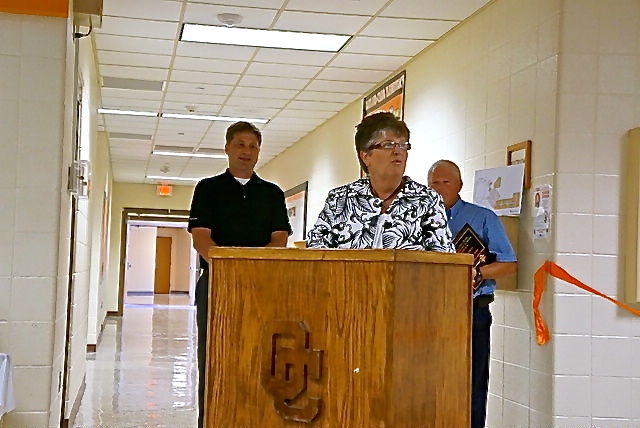
Nebraska State Board of Education President Rachel Wise congratulated the school and citizens on their new addition. Photo Credit/Denise Gilliland, Editor and Chief, Kat Country Hub.

Nebraska State Board of Education President Rachel Wise congratulated the school and citizens on their new addition. Photo Credit/Denise Gilliland, Editor and Chief, Kat Country Hub.

As we enter 2015 I find myself being very optimistic about the year ahead as it relates to meeting the educational needs of Nebraska’s children. My optimism begins with the possibility of a vision and leadership for education coming from the federal level for education finally!! As I previously mentioned, the primary federal law guiding education is the Elementary and Secondary Education Act or ESEA titled No Child Left Behind or NCLB when voted into law in 2000. This law should have been reauthorized in 2007. For the past eight years we have been caught between a “rock and a hard spot” with this outdated and, in my opinion, poorly written legislation.

Most parents, community leaders and educators concur: accountability is needed and improved student achievement is needed. While NCLB strengthened the focus on achievement, it set unrealistic student achievement expectations and narrowed the focus on testing, making tests the primary measure for student achievement and accountability. Most states have requested waivers or “flexibility” from the federally-defined accountability system. Nebraska Department of Education staff are currently researching the possibility of a waiver for Nebraska, however, we might not need a waiver. Congress may go to work!! Yes, you read that statement correctly: Congress may go to work on the reauthorization of the ESEA this spring!! Optimistically, reauthorization will once again focus on supporting state and local education efforts! Keep your fingers crossed as we wait to see if this optimism becomes a reality and Congress goes to work!

Two items on the Nebraska State Board of Education agenda January 8th and 9th focused on Rule 11 and Legislative Resolution 517. Rule 11, which sets school district practices and responsibilities for prekindergarten programs, is being revised. During a discussion on those revisions, Board members had several questions and determined an in-depth review by a Board committee was needed before the draft rule goes out for a public hearing. I will write more about these changes in the near future. Legislative Resolution 517 recommends changes in the training and competencies of educational interpreters for deaf and hard of hearing students. This is another important topic that the Board will continue to review and gather input on over the next few weeks.

Finally, it was an honor and privilege to be elected by my peers and to serve as president of the Nebraska State Board of Education for 2015. This will be my second year serving as president, and I am excited to be a part of the leadership team with my colleague Lillie Larsen, who was elected vice president. My colleagues and I will work diligently and passionately with state and local policy makers, educators, parents and students to ensure that Nebraska is at the top of the nation in how we serve and educate our most important and precious resource our children.

This article represents my personal view, not that of the State Board of Education or my role as president. Feel free to contact me at rachel.wise@nebraska.gov. Search the Nebraska Department of Education website at www.education.ne.gov to learn more about education in our state.

Finding Balance Between State and Local Control


Rachel Wise, District 3, Nebraska State Board of Education (October, 2014)

Rachel Wise

Rachel Wise

State Board of Education members in October spent a great deal of time on an issue that I believe illustrates the challenge of finding a balance between state and local control of PreK-12 education.

The issue sweeping the country and brought forward to the state board regarded the College Board’s Advanced Placement U.S. History course, APUSH. A state board policy committee took this issue up and put forward a resolution that generated quite a bit of discussion that was covered by several newspapers.

The College Board is a not-for-profit organization founded in 1900 with a mission to help students transition successfully to college. It provides opportunities for students to take SAT, a college entrance exam and to participate in Advanced Placement or college level courses. The APUSH course is considered a college-level course in U. S. History. It is a part of a host of courses approved by the College Board to allow students an opportunity to “test out” of various college courses while still in high school. Typically, students as freshmen or sophomores take high school level courses in subjects such as biology, chemistry, history, English, etc., and then, in some school districts, they take an Advanced Placement course in one or multiple subject areas as juniors or seniors. To put APUSH in perspective, 1,371 Nebraska students enrolled in AP U.S. History compared to 26,133 students enrolled in other U.S. History courses offered in Nebraska schools during the 2013-2014 school year. That means the proposed resolution focused on a course that only 5 percent of Nebraska students take.

So, you may be wondering, what is the controversy?

Recently, the College Board rolled out the new APUSH framework which contained gaps in what some people consider essential historical information. I am not going to delve into the content of the framework, but instead share with you why I believe this issue should be discussed and resolved at the local school district level rather than the state level. In my view, this issue is an excellent example of the balance that needs to be established between state and local control.

First, school districts follow the Americanism statute (79-724) which is in Rule 10, a rule that provides the foundation for school accreditation. Secondly, school districts use the Nebraska social studies standards to develop curriculum and purchase materials to augment courses such as APUSH. Finally, on issues regarding specific courses, it is hard for me to understand why the Nebraska State Board of Education would step into an arena in which citizens across the state have elected 1,560 local school board members to make such decisions.


I do think it is important for the State Board of Education to establish and adopt standards, frame accountability for a quality education system and accredit schools. However, I think we should continue to work to find and respect the balance between state control and support for local school district authority in decisions related to curriculum, materials and instructional practices.


In my opinion, the proposed resolution and subsequent board discussion was important. However, this is an example of overreach that really does not benefit the students of this state; locally elected officials understand the needs of their communities. After much discussion, the State Board of Education did not vote on the resolution at the October meeting. The policy committee, however, will review, discuss and possibly bring the resolution forward again at a later date.


This article represents my personal view, not that of the State Board of Education or my role as president. Feel free to contact me at rachel.wise@nebraska.gov. Search the Nebraska Department of Education website at www.education.ne.gov to learn more about education in our state.