A Time for Optimism


Rachel Wise, District 3, Nebraska State Board of Education (January, 2015)
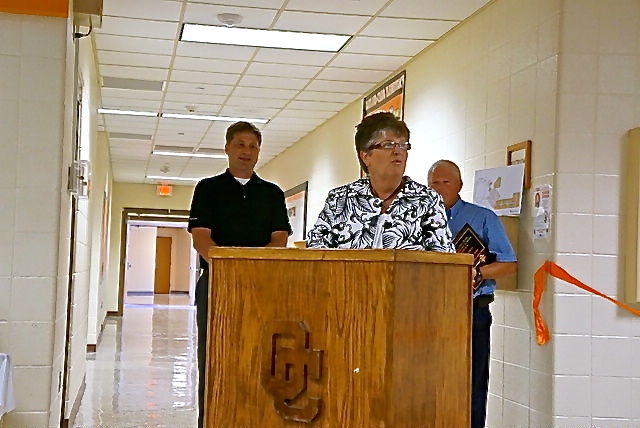
Nebraska State Board of Education President Rachel Wise congratulated the school and citizens on their new addition. Photo Credit/Denise Gilliland, Editor and Chief, Kat Country Hub.

Nebraska State Board of Education President Rachel Wise congratulated the school and citizens on their new addition. Photo Credit/Denise Gilliland, Editor and Chief, Kat Country Hub.

As we enter 2015 I find myself being very optimistic about the year ahead as it relates to meeting the educational needs of Nebraska’s children. My optimism begins with the possibility of a vision and leadership for education coming from the federal level for education finally!! As I previously mentioned, the primary federal law guiding education is the Elementary and Secondary Education Act or ESEA titled No Child Left Behind or NCLB when voted into law in 2000. This law should have been reauthorized in 2007. For the past eight years we have been caught between a “rock and a hard spot” with this outdated and, in my opinion, poorly written legislation.

Most parents, community leaders and educators concur: accountability is needed and improved student achievement is needed. While NCLB strengthened the focus on achievement, it set unrealistic student achievement expectations and narrowed the focus on testing, making tests the primary measure for student achievement and accountability. Most states have requested waivers or “flexibility” from the federally-defined accountability system. Nebraska Department of Education staff are currently researching the possibility of a waiver for Nebraska, however, we might not need a waiver. Congress may go to work!! Yes, you read that statement correctly: Congress may go to work on the reauthorization of the ESEA this spring!! Optimistically, reauthorization will once again focus on supporting state and local education efforts! Keep your fingers crossed as we wait to see if this optimism becomes a reality and Congress goes to work!

Two items on the Nebraska State Board of Education agenda January 8th and 9th focused on Rule 11 and Legislative Resolution 517. Rule 11, which sets school district practices and responsibilities for prekindergarten programs, is being revised. During a discussion on those revisions, Board members had several questions and determined an in-depth review by a Board committee was needed before the draft rule goes out for a public hearing. I will write more about these changes in the near future. Legislative Resolution 517 recommends changes in the training and competencies of educational interpreters for deaf and hard of hearing students. This is another important topic that the Board will continue to review and gather input on over the next few weeks.

Finally, it was an honor and privilege to be elected by my peers and to serve as president of the Nebraska State Board of Education for 2015. This will be my second year serving as president, and I am excited to be a part of the leadership team with my colleague Lillie Larsen, who was elected vice president. My colleagues and I will work diligently and passionately with state and local policy makers, educators, parents and students to ensure that Nebraska is at the top of the nation in how we serve and educate our most important and precious resource our children.

This article represents my personal view, not that of the State Board of Education or my role as president. Feel free to contact me at rachel.wise@nebraska.gov. Search the Nebraska Department of Education website at www.education.ne.gov to learn more about education in our state.

Teachers: Champions of Children!


By

Nebraska State Board of Education President Rachel Wise congratulated the school and citizens on their new addition. Photo Credit/Denise Gilliland, Editor and Chief, Kat Country Hub.

Nebraska State Board of Education President Rachel Wise congratulated the school and citizens on their new addition. Photo Credit/Denise Gilliland, Editor and Chief, Kat Country Hub.

Rachel Wise, District 3, Nebraska State Board of Education (November, 2014)

A highlight of serving on the Nebraska State Board of Education is participating in the celebration of the Teacher of the Year and Excellence in Teaching Awards. The Nebraska Teacher of the Year program has been in place since 1972. The award winners receive a great deal of accolades for their accomplishments and a variety of monetary awards, including a $1,000 grant from the State Board of Education to each of the recipients’ school districts to support innovative practices, tools and resources.

The Teacher of the Year for 2015 is Shelby Aaberg, a high school math teacher at Scottsbluff High School. The Excellence in Teaching Award Winners include: Jim Fielder, a high school science teacher at Hastings Senior High School; Christopher Maly, an English teacher at Lincoln High School; and, Sarah Schau, a business teacher at Westside High School in Omaha. The commonality of all of these exceptional teachers includes a passion for their students and an ability to inspire and motivate every student, every day! Following the November luncheon celebration, the 2014 Teacher of the Year, Kristi Bundy from Ashland-Greenwood Public Schools provided an overview of her experiences the past year to the State Board of Education. Congratulations to these amazing educators who are the everyday champions of children and education.

Though this event highlighted only a few of the outstanding teachers in Nebraska, I know that every school in Nebraska has teachers of excellence—teachers who come to work every day to provide engaging learning experiences for all children. Our schools in Nebraska are always working to get better and to build on their strengths; one of their strengths is our great teachers!

At the end of October, the Nebraska State of the Schools Report was released to the public. At the November meeting, the State Board of Education discussed highlights of that report as well as the status of student achievement. The good news: students across the state are improving in reading, math and science! The challenge: an achievement gap among groups of students continues to exist! Once again, I encourage you to go to the NDE website, www.education.ne.gov, to review a wealth of information about our schools and student performance, including student dropout rates and school district test scores. This is an accurate and reliable source of information about our Nebraska schools.

Finally, the State Board of Education is making progress pursing a “waiver” or flexibility under the No Child Left Behind Act of 2001. In earlier articles I described the challenges schools have working to meet the unrealistic federal accountability benchmark of 100 percent student proficiency in reading and math. The State Board’s goal is to submit a “waiver” request this spring.

This article represents my personal view, not that of the State Board of Education or my role as president. Feel free to contact me at rachel.wise@nebraska.gov. Search the Nebraska Department of Education website at www.education.ne.gov to learn more about education in our state.

Choosing Flexibility


By

Rachel Wise

Rachel Wise

Rachel Wise, District 3, Nebraska State Board of Education (July, 2014)

As I mentioned last month, the State Board of Education is not meeting in July, so this month, the topics are “my choice” and the article focuses on two educational topics that, for me, are very important.

This month I will address accountability and the federal Elementary and Secondary Education Act (ESEA.) In my personal view, these two topics are interwoven and both important to the State Board of Education. In July 2013, I shared with you that I typically try to write articles that are informative and factual, well, watch out for the fireworks…I will now throw some opinions your way. As we know, if we read it on the Internet, or even in a newspaper, it must be true!!

Joe Dejka, a reporter with the Omaha World-Herald, provided an excellent overview of ESEA—now commonly known as the No Child Left Behind Act of 2001. The June 23rd OW-H article highlighted a State Board of Education discussion about pursuing an ESEA Flexibility “waiver” from certain federal government requirements. ESEA has an unrealistic goal of requiring all students to be 100 percent proficient in reading and math by 2014 Yes, that would be this year! In my opinion, if the State Board applies for ESEA Flexibility, it should occur only after Nebraskans across the state have an opportunity to voice their views on the issue.

So, before I continue painting the picture of what the Nebraska Department of Education and local schools will have to do to receive ESEA Flexibility, I think it is only fair to point fingers. The United States Congress has a job to do and, in the case of reauthorizing the federal ESEA law, that just has not happened!! I know you are surprised by this lack of action at the federal level!! Because Congress has not reauthorized ESEA—action that should have occurred in 2007–we find ourselves in this very difficult position.

Before I continue, I urge you to contact your Congressional representatives to encourage bipartisan collaboration on the reauthorization of ESEA.

Since reauthorization appears unlikely at this time, let’s look at what Nebraska’s request for ESEA Flexibility would entail. Nebraska would apparently be required to develop and implement a plan that would include: academic content standards that are college and career ready; issue annual report on the state’s college going rate and college credit accumulation rates for all students; establish an accountability system that includes student achievement on assessments, and the identification of focus and priority schools; ensure districts implement teacher and principal evaluation system that connects teacher evaluations to student performance and support systems; and, my favorite—reduce duplication and unnecessary burdens on school districts! The good news: several of the elements required at the federal level are included in the state’s Quality Education Accountability Act. The bad news: many of those elements have not yet been defined and that work will take input from the public and time to put in place.

Some readers may think one solution would be to just not take any federal education funds. For many schools, federal funding is a very important part of their budget, and it would be very difficult for local school districts or the state to make up for the loss of those federal dollars. If the State Board does nothing–like the U.S. Congress–our schools will be in a very difficult situation. What is the State Board of Education to do? Research options, become informed and get input from Nebraskans. ESEA Flexibility will not happen overnight and not without input from the public. In my opinion, we need to urge the U.S. Congress to work to reauthorize ESEA. In reality—my reality—we need to explore the feasibility of requesting an ESEA Flexibility waiver from certain federal requirements.

This article represents my personal view, not that of the State Board of Education or my role as president. Feel free to contact me at rachel.wise@nebraska.gov. Search the Nebraska Department of Education website at www.education.ne.gov to learn more about education in our state.


Academic Standards on State Board’s Agenda


Rachel Wise, District 3, Nebraska State Board of Education 

Rachel Wise

Rachel Wise

Too Much To Write….Too Little Time!!

This month there are three major topics that I would like to touch base on. All three of these topics are important to the State Board of Education, to Nebraska schools and in ensuring continued high-quality public education in Nebraska!

First, I want to touch base on standards, again! A review of the academic standards in English/Language Arts has been underway at the Nebraska Department of Education. During the April meeting, a draft of the revised standards was released for public comment. The revised standards as well as a survey for public comment can be found on the NDE website at http://www.education.ne.gov/StandardsSurvey/index.html. Please go online to provide your input by May 31st. In June, the standards will be revised based on your feedback and additional public comment will be requested in July. As stated in previous articles, the primary authors of Nebraska standards are Nebraska teachers–elementary teachers, secondary teachers and faculty from community colleges, colleges and universities. Nebraska’s standards development process included a review of standards from other states and national standards before identifying broad standards, grade level standards and curricular indicators. Local school districts are responsible for developing their local curriculum based on standards and for adopting appropriate instructional materials.

Second, I want to talk about Nebraska State Assessments (NeSA), the statewide tests that look at student progress in writing, reading, math and science. As I have stated in previous articles, we have had technical difficulties with testing this year. We have been working through assurances for next year with the testing vendor, Data Recognition Corporation, and we will make a decision in June regarding the 2014/2015 DRC contract. The challenges we have encountered this year and the feedback we are receiving about “too much testing” has told us that we need to take a good hard look at what we are doing with assessment. Over the next few months, we will seek input and review what the state is asking schools to do relative to assessment. I will keep you posted on the progress of this review and on your opportunities to provide input.

Finally, we have moved forward on some accountability issues. We have two levels of accountability requirements to consider; a new state law and federal requirements under No Child Left Behind. At the May state board meeting, we asked Commissioner Matt Blomstedt to put together a potential plan to seek a waiver from the federal government’s accountability requirements in No Child Left Behind and to define the relationship between a possible waiver request and the expectations in the new state law on accountability. At the federal level, 2014 is the magic year for all students to be 100 percent proficient in reading and math. Nebraska students have been making gains in reading and math. However, it is unrealistic for the federal government to expect all students to be 100 percent proficient. The consequences the federal government has set for not meeting this unrealistic benchmark are also unrealistic for schools and communities, especially those in rural settings! I will spend a little more time in June on this issue, including strategies and next steps Nebraska may take relative to a waiver as presented by Commissioner Blomstedt.

This article represents my personal view, not that of the State Board of Education or my role as president. Feel free to contact me at rachel.wise@nebraska.gov. Search the Nebraska Department of Education website at http://www.education.ne.gov to learn more about education in our state.

State Board Highs and Lows


Rachel Wise, District 3, Nebraska State Board of Education (March, 2014)

State Board Highs and State Board Lows!

Rachel Wise

Rachel Wise

This month I will write about a recent State Board high — an action that my board colleagues and I are very excited about. I will then address what I consider a State Board low — something I would really rather not write about, but feel compelled to inform and acknowledge.

Let’s get to the good news. On March 4th, the State Board of Education unanimously adopted Nebraska Fine Arts Standards. As eloquently stated by Debbie DeFrain, the Nebraska Department of Education Director of Fine Arts, “these standards will help lead the way in developing citizens of tomorrow through excellence: in continuous improvement; in quality of life; in promoting richness of humanity; and, in recognizing the importance of fine arts in healing, uplifting and maintaining the human spirit.” Many individuals and organizations across the state were involved in developing the standards and participated throughout the process. It was clear that the needs of students and the ability of local schools to implement standards remained at the forefront of their work. Supporting this process and voting to adopt the Fine Arts Standards has been a high among my board experiences.

So, now for the low. Let’s revisit an article that I wrote last April regarding assessment. Nebraska State Accountability (NeSA) is a system of assessments or “testing” developed to measure student progress on Nebraska standards. In Nebraska, students are assessed as follows:  writing – grades 4, 8 and 11; reading – grades 3-8 and 11; math – grades 3-8 and 11; science – grades 5, 8 and 11. All of these tests are administered during pre-set times from January through early May. Eighth and 11th grade students take the 90-minute Nebraska state writing test online. Fourth grade students take the test in a paper/pencil format in two, 40-minute sessions. So you may be wondering why is writing about a writing test a low?

Last year, 8th and 11th grade students taking the state writing test encountered technical difficulties and many students were not able to finish the test or get an accurate score. The contractor, Data Recognition Corporation, stopped using a sub-contractor from last year and began providing those testing services to Nebraska this school year. Long story short—problems were again encountered and 2 to 3 percent of Nebraska students experienced technical difficulties while taking their writing test this year. As a State Board member, the low is knowing that students encountered a frustrating situation while taking the writing test. For many college students today, taking online classes and encountering technical difficulties with a class or an online test is part of the learning experience. However, technical difficulties should not be a part of the learning experience of an 8th or 11th grade student taking a state test!

So what is the Nebraska Department of Education and State Board prepared to do? We have not paid Data Recognition Corporation and are working diligently to garner assurances that the technical difficulties will not occur in the upcoming online reading, math and science tests. We also have apologized for the challenges this has created for some students and staff in some schools across the state.

Next month, I am optimistically looking forward to writing only about the highs of representing District 3 on the State Board of Education.

One more high, Voices for Children recently published its 2013 Kids Count in Nebraska Report. If you care about kids, this is a very important report to read. You can access the 2013 report or any of the reports since 2006 at www.voicesforchildren.com/kidscount.

This article represents my personal view, not that of the State Board of Education or my role as president. Feel free to contact me at rachel.wise@nebraska.gov. Search the Nebraska Department of Education website at www.education.ne.gov to learn more about education in our state.