Change is in the Air!


Rachel Wise, District 3, Nebraska State Board of Education (December, 2015)

I can’t believe that I am writing about the reauthorization of the Elementary and Secondary Education Act (ESEA) again. However, this time it is good news! The United States Congress passed– through a bipartisan effort with an overwhelming majority in the House and the Senate– the reauthorization of ESEA which has been titled Every Student Succeeds Act (ESSA). On December 10th, President Obama signed it into law!

Granted, this bipartisan effort should have occurred in 2007, but better late than never. Nebraska schools are finally rid of the previous version of ESEA which was titled No Child Left Behind. For 15 years, states and local school districts were saddled with federal education law that left many schools and states behind! While ESSA may not be perfect, it is a good step for Nebraska schools and school districts. It puts the responsibility and accountability for education back in the hands of states and local school districts and, most importantly, local educators, who are better prepared to know how to improve schools and opportunities for all students.

Key priorities in ESSA that benefit Nebraska include: states remain in control of standards and assessments; states are given flexibility for developing and implementing state accountability systems; and, the lowest-performing schools still receive focused attention and support. The accountability stars finally may be aligned for Nebraska. The passage of the Every Student Succeeds Act coincides with Nebraska’s roll out of our new accountability system, Accountability for a Quality Education System, Today and Tomorrow (AQuESTT).

At the December 4th State Board of Education meeting, the Nebraska Department of Education (NDE) released the accountability classifications of Nebraska schools and school districts. Under the new system, all public schools and districts are classified as Excellent, Great, Good or Needs Improvement. To find out the classification of any school or district in Nebraska or to learn more about AQuESTT, go to: www. AQuESTT.com . In addition, the State Board approved the Commissioner of Education’s recommendation for the identification of three priority schools. The priority schools were identified from a list of schools classified as Needs Improvement, those schools most in need of support to improve. NDE staff did an amazing job analyzing schools finding patterns among schools. They found that schools needing improvement fall into four primary types of schools. These are: schools with mixed poverty levels in small communities widely dispersed statewide; schools in small to mid-size communities with changing demographics; Native American schools; and, urban/metro schools with poverty levels higher than the state’s average. The three priority schools identified were Santee Middle School, Loup County Elementary School and Druid Hill Elementary School in Omaha. During the next few weeks, NDE will work with these three schools to assess their specific needs, develop action plans in partnership with the schools and identify support and intervention teams to work with the priority schools. These teams will help identify specific strategies to address student achievement needs and assist in the development of school specific plans focused on improving student achievement.

As I reflect on accountability and the new federal Every Student Succeeds Act, I am excited to be a part of education in Nebraska. I know that our local school boards, administrators and teachers will work with students, parents and communities to continue to improve educational opportunities and outcomes for Every Student Every Day!! Our new accountability system may not be perfect, but was developed with input from across Nebraska, and it will be improved with continuing input from across the state. It is an honor and a privilege to live in Nebraska and to serve Nebraskans. Nebraska may be nice, but we are also still “the good life,” and we know what is good for education in our state. St

This article represents my personal view, not that of the State Board of Education or my role as president. Feel free to contact me at rachel.wise@nebraska.gov. Search the Nebraska Department of Education website at www.education.ne.gov to learn more about education in our state.
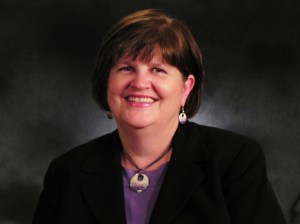
Rachel Wise

Rachel Wise

Champions of Children


By Rachel Wise, District 3, Nebraska State Board of Education (November, 2015)

This month I would like to highlight and recognize some very special people and schools. Recently, two schools in Northeast Nebraska were recognized by the National Blue Ribbon Schools Program. Bancroft-Rosalie Elementary School in Bancroft and Washington Elementary School in Norfolk were recognized for their overall academic excellence or their progress in closing achievement gaps. In addition, Dr. Jon Cerny, principal at Bancroft-Rosalie Elementary School, was named one of seven principals from the 2015 National Blue Ribbon Schools to receive the Terrel H. Bell Award for Outstanding School Leadership.

A highlight of serving on the Nebraska State Board of Education is participating in the celebration of outstanding teachers. On November 5th, the Nebraska State Board of Education recognized the 2016 Teacher of the Year, the recipients of the Excellence in Teaching Awards as well as the Milken Educator Award winner. The Nebraska Teacher of the Year program has been in place since 1972. The Teacher of the Year is Tim Royers from Millard West High School. The Excellence in Teaching Award winners are: Lori Boudreau of Papillion La Vista High School; Lynn Hill of Millard South High School; Daniel Schaben of Arapahoe Public School; and Jayson Stoddard of Hastings Middle School. The commonality of all of these exceptional teachers includes a passion for teaching their students and an ability to inspire and motivate every student every day!

The Milken Educator Awards were launched by the Milken Family Foundation in 1987. The Milken Educator Award recipients are early to mid-career teachers selected for what they have achieved and for their promise and commitment to the profession of teaching. The Milken Educator Award recipient is Courtney Matulka from the Millard Public Schools, Beadle Middle School.

Following the November luncheon celebration, the State Board of Education was honored by remarks from the 2016 Teacher of the Year Tim Royers who provided insightful comments regarding his love for teaching and learning. Also presenting was the 2015 Teacher of the Year, Shelby Aaberg from Scottsbluff High School, who provided an overview of his experiences traveling Nebraska and the country as Nebraska’s Teacher of the Year.

Congratulations to these outstanding schools and amazing educators who are the everyday champions of children and education.

A year ago, I provided information about the Nebraska Department of Education’s plan to submit a “waiver” or flexibility request under the No Child Left Behind Act of 2001 to the United States Department of Education. Recently, NDE received information regarding changes that would need to be made to the plan before any approval could occur. At the same time, it appears there may be some movement by Congress to get their work done and to reauthorize the Act! So, we are in a “wait and see” mode. If reauthorization occurs, there will not be a need for the waiver.

This article represents my personal view, not that of the State Board of Education or my role as president. Feel free to contact me at rachel.wise@nebraska.gov. Search the Nebraska Department of Education website at www.education.ne.gov to learn more about education in our state.

The 21st Century One-Room School House


By Rachel Wise, District 3, Nebraska State Board of Education (August, 2015)

August is all about county fairs and students going back to school! This summer I had the privilege of volunteering at a one-room school house located on the Burt County Fairgrounds. Some hardworking, dedicated teachers and retired teachers worked diligently to display artwork of students attending Burt County schools. The schoolhouse also showcases the history of 72 former one-room school houses. Yes, that is correct: at one time there were 72 one-room school houses in Burt County! You may be wondering where this article is heading….no, I am not advocating that we go back to one-room school houses, but I do believe — after hearing so many stories from former teachers and students who worked and attended school in these very small schools — that there are some great similarities between teaching and learning in a one-room school house and teaching and learning in a highly successful classroom today. It begins with the teacher — the heart and soul of the learning experience for every student every day.

At the August State Board of Education meeting, the Board started a new study committee on competency-based education. The first task of this study committee will be to define competency-based education. Typically, the definition includes a learner-focused education experience. Student progress is based on their ability to demonstrate proficiency or mastery of key concepts and skills. Competency-based education is typically very personalized, tied to individual learner needs. Hmm, sounds like the strategies used by teachers in one-room school houses. Teachers today have digital tools and resources to individualize and personalize learning for every student every day while the teachers in the one-room school houses had few resources, but used those limited resources to individualize and personalize learning for every student every day!

While I am on the subject of the heart and soul of teachers, one topic covered at the August board meeting was the breach of security in state testing in Nebraska. A story on this issue was recently published in the Omaha World Herald. Here is the rest of the story: Nebraska has had 8 serious testing security breaches since 2009. These are truly minimal breaches of testing security when you put it in perspective. Since 2009 over two million individual state tests in reading, writing, math and science have been administered in Nebraska. I believe the number of breaches is minimal is because Nebraska has great teachers who have strong ethics. Simply stated, Nebraska teachers just don’t cheat! Other states have created high stakes around testing and tied teacher performance to one state test score but that is not how we do business in Nebraska! In Nebraska, teachers are evaluated on multiple measures including student performance, but more than one test score. Nebraska also is moving forward with an accountability system that goes beyond a test score. Student success, teacher success and school success is more than one test score and Nebraska’s new accountability system called AQuESTT — Accountability for a Quality Education System Today and Tomorrow — is about more than one test score!

Last month I stated that I was optimistic that I would soon be able to share additional information about the reauthorization of the federal Elementary and Secondary Education Act. Well, here we are into August and we are now in a waiting mode. The U.S. Senate and House have each passed their version however, a conference committee comprised of the House and Senate will meet in early fall and work on a compromise that can be supported by both the House and the Senate and signed by the President. Hopefully, this will occur this fall!

Have a great 2015/2016 school year!!

This article represents my personal view, not that of the State Board of Education or my role as president. Feel free to contact me at rachel.wise@nebraska.gov. Search the Nebraska Department of Education.

Rachel Wise

Rachel Wise

Need to Fix No Child Left Behind Nationally


Rachel Wise, District 3, Nebraska State Board of Education 

In March, I had an opportunity to attend the National Association of State Boards of Education’s board of directors meeting and legislative policy forum. As a member of the board of directors of this organization, I have had an opportunity to learn about educational issues around the country from my colleagues serving on state boards of education in other states. This month, I want to share some activities happening nationally as well as a few important initiatives underway “at home” here in Nebraska.

Nationally, the biggest issue is the need to fix or reauthorize a very broken Elementary and Secondary Education Act (ESEA) titled No Child Left Behind. I feel like a broken record, bringing this issue up every month! However, this month there is a glimmer of hope! It is anticipated that the House of Representatives will vote on its bill when Congress returns to Washington D. C, after its break. This week a draft bipartisan Senate bill has been made public. Apparently, the House and the Senate— from a bipartisan perspective—concur that ESEA needs to be reauthorized and that states should have greater control of education as they once did!

At the conference I attended a session on the effective use of digital educational resources and technology. Technology is significantly impacting our lives and education. Technology has changed my life! With the help of our great Nebraska public libraries and the application called OverDrive, I can use my phone to listen to a book while I am walking, cleaning the house or on the road. Technology can have a positive change in the classroom! Classroom teachers are engaging students with digital resources and a variety of applications. These are the new tools of the trade for teachers at all grade levels. An open educational resource is the term used to define a host of digital resources that teachers can access at low or no cost. Some states have created statewide networks to help teachers more easily access digital materials and resources. In Nebraska, we have resources and digital tools in place, but we need a statewide plan that allows educators easy access similar to the Nebraska OverDrive Libraries, which has expanded access to eBooks and audio books through the public library network. All Nebraska students, teachers and parents ought to have key educational resources at their fingertips through a few easy clicks on a phone or a tablet.

In April, the Nebraska State Board of Education released a draft of the new mathematics standards for public input. If you go to the Nebraska Department of Education website at the link below, you can review and provide comments on these draft standards. As Nebraskans, we should take pride in the process used to develop academic content standards. Nebraska teachers—with input from business, post-secondary education and the public—write the standards and then seek input in multiple ways, including the survey on the NDE website.

This month the board also reviewed the Nebraska Coordinated School Health program, and NDE’s role in providing support for schools in health education, human growth and development and sex education. This role involves providing resources and support to schools as they work to develop curriculum and strategies that work well for local school districts. While NDE provides resources and support, it is the responsibility of local school districts—with input from their communities and their locally-elected school boards —to address these sensitive and sometimes controversial issues within their individual communities. Each community has unique needs and challenges. Who knows better how to deal with those issues other than local community members and parents of children in the school district? One reason I ran for the State Board of Education was to become an advocate for a balance in the responsibilities between state and locally-elected school board members. The approach taken with the Nebraska Coordinated School Health program is balanced, respectful and has led to a meaningful process and practice.

This article represents my personal view, not that of the State Board of Education or my role as president. Feel free to contact me at rachel.wise@nebraska.gov. Search the Nebraska Department of Education website at www.education.ne.gov to learn more about education in our state.

Rachel Wise

Rachel Wise

A Time for Optimism


Rachel Wise, District 3, Nebraska State Board of Education (January, 2015)

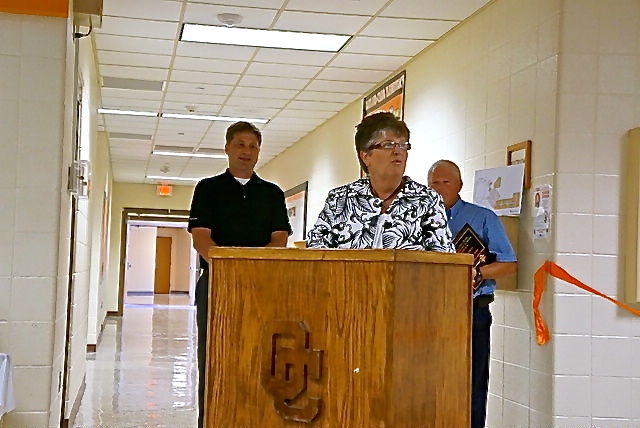
Nebraska State Board of Education President Rachel Wise congratulated the school and citizens on their new addition. Photo Credit/Denise Gilliland, Editor and Chief, Kat Country Hub.

Nebraska State Board of Education President Rachel Wise congratulated the school and citizens on their new addition. Photo Credit/Denise Gilliland, Editor and Chief, Kat Country Hub.

As we enter 2015 I find myself being very optimistic about the year ahead as it relates to meeting the educational needs of Nebraska’s children. My optimism begins with the possibility of a vision and leadership for education coming from the federal level for education finally!! As I previously mentioned, the primary federal law guiding education is the Elementary and Secondary Education Act or ESEA titled No Child Left Behind or NCLB when voted into law in 2000. This law should have been reauthorized in 2007. For the past eight years we have been caught between a “rock and a hard spot” with this outdated and, in my opinion, poorly written legislation.

Most parents, community leaders and educators concur: accountability is needed and improved student achievement is needed. While NCLB strengthened the focus on achievement, it set unrealistic student achievement expectations and narrowed the focus on testing, making tests the primary measure for student achievement and accountability. Most states have requested waivers or “flexibility” from the federally-defined accountability system. Nebraska Department of Education staff are currently researching the possibility of a waiver for Nebraska, however, we might not need a waiver. Congress may go to work!! Yes, you read that statement correctly: Congress may go to work on the reauthorization of the ESEA this spring!! Optimistically, reauthorization will once again focus on supporting state and local education efforts! Keep your fingers crossed as we wait to see if this optimism becomes a reality and Congress goes to work!

Two items on the Nebraska State Board of Education agenda January 8th and 9th focused on Rule 11 and Legislative Resolution 517. Rule 11, which sets school district practices and responsibilities for prekindergarten programs, is being revised. During a discussion on those revisions, Board members had several questions and determined an in-depth review by a Board committee was needed before the draft rule goes out for a public hearing. I will write more about these changes in the near future. Legislative Resolution 517 recommends changes in the training and competencies of educational interpreters for deaf and hard of hearing students. This is another important topic that the Board will continue to review and gather input on over the next few weeks.

Finally, it was an honor and privilege to be elected by my peers and to serve as president of the Nebraska State Board of Education for 2015. This will be my second year serving as president, and I am excited to be a part of the leadership team with my colleague Lillie Larsen, who was elected vice president. My colleagues and I will work diligently and passionately with state and local policy makers, educators, parents and students to ensure that Nebraska is at the top of the nation in how we serve and educate our most important and precious resource our children.

This article represents my personal view, not that of the State Board of Education or my role as president. Feel free to contact me at rachel.wise@nebraska.gov. Search the Nebraska Department of Education website at www.education.ne.gov to learn more about education in our state.

Governor Ricketts Calls on McPherson to Resign


Governor Pete Ricketts called on State Board of Education Member Pat McPherson to resign from the State Board of Education following unacceptable comments that were contained in a post on his blog.


“While many Nebraskans disagree with our president on many issues, he is deserving of the same civility and respect we give one another. There is no room for bigotry. I am deeply disappointed and unequivocally condemn these comments,” said Ricketts.


“I respect the will of the people, but as additional information about the frequency of these bigoted comments on the blog has become available, it is clear that this controversy will hinder the State Board of Education from accomplishing its goals. Pat should tender his resignation and allow the Board to get back to work on its goal of improving achievement outcomes for all students.”

The End and the Middle of the Year


Rachel Wise, District 3, Nebraska State Board of Education (December, 2014)

As a retired educator, when I think about a calendar, I think about December being halfway through the year, rather than the end of the year. It is difficult to make a calendar mind-shift after so many years of thinking that the most important calendar is a school calendar! In the world of “elected officials” the calendar follows the rest of the world, and December is the end of the year and January begins a New Year. As the end of this year approaches, I want to take the liberty of the pen (or keyboard) to thank some outstanding elected officials!

Congratulations go out to Dr. Bradley Krivohlavek who was recognized recently by Nebraska Association of School Boards with the Ann Mactier Leadership Award for outstanding local school board members. Dr. Krivohlavek has served Norfolk Public Schools for 30 years. In December, Dr. Krivohlavek and, many other local school board members complete their final term of dedication and commitment to local school districts. Take time to thank those individuals who have and are willing to volunteer and give of their time and talent to serve on local school boards.

As we wind down 2014, I would also like to thank John Sieler, the Vice President of the State Board of Education, for his service to Nebraska students. It has been a pleasure to serve with John. I appreciate his advocacy for education and the future of Nebraska.

So, on to the middle of the school year! As I mentioned last month, the Nebraska State of the Schools Report was recently released to the public. In November, the report was updated with graduation rates, which, like reading, math and science test scores, are improving in Nebraska! Similar to the reading, math and science scores, an achievement gap among groups of students continues to exist. However, we should celebrate the efforts of all schools on improving graduation rates, while increasing graduation requirements.

As teachers and administrators look to January, they are reflecting on the first half of the school year, making adjustments for the second half of the school year, reviewing student achievement data, focusing on keeping students in school and on the pathway to graduation. School district staff are engaged in planning for next year, reviewing curriculum, evaluating additional courses that they can offer with existing staff or through partnerships with other schools or colleges or through distance education. A part of this district-level planning involves a review of Nebraska Department of Education Rule 10. The State Board is in its own mid-year review of the rule as well. Rule 10 frames the requirements for school district accreditation in Nebraska. Next month, I will spend more time describing Accountability for Quality Education Systems for Today and Tomorrow (AQuESTT) and the Rule 10 changes that are being proposed to define the expectations for quality and the accountability of Nebraska’s public schools in Nebraska.

This article represents my personal view, not that of the State Board of Education or my role as president. Feel free to contact me at rachel.wise@nebraska.gov. Search the Nebraska Department of Education website at www.education.ne.gov to learn more about education in our state.

Rachel Wise

Rachel Wise

Finding Balance Between State and Local Control


Rachel Wise, District 3, Nebraska State Board of Education (October, 2014)

Rachel Wise

Rachel Wise

State Board of Education members in October spent a great deal of time on an issue that I believe illustrates the challenge of finding a balance between state and local control of PreK-12 education.

The issue sweeping the country and brought forward to the state board regarded the College Board’s Advanced Placement U.S. History course, APUSH. A state board policy committee took this issue up and put forward a resolution that generated quite a bit of discussion that was covered by several newspapers.

The College Board is a not-for-profit organization founded in 1900 with a mission to help students transition successfully to college. It provides opportunities for students to take SAT, a college entrance exam and to participate in Advanced Placement or college level courses. The APUSH course is considered a college-level course in U. S. History. It is a part of a host of courses approved by the College Board to allow students an opportunity to “test out” of various college courses while still in high school. Typically, students as freshmen or sophomores take high school level courses in subjects such as biology, chemistry, history, English, etc., and then, in some school districts, they take an Advanced Placement course in one or multiple subject areas as juniors or seniors. To put APUSH in perspective, 1,371 Nebraska students enrolled in AP U.S. History compared to 26,133 students enrolled in other U.S. History courses offered in Nebraska schools during the 2013-2014 school year. That means the proposed resolution focused on a course that only 5 percent of Nebraska students take.

So, you may be wondering, what is the controversy?

Recently, the College Board rolled out the new APUSH framework which contained gaps in what some people consider essential historical information. I am not going to delve into the content of the framework, but instead share with you why I believe this issue should be discussed and resolved at the local school district level rather than the state level. In my view, this issue is an excellent example of the balance that needs to be established between state and local control.

First, school districts follow the Americanism statute (79-724) which is in Rule 10, a rule that provides the foundation for school accreditation. Secondly, school districts use the Nebraska social studies standards to develop curriculum and purchase materials to augment courses such as APUSH. Finally, on issues regarding specific courses, it is hard for me to understand why the Nebraska State Board of Education would step into an arena in which citizens across the state have elected 1,560 local school board members to make such decisions.


I do think it is important for the State Board of Education to establish and adopt standards, frame accountability for a quality education system and accredit schools. However, I think we should continue to work to find and respect the balance between state control and support for local school district authority in decisions related to curriculum, materials and instructional practices.


In my opinion, the proposed resolution and subsequent board discussion was important. However, this is an example of overreach that really does not benefit the students of this state; locally elected officials understand the needs of their communities. After much discussion, the State Board of Education did not vote on the resolution at the October meeting. The policy committee, however, will review, discuss and possibly bring the resolution forward again at a later date.


This article represents my personal view, not that of the State Board of Education or my role as president. Feel free to contact me at rachel.wise@nebraska.gov. Search the Nebraska Department of Education website at www.education.ne.gov to learn more about education in our state.


The Role of the Judge


Rachel Wise, District 3, Nebraska State Board of Education 

Rachel Wise

Rachel Wise

Since the Nebraska State Board of Education did not meet in July, we had an incredibly full agenda for our August work session and business meeting. As I list some of the highlights of the past meeting, I want to remind readers of the State Board’s three broad areas of responsibility. That is policy-making, development and adoption of rules and regulations and quasi-judicial decision-making. In most of my articles I share information about the policy-making and regulatory responsibilities of the board, but for this article, I want to start out with the quasi-judicial role.

What does the board do in its quasi-judicial role? We make some very difficult decisions about the certificates of educational professionals―teachers, coaches, administrators, etc. At this meeting, we had four certification cases about which we had to make “judgments.” This is some of the most challenging work that we do as a board. Educational professionals have an ethical code of conduct they must follow and at times, some individuals make very poor choices or decisions. The Nebraska Professional Practices Commission (PPC) is the first line of decision-makers when an educational professional is alleged to have violated the code of conduct. Typically, all of the evidence in any case is introduced when the PPC hears from witnesses and receives documents as evidence. In cases where the PPC believes an educator’s certificate should be suspended or revoked, then all of the case materials are filed with the State Board of Education who becomes the final quasi-judicial decision-maker. While decisions on whether educators lose their certificates for a short-time or for a lifetime are very difficult, in my opinion, this is one of the most important roles we fulfill as board members.

On to a more uplifting topic, accountability!! At the August meeting the Nebraska Department of Education presented a draft framework of an accountability and quality system for Nebraska schools ― called A QuESTT (Accountability for a Quality Education System, Today and Tomorrow}. Under this system, schools will be classified as excellent, great, good or needs improvement. As required by LB 438, three schools most in need of improvement will be identified as priority schools. Tenets of the system are as follows: College and Career Readiness; Assessment; Positive Partnerships, Relationships and Student Success; Educator Effectiveness; Transitions; and Educational Opportunities and Access. During the next few months specific indicators, measures and timelines will be identified. Public hearings and public comment opportunities will be held to gather input before finalizing the new system.

We are now moving closer to adopting more rigorous college and career ready, English Language Art Standards in Nebraska. On August 5th, public hearings were held throughout the state to gather additional input on the standards. The next step is a final review and validation by postsecondary education, then back to the State Board in September.

Finally, I would like to take a moment to thank Lynn Cronk, who stepped down from the State Board of Education as a result of her move from Grand Island to Lincoln. Lynn has been a longtime public servant, serving first on the Grand Island School Board and then the State Board of Education for almost four years. Lynn demonstrated a strong passion for education and was a champion for all students.

This article represents my personal view, not that of the State Board of Education or my role as president. Feel free to contact me at rachel.wise@nebraska.gov. Search the Nebraska Department of Education website at www.education.ne.gov to learn more

Academic Standards on State Board’s Agenda


Rachel Wise, District 3, Nebraska State Board of Education 

Rachel Wise

Rachel Wise

Too Much To Write….Too Little Time!!

This month there are three major topics that I would like to touch base on. All three of these topics are important to the State Board of Education, to Nebraska schools and in ensuring continued high-quality public education in Nebraska!

First, I want to touch base on standards, again! A review of the academic standards in English/Language Arts has been underway at the Nebraska Department of Education. During the April meeting, a draft of the revised standards was released for public comment. The revised standards as well as a survey for public comment can be found on the NDE website at http://www.education.ne.gov/StandardsSurvey/index.html. Please go online to provide your input by May 31st. In June, the standards will be revised based on your feedback and additional public comment will be requested in July. As stated in previous articles, the primary authors of Nebraska standards are Nebraska teachers–elementary teachers, secondary teachers and faculty from community colleges, colleges and universities. Nebraska’s standards development process included a review of standards from other states and national standards before identifying broad standards, grade level standards and curricular indicators. Local school districts are responsible for developing their local curriculum based on standards and for adopting appropriate instructional materials.

Second, I want to talk about Nebraska State Assessments (NeSA), the statewide tests that look at student progress in writing, reading, math and science. As I have stated in previous articles, we have had technical difficulties with testing this year. We have been working through assurances for next year with the testing vendor, Data Recognition Corporation, and we will make a decision in June regarding the 2014/2015 DRC contract. The challenges we have encountered this year and the feedback we are receiving about “too much testing” has told us that we need to take a good hard look at what we are doing with assessment. Over the next few months, we will seek input and review what the state is asking schools to do relative to assessment. I will keep you posted on the progress of this review and on your opportunities to provide input.

Finally, we have moved forward on some accountability issues. We have two levels of accountability requirements to consider; a new state law and federal requirements under No Child Left Behind. At the May state board meeting, we asked Commissioner Matt Blomstedt to put together a potential plan to seek a waiver from the federal government’s accountability requirements in No Child Left Behind and to define the relationship between a possible waiver request and the expectations in the new state law on accountability. At the federal level, 2014 is the magic year for all students to be 100 percent proficient in reading and math. Nebraska students have been making gains in reading and math. However, it is unrealistic for the federal government to expect all students to be 100 percent proficient. The consequences the federal government has set for not meeting this unrealistic benchmark are also unrealistic for schools and communities, especially those in rural settings! I will spend a little more time in June on this issue, including strategies and next steps Nebraska may take relative to a waiver as presented by Commissioner Blomstedt.

This article represents my personal view, not that of the State Board of Education or my role as president. Feel free to contact me at rachel.wise@nebraska.gov. Search the Nebraska Department of Education website at http://www.education.ne.gov to learn more about education in our state.