News From Bancroft Senior Center


Bancroft Senior Center News by Connie Bargmann

*If you are 60+ and need information on programs designed to help keep you stay in your home longer or if you need legal help, contact Connie at 402-648-3387 or in the evening at 402-648-7648. There are no membership fees or attendance requirements and new faces are always welcome.

* We have the following medical equipment to loan out on an as need basis, wheel chair, bath seats, toilet seat riser and portable toilet chair, crutches or walkers. Call 402-648-3387 during office hours.

Meals on Wheels

*Would you like to get Meals on Wheels? Anyone over the age of 60 years and lives within the city limits are eligible for these meals. You may sign up anytime for the Meals on Wheels program; you can get the meals delivered however many times you want them each week. You must call 402-687-2332 before 8:30 a.m. if you want a meal that day. The suggested donation for the meal is $4.00.


Weekly Activities:

Wed. May 24: Chime practice at 12:30 p.m.; we will play at the Wisner Nursing Home at 2:00 p.m. Coffee time at 10:00 a.m. Cards at 1:30 p.m. The monthly board meeting is at 3:45 p.m.

Thurs. May 25: Tai Chi Class at 9:30 a.m. Coffee time is 10:00. Sign up to play in the pitch tournament at 1:30 p.m.

Fri. May 26: Sign up if you want to play in the pinochle or hand & foot tournament at 1:30 p.m.

Mon. May 29:  the center is closed for Memorial Day.

Tues. May 30: Tai Chi class at 9:30 a.m. Coffee time at 10:00 a.m. Please sign up if you would like to play in the pitch tournament at 1:30 p.m.

Wed. May 31: Chime practice at 9:00 a.m. Coffee time is at 10:00 a.m. Fitness chair Ex. at 1:00 p.m. We will play bingo at 2:00 p.m.


President’s 2018 Budget Undercuts Rural Communities


Center for Rural Affairs Policy Associate Anna Johnson said today that President Trump’s 2018 budget does not support rural America and its communities. The budget was released in its final form this morning.

“The president’s budget demonstrates President Trump’s lack of understanding and prioritization of the struggles of rural communities,” she said. “Although President Trump won the presidency with broad support from rural voters, his budget proposes to zero out several programs that address the challenges of rural communities. Proposed cuts include reducing or eliminating support for rural small businesses and entrepreneurs and compromising anti-poverty programs that lead to healthy families.”

“Economic opportunity is a central struggle in rural communities: 85 percent of counties with persistent poverty are in rural areas and rural communities still have not recovered the jobs they lost during the recession,” she continued. “Nearly one in four nonelderly rural residents are covered by Medicaid, a figure that grew nearly six percent with Medicaid expansion. Programs like the Supplemental Nutritional Assistance Program (SNAP) also serve as a lifeline for those living with limited incomes in rural areas, where an estimated 15 percent of households receive SNAP assistance. These critical assistance programs are both slated for decimating cuts under the proposed budget.”

Johnson stated the budget retains deep cuts to U.S. Department of Agriculture (USDA) discretionary spending included in the budget blueprint, including eliminating activities of the government agency that builds rural economic opportunity: the Rural Business-Cooperative Service.

“The Rural Business-Cooperative Service administers several programs – including one that provides low-interest loans to rural entrepreneurs – all zeroed out in this budget proposal,” she said. “Today’s final budget goes a step further by eliminating additional mandatory spending, including support for the Rural Economic Development Program.”

Earlier this month, U.S. Secretary of Agriculture Sonny Perdue proposed a reorganization of USDA that would eliminate the Undersecretary for Rural Development.

“He has described it as an ‘elevation’ of this function, but this promise rings hollow given the level of proposed funding cuts to rural development programs,” Johnson said.

The president’s 2018 budget also proposes cuts that would reduce farmers’ and ranchers’ abilities to expand conservation practices.

“Although many farmers and ranchers would like to enroll in conservation programs such as the Conservation Stewardship Program and the Environmental Quality Incentives Program, they face regular bottlenecks when local conservation offices are understaffed or overburdened,” Johnson said. “The president’s proposal to reduce funding for conservation programs and for local conservation staff would increase the backlog of conservation program delivery.”

Johnson continues:

“President Trump came to the presidency with the stated goal of ‘draining the swamp’ and cutting federal spending. Instead, the new administration’s first budget proposal would drain support for rural America. We fear that these actions represent a lack of understanding of rural voters’ struggles. We urge President Trump, Secretary Perdue, and their teams to cease these actions that undercut rural Americans and rural communities.”

Conservation Officers to Conduct Special Patrols


From June through August, Nebraska Game and Parks Commission conservation officers, in conjunction with the Lancaster County Sheriff’s Office and the Nebraska State Patrol, will conduct special enforcement patrols focusing on state recreation areas (SRA) and other Commission-managed property in Lancaster County.

The special patrols will focus on reducing the potential for alcohol-related vehicle and boat accidents around Branched Oak SRA, Pawnee SRA, Bluestem SRA, Wagon Train SRA, Stagecoach SRA and Wildwood Wildlife Management Area.

The efforts will focus primarily on weekends from May 26 through Aug. 4, with conservation officers conducting high-visibility patrols on and off the water.

Visitors to those areas are reminded that alcohol consumption on park and wildlife areas is prohibited on all roadways, designated swimming areas and parking areas. Consumption of alcohol also is prohibited between 10 p.m. and 6 a.m. and where posted with signs.

A $10,800 grant from the Nebraska Office of Highway Safety will help fund this special enforcement effort.

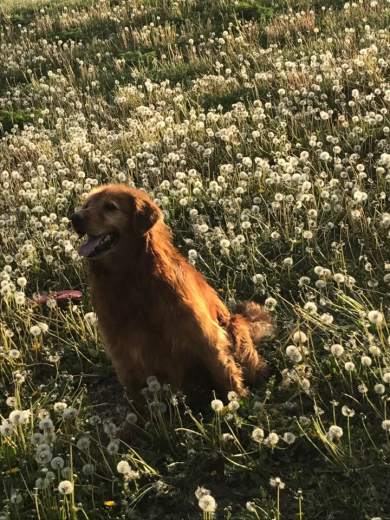
Our Dog Tucker Playing in the Dandelions


Our Golden Retriever, Tucker, took a break from playing frisbee in the dandelions located to the south of our house in an empty lot. He is usually so busy running around that I have a hard time getting a picture of him. He must have been tired!
Photo Credit: Denise Gilliland/Editor and Chief, Kat Country Hub.

Happenings at Oakland Heights


Oakland Heights News by Nancy Silvey

This week’s special event on Thursday May 11th Charlie Davis will be here to play the Harmonica. Next week is National Nursing Home week with many events going on. Starting on Monday May 15th is our Mother’s Day Tea Party at 2:30 pm with entertainment by Lori Orr. On Tuesday May 16th is a Baseball themed day, with a Cookout at 11:30 am serving Hamburgers and Hotdogs.  At 2:30 pm is a Ball tournament with Staff and Residents. On Wednesday May 17 is our Red White and Blue Day with an All-American Meal serving BBQ Chicken, Potato salad, corn on the cob, and Entertainment in the afternoon at 2:30 pm by Jerry Stingley. On Thursday May 18th is Cowboy Day, with cowboy games in the afternoon at 2:30 pm. And on Friday is May 19th is our Fiesta Day, we will be having our Happy Hour Fiesta Style at 2:30 pm. And on Saturday May 20th the Rusty Buckets will be here at 2:30 pm to perform.

Church Service for Sunday May 14th be given by the St. John Lutheran Church at 2:30 pm with a luncheon following service.

Activities for the week of May 15th to May 20th are as follows, reading with Suzanne, Sing A Long, Bingo the w/Salem, Bible Fellowship, Let’s Play Ball, Crafty Cooking, Saturday Movie, and Lawrence Walk.

Volunteers signing in last week were; Suzanne Sanderson, Dani Moseman, Bonnie Fleischman, Pat Anderson, Mary Donavon, Judy Nelson, Marge Maller, Betty Hanna, Anne Anderson, Di Ruwe, and Nadine Anderson.

Guest signing the guest book last week was; Mary Stuenkel and Brain Goracke to see Jene Hightree. Doris Kilgore to see Iona Long, and Dona Nelson.


Senator Brasch Invites High School Students to Apply for Youth Legislative Experience


High school students are invited to take on the role of state senators at the Unicameral Youth Legislature June 11-14.  At the State Capitol, student senators will sponsor bills, conduct committee hearings, and debate legislation. Senator Brasch says, “This is a great opportunity for Nebraska high school students to learn about their state capitol building and experience the legislative process of the nation’s only Unicameral Legislature.”


The Unicameral Youth Legislature gives behind-the-scenes access to students who have an interest in public office, government, politics, law, public policy, debate or public speaking.  Students will learn about the inner workings of the Legislature directly from senators and staff.


Registrants are encouraged to apply for a Greg Adams Civic Scholarship award, which covers the full cost of admission.  Applicants must submit a short essay.  Other $100 scholarships are also available. The deadline for registration is May 15.


The Office of the Clerk of the Nebraska Legislature coordinates the Unicameral Youth Legislature.  The University of Nebraska-Lincoln’s Extension 4-H Youth Development Office coordinates housing and recreational activities as part of the Big Red Summer Camps program.


To learn more about the program, go to www.NebraskaLegislature.gov/uyl or call (402) 471-2788.


Expanding Educational Opportunity


By Governor Pete Ricketts

George Washington Carver famously said that “education is the key to unlock the golden door to freedom.”  America has exemplified that truth with countless examples of individuals who have improved their position in life through education.  Access to education is the foundation of the American dream.  And the foundation to education and educational achievement is basic literacy.


The ability to read is critical to student success, as well as life-long earning potential and economic security.  From kindergarten to 3rd grade most students are learning to read.  After 3rd grade, students should be reading to learn.  Third grade marks a clear pivot point in reading.  If children cannot read proficiently at the end of 3rd grade, it is a daunting road block to future educational and professional success.


Nebraska needs to improve 3rd grade reading proficiency.  The National Assessment of Education Progress (NAEP), the “Nation’s Report Card,” is the only accurate metric to compare states.  NAEP reports only 40 percent of Nebraska students were proficient in reading by 4th grade, and only 38 percent were proficient by 8th grade.


Studies on 3rd grade reading demonstrate that those who struggle to read by 3rd grade continue to struggle and are likely to fall further behind their grade-level reading peers.  If a child is not reading proficiently going into 4th grade, they only have a 22 percent chance of ever catching up.


One of Nebraska’s biggest challenges in reading proficiency is the state assessment tool.  According to the Harvard Kennedy School Program on Education Policy and Governance’s Education Next, Nebraska is ranked 45 out of 51 for Rigor of State Proficiency Standards.  While many states have raised the bar on assessments to be closer to NAEP, Nebraska has not.  Nebraska’s kids simply deserve better than the low standards set by virtue of our state assessment tool.


A child who cannot read proficiently by 3rd grade is on the high school dropout track.  A study conducted on how reading skills and poverty influences graduation found struggling to read in 3rd grade is a stronger predictor of dropping out of high school than spending a year in poverty.  Almost 90 percent of students in poverty who read proficiently by 3rd grade graduated on time.  Conversely, 88 percent of students who failed to earn a high school diploma were struggling readers in 3rd grade.


When children don’t learn to read and eventually drop out of high school the cost to taxpayers is high.  Dropouts make up 90 percent of Americans on welfare and 75 percent of food stamp recipients.  But the consequence of failing the individual child is even more costly.  Statistically, children who cannot read proficiently by 4th grade are more likely be on welfare or in the corrections system at some point in their lives.  Almost 85 percent of teenagers in the juvenile justice system are functionally illiterate and seven out of ten adult prisoners can’t read above a 4th grade level.


Nebraska can take decisive steps to ensure our students achieve a higher standard at a better rate.  We can start by increasing our reading standards with a better assessment tool.  Many states have adopted A-F grading scales to provide transparency for parents about student outcomes.  This is a cost effective tool to improve the quality of education.  What is measured will improve.  Best practices on A-F scales include measures for both proficiency and year-to-year improvement so schools that start further down are recognized for their progress and high performing schools are continually challenged to improve.


We should develop public policy around the importance of 3rd grade reading, a concept which was introduced in the Unicameral this year.  Nebraska is one of only 15 states with no policy on K-3 reading, while 12 states have adopted comprehensive polices and 35 states have some form of K-3 reading policy.


In government, the discussion about education often centers on topics pushed by the teachers’ union and lobbyists hired by school districts with taxpayer funds.  Unfortunately, that means the political discussion often centers on things like school funding and pensions, when education discussions should begin and end with student achievement.


Every Nebraska student deserves the opportunities that a good education can bring.  Education reform policies have improved educational outcomes for students across the country.  My goal is for Nebraska’s students to be at the top, in both expectations and outcomes, especially in the critical area of 3rd grade reading.


I invite you to contact me with your perspective and concerns.  You can reach my office by emailing pete.ricketts@nebraska.gov or calling 402-471-2244.

May is Nebraska Bird Month


Throughout the month of May — otherwise known as Nebraska Bird Month — organizations across the state are holding exciting events celebrating our feathered friends. You’re invited to join in on the fun.

If you live in central Nebraska, come on out for the Fort Kearny Expo on May 13, where you can learn more about birds and make bird-related crafts. Those in western Nebraska can enjoy a birding hike at Wildcat Hills State Recreation Area on May 20. Eastern Nebraska events include a Mothers’ Day breakfast and bird walk May 14 in Lincoln, and bird observation and identification at Indian Cave State Park on May 27.

Happenings at Oakland Heights


Oakland Heights News by Nancy Silvey

This week we will be having Root Beer Floats on Thursday May 4th at 2:30 pm. Next week on Thursday May 11th at 2:30 pm Charlie Davis will be here to perform. We have a resident celebrating a birthday this week Doris Sanderson on May 4th.

Church Service for Sunday May 7th be given by the First Lutheran Church at 2:30 pm with a luncheon following service.  On Tuesday May 9th  is Catholic Mass at 9:30 am given by Father Paul.

Activities for the week of May 8th to May 12th are as follows, reading with Suzanne, Manicures, Reminiscing Group, Sing A Long, Game Day, Bingo the w/Evang. Free, Show and Share, Bible Fellowship, Let’s Play Ball, Crafty Cooking, Friday Bingo, Saturday Movie, and Lawrence Walk.

Volunteers signing in last week were; Dani Moseman, Sue Beckner, Pat Anderson, Mary Donavon, Judy Nelson, Betty Hanna, Anne Anderson, Lola Bridgeford, and Nadine Anderson.


April Showers


By John Wilson, Extension Educator

The old saying goes, “April showers bring May flowers” so my question to you is, what do May flowers bring? I’ll let you think about that one for a couple of minutes! I don’t know that it’s the kind of May flowers most people hope for, but April showers certainly have generated calls about purple flowers in lawns.

Unfortunately these are flowers homeowners don’t want. These are found on our number one lawn weed problem, ground ivy! I think one of my Extension co-workers says it best when she states, “Ground ivy is a very horrible weed.” There’s a small fortune, probably a large fortune, to be made if someone could just find a good use for this weed.

Ground ivy is a perennial broadleaf weed, meaning that it comes back from the roots year after year. This plant is the one that grows low to the ground and sends out runners, has scalloped leaves like a seashell, and has a small purple flower. It also has square stems and smells like mint when you mow over it because it is a member of the mint family.

People want to control it now because it is turning their lawns purple, but this is very difficult at this time of year. The major flow of energy and nutrients in the plant in spring is from the roots, where it was stored overwinter, to the above ground portion of the plant. Broadleaf herbicides applied at this time of year may burn the top growth and slow it from spreading, but they rarely give satisfactory control.

The optimum time to apply selective herbicides, those that kill broadleaf plants but not the grass, is in mid-September to mid-October when there is adequate moisture and warm temperatures. The plant is making and storing food for next year’s growth. Good growing conditions at this time cause the plant to translocate the herbicide to the roots, providing better control. The good thing about treating then is, this is also the best time to control other perennial broadleaf lawn weeds like white clover and dandelions.

Even when you apply a selective herbicide in the fall, you will not achieve 100% control with a single application. You will have better results with two applications about three weeks apart in the fall with the second application spot treating weeds that survived the first application. Remember, to be effective, the plants need to be actively growing to metabolize the herbicide.

The other herbicide alternative at any time of year are nonselective products containing glyphosate (or Roundup) which will kill everything, weeds and grass, and then you would need to sod or reseed. So it is best to only use this in the spring or fall if you are going to reseed the area. If you are going to sod an area, you have a little more flexibility on when this could be done.

Remember, using a non-selective herbicide is a last resort measure when there is not enough grass to try to salvage by using a selective broadleaf weed killer. If you have an area that is going to require this drastic measure, I would recommend the herbicide treatment rather than trying to use tillage to control the ground ivy. You might think you have everything killed with tillage, but little root fragments may resprout and you’ll find you have ground ivy coming up in your new seeding.

A couple of other quick reminders. If you haven’t put on your crabgrass preventer this spring, now is a good time to do that. It is good to apply it before a rain. The rain will dissolve and activate it. If you miss out on the rain, you need to water it in with a quarter to a half inch of irrigation… which might seem really strange after all the rain we’ve had recently.

And speaking of rain, if it prevented you from mowing your lawn in a timely fashion, set your mower on the highest setting if it isn’t there already. Then do your next couple of mowings a day or two earlier than you normally would so you remove a smaller percent of the leaf area which will help the turf recover.

Now, for the answer to my earlier question, “What do may flowers bring?” Any elementary student studying U.S. history would be able to give you the answer. Pilgrims! That’s all for today. For more information on controlling ground ivy or other lawn weeds, contact your local Nebraska Extension office.