Elkhorn Logan Valley Health Department launches website


Contact:

Gina Uhing

Elkhorn Logan Valley Public Health Department

402-529-2233

Elkhorn Logan Valley Public Health Department, as a member of the Nebraska Association of Local Health Directors, has launched a new interactive website that will provide tools for the public, the media, health care providers and policymakers in making solid decisions regarding health.

Created as a joint endeavor by several national agencies, the Network of Care for Public Health and Wellness is designed to provide the most up-to-date health information in one easy-to-use website.  The website includes county level statistics about key health indicators, wellness education, information about health issues and medical care, news, and links to local and national support groups.  It also provides information about state and federal legislative bills on various health topics, allowing the public to easily contact their representatives about issues of concern.

“An individual or organization can, for instance, look up an indicator, such as lung cancer and find out if their county statistics for this disease are better or worse than those in other areas of the state or nation.  If they find there is concern about their county’s incidence of lung cancer, they can then look up risk factors, such as smoking rates and air quality, for their county on the same site.  Having all of the information can help healthcare organizations, policymakers and others to develop priorities and direct resources to effectively impact the top health concerns for their communities”, says Gina Uhing.

Continuing to use lung cancer as an example, individuals who may have the disease can also easily research the latest treatment options, find news releases and articles by trusted experts on the topic, locate a support group, and establish and manage their own online personal health record.

This is just one example of how the Network of Care can be utilized.  Hospitals, now required by the IRS to complete community needs assessments, will find the information valuable to their endeavors.

“The Network of Care will provide us with a ready source – a complete and current site where we can go, and where others in the community can go – to get current statistics and numbers to guide their work,” said Teresa Anderson, President of the Nebraska Association of Local Health Directors. “It will allow us to display local, state and nationally acquired data in an easily understood and immediately accessible manner”.

Kids 4 Christ


Permission slip Kids 4 Christ 7-19-13

Permission slip for Kids 4 Christ


Kids for Christ


Below is the Kids 4 Christ Flyer


brochure-kids-4-christ-7-19-2013.docx


Improve lawns now


John Wilson

John Wilson

NOW is the Time to Start Improving Lawns

Though this has been a relatively good growing season for turfgrasses throughout the region, many areas are still showing damage from the summer, fall, and/or winter of 2012-13. Mid- to late-August is the time to dramatically improve turf areas and improve resiliency to future stresses. Depending on the turf species present and extent of damage, the course of action ranges among the following three options:


1. For a moderately thinned lawn (no larger than softball-sized holes on a Kentucky bluegrass lawn or baseball-sized holes on a tall fescue lawn), aggressive fall fertilization and broadleaf weed control applied in late September through late October should dramatically improve the lawn.


2. For Kentucky bluegrass with larger than softball-sized holes on a Kentucky bluegrass lawn or larger than baseball-sized holes on a tall fescue lawn, aerification and/or power raking followed by overseeding will help reestablish turfgrass into the thin areas. Seed tall fescue back into tall fescue lawns. Seed Kentucky bluegrass back into Kentucky bluegrass lawns.

The exception to this would be if you want to convert a bluegrass lawn to tall fescue, in which case overseeding with tall fescue across the entire lawn can be effective. In this case, mow the lawn to 1.0-1.5” or as low as feasible to minimize competition from existing plants. Aerify aggressively and/or power rake to maximize seed-soil contact and drop seed or power-overseed tall fescue across the entire lawn. Keep mowing at the low heights until seedling leaves are being cut and then gradually raise the mowing height back to 3.0-3.5” where it should remain.

Multiple years of overseeding tall fescue into Kentucky bluegrass will be required to increase the percent of tall fescue in the lawn. Regardless of the species overseeded, aggressive fall fertilization and broadleaf weed control applied in late September through late October is required to further improve the lawn.


3. If the lawn is severely damaged or has been perennially problematic because of species, soil type, drainage, etc., now is the perfect time to start over with complete renovation. This may include regrading, tillage, and/or incorporating organic matter into a clay soil followed by reseeding and aggressive postseeding care for most effective establishment. This should be done in August if you are choosing to use a cool-season grass like Kentucky bluegrass or tall fescue. Wait until May if buffalograss will be the futuregrass on the lawn.


Though a number of advertisements are touting new miracle grasses such as Cutting Edge™ or Canada Green™, locally purchased turf-type tall fescue, Kentucky bluegrass, or buffalograss are still the best grasses for lawns in Northern Great Plains.


We have many relatively recent publications on our web page including:

Improving Turf in the Fall:

http://turf.unl.edu/pdfcaextpub/LawnImprovementPrograms2010a.pdf

Choosing Grasses and Buying Seed for Lawns in Nebraska:

http://turf.unl.edu/pdfcaextpub/Grassesforlawns2012k.pdf

Establishing Lawns from Seed:

http://turf.unl.edu/pdfcaextpub/Establishingturffromseed2012l.pdf

Establishing Lawns from Sod:

http://turf.unl.edu/pdfcaextpub/Establishingturffromsod2012m.pdf


Kids 4 Christ


An after school program, Kids 4 Christ, will begin Wed., Sept. 11th 2013 at the Lyons Memorial United Methodist Church.

Kids 4 Christ is open for children in grades kindergarten through 6th. The program will be held every Wednesday from 3:45-5:00 p.m.

An escort service will be available from the Lyons-Decatur grade school (at the north door on Lincoln Street) to the Methodist Church.

The program consists of fun and games, craft, music, snacks and learning about Jesus.

Kids 4 Christ is for all children, regardless of church affiliation. The purpose of the program is to teach children about Jesus through scripture. For registration ask for the registration and permission slip.

For further information, questions or suggestions, please feel free to contact Michelle Roscoe at 402-687-2576 or Pastor Dean Joy at 402-984-2534.

Obamacare is coming


Written by: Herb Weisbaum NBC News contributor


As the debate rages over who benefits from the Affordable Care Act, one thing is becoming clear: The controversial program is a dream come true for con artists.

Consumer experts warn that the program has created a huge opportunity to swindle people – steal their money and snag their sensitive personal information.

“Any time you roll out a big government program like this, confusion is inevitable,” said Lois Greisman, an associate director in the Bureau of Consumer Protection at the Federal Trade Commission. “This confusion creates a tremendous opportunity for the fraudster.”

Scammers have been at it for more than a year now, but consumer advocates and security experts warn that the problem will worsen as we get closer to Oct. 1. That’s when the millions of uninsured Americans can use a health insurance exchange – set-up by their state or the federal government – to shop for coverage.

“I believe the incidents are going to skyrocket as that date approaches,” said Eva Velasquez, president and CEO of the non-profit Identity Theft Resource Center. “And even people who are smart and savvy could get taken, so we are very concerned about the potential for some serious financial harm.”

The Affordable Care Act created a Health Insurance Marketplace – also referred to as the Health Insurance Exchange. Policies in the exchange have been preapproved by each state’s insurance commissioner.

“There are fake exchanges already up and running on the Internet,” said Monica Lindeen, Montana’s Commissioner of Securities and Insurance. “If you do a search and type in ‘exchange,’ you’ll find all sorts of websites that claim to be in the exchange when they are not.”

These health insurance exchanges don’t open for business until October 1, so no one can sell you insurance through an exchange until then.

Scam artists got an early jump on national health care reform. Since last year, they’ve been calling, faxing and emailing people across the country claiming to be with the Medicare or ‘Obamacare’ or some part of the federal government.

They often say they need to “verify” some personal information – typically a bank account or Social Security number – to ensure you get the proper benefits. In some cases, they tell the victim they need to purchase a new insurance card to be eligible for insurance under the new program.

According to John Breyault, who runs Fraud.org , a project of National Consumers League, these scammers can be very intimidating, especially to seniors.

“We’ve heard about cases where the scam artists have threated people with jail time if they don’t purchase the fake insurance cards,” Breyault said.

Americans don’t need a new Medicare card and no one from the government is calling and asking for personal information or money. Under the individual mandate provision of the Affordable Care Act, people who don’t buy health insurance could get hit with a financial penalty, but that does not take effect until 2014. There is no jail penalty in the law.

A con artist can claim to be anyone, for instance a “navigator” who can help you apply for health care coverage through an exchange. They gain your trust and then ask for personal information to buy non-existent policies. Fraud.org reports that some victims have been convinced to wire money or send funds via prepaid debit card to get their full benefits.

Thousands of “navigators” are being trained and certified to guide you through the process of applying for coverage through the new exchange program. These navigators are prohibited by law from recommending a particular plan. They will never ask for personal information and they will never ask for money in any form. The navigator program hasn’t started yet, so no one is making calls.


Don’t get taken

You can’t sign up yet, but you learn about your choices at HealthCare.gov, the site run by The Center for Medicare and Medicaid Services. You also want to start your search here if you live in one of the places (17 states, District of Columbia, Guam or American Samoa), that set up its own insurance exchange. Customer service representatives are available at 1-800-318-2596.

These tips, provided by consumer groups and government, will help you spot a fraud:

  • There is no card associated with health care reform.
  • There is no new Medicare card and you do not have to update any personal information.
  • The Health Insurance Marketplace (those exchanges) doesn’t open until October 1, so you can’t buy coverage under the Affordable Care Act until then.
  • Don’t respond to a cold call of any kind, especially one that asks for personal information or money. And don’t trust your Caller ID; it can be spoofed to make it look like the call is coming from a government office.
  • Don’t let anyone rush you. The rates in the exchange have been pre-approved and won’t change during the initial enrollment period, Oct. 1 to March 31. Anyone promising a “special price” or “limited time offer” or who tells you “spots are limited” is lying to you.

The FTC’s Lois Greisman urges you to file a complaint if you spot a problem, get a suspicious call or fall victim to a health care insurance con artist.

Herb Weisbaum is The ConsumerMan. Follow him on Facebook and Twitter or visit The ConsumerManwebsite. 


Mary Loftis,

Extension Assistant
UNL Extension – Burt County
111 North 13th Street, Suite 6
Tekamah, NE 68061
Phone: (402) 374-2929

Fax: (402) 374-2930

Internet: mloftis2@unl.edu


Allison Penke Memorial Feeder Calf Program


Mary Loftis

Mary Loftis

Jason and Kylie Penke are offering the Allison Penke Memorial Feeder Calf Program to create a positive out of a negative in their family. They lost baby Allison in January this year. Because of the outpouring of love and sympathy they received, the memorials were used to purchase the initial heifer, “Allie,” during the Burt County Fair Foundation Fundraiser Auction to begin this program.  Both Kylie and Jason are strong supporters of the 4-H and FFA programs and they wanted to make it possible for a 4-H or FFA member to be able to participate in the beef program.

Burt County 4-H and/or FFA members are eligible to apply on a yearly basis to receive any feeder calf born to “Allie” until a feeder calf is received or membership status no longer applies. 


Allison Penke Memorial Feeder Calf Criteria

  1. One feeder calf born to “Allie” will be donated to a recipient each year.  In the event that “Allie” does not have a calf, there will not be a recipient.
  2. Applicants must be enrolled in 4-H and/or FFA to be eligible.
    1. In the event that one of the Penke children becomes eligible to be a 4-H member the calf will go to that child.
  3. The recipient will acquire ownership prior to June 1. In order to retain ownership, the animal must be shown at the Burt County Fair as a feeder calf the first year, and a breeding/market heifer or market steer the following year.
  4. Liability deferral and retainer agreement must be signed by the applicant and parent/guardian (when applicable).
  5. Application must be typed and signed by applicant.
  6. Application must include:
    1. Complete applicant information page
    2. Current and prior 4-H and/or FFA involvement essay
    3. Complete feeding and vaccination plan
  7. Applicants must complete the enclosed application and return to the Extension Office by September 15th for the year it is to be awarded.


The recipients will be selected based on the following criteria:

4-H and/or FFA Enthusiasm, Involvement & Leadership – Project areas, exhibiting, skills and knowledge learned, community service, offices held, etc.


Financial Need – This is included to encourage 4-H and FFA members who may not otherwise be able to participate in the beef project.  Based on household income.


A selection committee will be assembled by the Penke family. The committee will review the applications and recommend a recipient. A recipient may receive a feeder calf only one time.  The recipient will be notified in a letter, and will be announced at 4-H Achievement Night and/or in local newspapers.


Letters of Appreciation – Appreciation for the Allison Penke Memorial Feeder Calf Program may be expressed to:


Jason & Kylie Penke, 1381 County Road 21, Craig, NE  68019


Applications are available at the Burt County Extension Office, or by going online to the following websites:

(Burt County Extension Website under Forms)         http://burt.unl.edu/web/burt/4hprogram

(Burt County Fair Website)                 www.burtcountyfair.net


State Fair – Prizes & Results


PRIZES such iPad, iPod Touch, iTunes gift cards…fairgoers will have the opportunity to win these great prizes sponsored by the Nebraska 4-H Foundation.  To win, fairgoers simply locate a kiosk at the Exhibit Hall or at the “Five Points Bank Arena”.  On the “State Fair 4-H” app, tap on “Register & Win”, enter name, e-mail, zip code and a few other tidbits of information and the fairgoer is registered to win.  Prizes will be awarded through the 4-H Foundation office after the State Fair.  So spread the news!


RESULTS:  Did you know you can find and share Nebraska State Fair 4-H results on Facebook, Email, Twitter, and more with a click?  From your computer, go to the 4-H Results web site at:http://4h.unl.edu/web/4h/nebraskastatefair4hresults, filter results by name, county, department, etc.  After results have surfaced, select the “Share” icon.  Select the service to post the results.


Mary Loftis,

Extension Assistant
UNL Extension – Burt County
111 North 13th Street, Suite 6
Tekamah, NE 68061
Phone: (402) 374-2929

Fax: (402) 374-2930

Internet: mloftis2@unl.edu

Southern leaf rust confirmed


Southern Leaf Rust Confirmed

I had a corn leaf sample brought into me earlier this week that was covered with small orange lesions with yellow leaf tissue around the lesions. From the visual observation, I was 99% sure it was southern rust of corn and confirmed it by looking at the spores under a microscope. This is significant because southern rust can be more damaging to corn than common rust.

Rusts are obligate parasites meaning they have to be on a living host at all times
John Wilson

John Wilson

to survive. So rust diseases do not overwinter in Nebraska, they develop on crops in the southern United States. Then the spores have to blow up from these southern infestations and the disease develops here when conditions are right. Rusts develop most rapidly when we have moderate temperatures, low to mid 80’s, and moisture on the leaf surface from heavy dew or rainfall.

When scouting fields, it is important to be able to distinguish between common rust and southern rust. We always have some common rust and there is quite a bit of it out there this year. However, common rust generally does not cause as great of a yield loss as southern rust. The last time we had a significant outbreak of southern rust in Nebraska was in 2006.

We need to look for several things when deciding which species of rust is present in fields. The first is location of the pustules on the leaf. A pustules is the raised area in the middle of the lesion that releases spores. If you look at these under a magnifying glass or hand lens, they appear as small raised bumps with a small crack where the spores are released.

In common rust, pustules are found on both the upper and lower surfaces of the leaf and randomly scattered while southern rust pustules are found almost entirely on the upper surface and may be scattered, but often are found in dense clusters in some areas on the leaf. Also common rust lesions are generally larger and tend to elongate while southern rust lesions are smaller and round. Common rust lesions tend to be darker, brick red to darker brown while southern rust lesions are usually orangish-brown.

Some, but not all corn hybrids have a distinct reaction to the southern rust lesions and form a halo of chlorotic leaf tissue around the lesions creating yellow circles less than a quarter inch in diameter with a small lesion in the center.

Before we confirmed southern rust here, the 11 counties where southern rust had been found were farther south and west, starting at the Kansas border around Hebron and north to Columbus and then in counties west of that line. The one exception would be Gage County or the Beatrice area. Burt County is as far north and east as it has been identified in Nebraska so far this year.

The level of infestation around here doesn’t warrant control now. It has been found primarily in the rows along the edge of the fields and only on a few leaves of the plant. However, if we get more August-like weather with warmer nights plus rainfall or lots of heavy dews and it could develop to levels where farmers do need to treat with a fungicide. If they do, they will want to use a fungicide with as long as residual as they can get, keeping in mind pre-harvest intervals.

So even though conditions don’t warrant treating now, it is important to scout fields to see if it is present in fields and to monitor if the disease is spreading to more leaves on the plants. The weather will play a major role in how the disease develops. For more information on common and southern rust in corn, visit the CropWatch website at http://cropwatch.unl.edu or contact your local UNL Extension office.


= = = = = = = = = = = = = = = = = = = = = = = = = = = = = = = = = = = = = = = = = = = = = = = = = = = = =


News Release

John Wilson

Extension Educator

August 16, 2013


$45 Million in Losses

Last year, soybean cyst nematodes, SCN, cost Nebraska soybean growers over $45 million, more than all other soybean diseases combined. If you have SCN in your fields and are not managing it, YOU contributed to that loss. Farmers and ag professionals can learn how to identify and manage soybean cyst nematode at a UNL Extension SCN Management Field Day.

SCN often goes undetected in the field. Yield losses of 20-30% have been documented in Nebraska fields with no above-ground symptoms. If SCN caused holes, lesions, spots, or other plant abnormalities, it would be much easier to convince producers to test for and manage it. However, infested plants usually look healthy. Often, the first indication of a problem is when soybean yields level off or even start to drop while corn or other crop yields in the same field continue to improve.

What would a six bushel yield increase on your soybean acres do for your bottom line? That’s the average yield increase at 25 University of Nebraska research trials when resistant varieties were compared to top yielding susceptible varieties on SCN-infested sites. In addition to direct yield losses, SCN has been linked to an increase in the occurrence and severity of sudden death syndrome, SDS, in soybeans.

At each SCN Management Field Day site, you will be able to:


  • see SCN resistant and susceptible soybean varieties in infested fields,
  • examine cysts on soybean roots,
  • learn how to identify and manage SCN infestations,
  • receive bags for free SCN analyses – a $25/bag value,
  • get answers to your SCN questions,
  • enjoy a complimentary meal & visit informally with experts, and
  • CCAs can earn 1 FREE ceu in pest management.

A local SCN Management Field Day will be held on Wednesday, August 28, 6:30 p.m., at the Tim Gregerson farm. From Herman, go 2.5 miles north on Highway 75 (or 4 miles south of Tekamah), then 1.5 miles west on County Road “C”, and 0.1 mile north on County Road 34. The field will be on the east side of the road.

Originally identified in counties bordering the Missouri River, soybean cyst nematode has been identified in 54 counties in eastern and central Nebraska as far west as McCook. The Soybean Cyst Nematode Management Field Days are presented by UNL Extension with support from the Nebraska Soybean Board. A meal will be provided courtesy of Monsanto (DeKalb/Asgrow).

For more information, contact your local UNL Extension office at 402.374.2929.



Cyber criminals use photo-sharing programs


News Release

Mary Loftis

SHIIP and SMP Volunteer

August 13, 2013


Mary Loftis

Mary Loftis

The FBI has seen an increase in cyber criminals who use online photo-sharing programs to perpetrate scams and harm victims’ computers. These criminals advertise vehicles online but will not provide pictures in the advertisement. They will send photos on request. Sometimes the photo is a single file sent as an e-mail attachment, and sometimes the victim receives a link to an online photo gallery.

The photos can/often contain malicious software that infects the victims computer, directing them to fake websites that look nearly identical to the real site where they originally saw the advertisement. The cyber criminals run all aspects of these fake websites, including “tech support” or “live chat support,” and any “recommended” escrow services. After the victim agrees to purchase the item and makes the payment, the criminals stop responding to correspondence. The victims never receive any merchandise.

The FBI urges consumers to protect themselves when shopping online. Here are a few tips for staying safe:


 Be cautious if you are on an auction site and lose an auction and the seller contacts you later saying the original bidder fell through.


 Make sure websites are secure and authenticated before you purchase an item online. Use only well-known escrow services.


 Research to determine if a car dealership is real and how long it has been in business.


 Be wary if the price for the item you’d like to buy is severely undervalued; if it is, the item is likely fraudulent.


 Scan files before downloading them to your computer.


 Keep your computer software, including the operating system, updated with the latest patches.


Ensure your anti-virus software and firewalls are current – they can help prevent malware infections.

If you have fallen victim to this type of scam, file a complaint with the Internet Crime Complaint Center, http://www.ic3.gov/

The Internet Crime Complaint Center (IC3) is a partnership between the Federal Bureau of Investigation (FBI) and the National White Collar Crime Center (NW3C).


Mary Loftis,

Extension Assistant
UNL Extension – Burt County
111 North 13th Street, Suite 6
Tekamah, NE 68061
Phone: (402) 374-2929

Fax: (402) 374-2930

Internet: mloftis2@unl.edu


4-H members headed to state fair


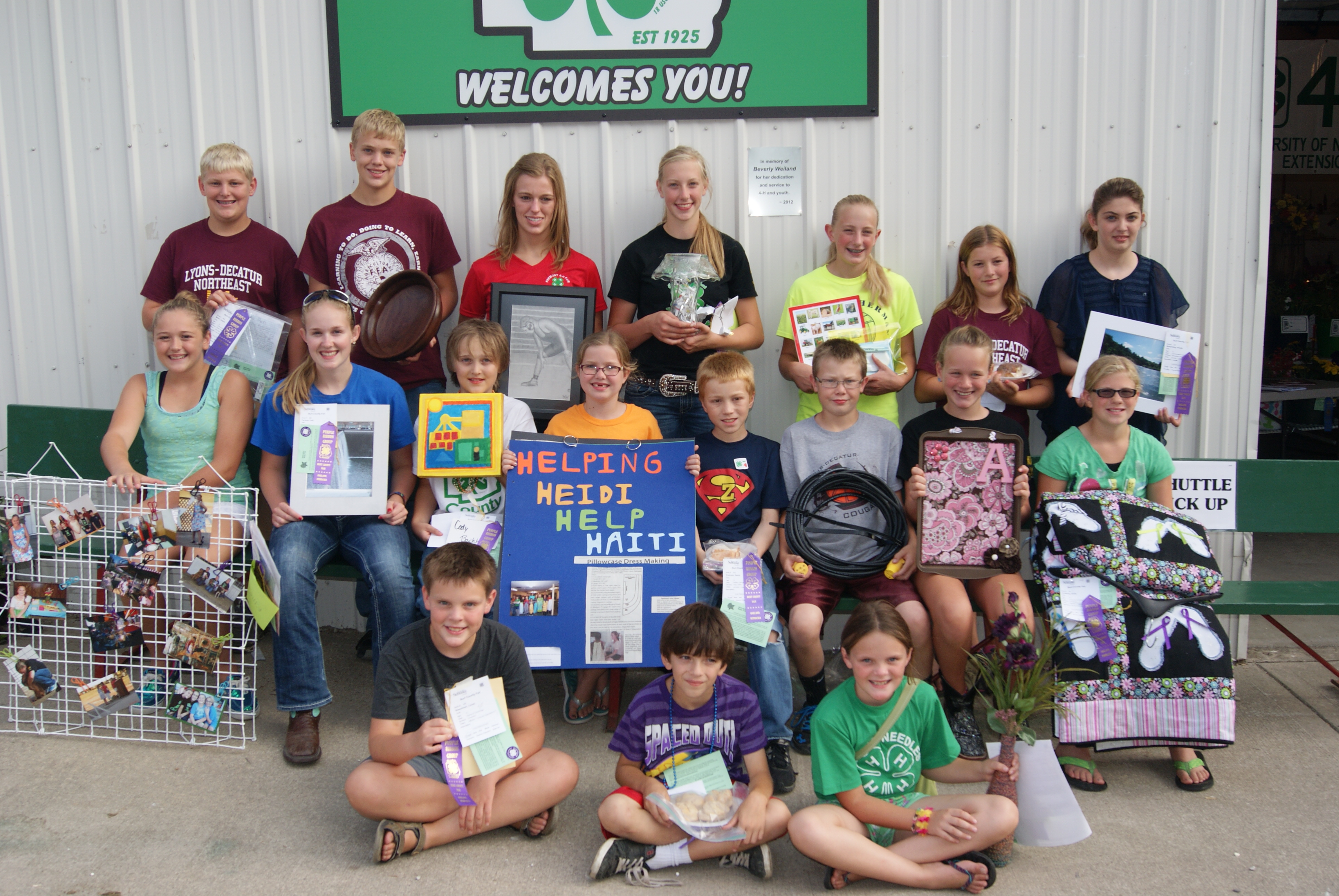
Many Burt County 4-H members had their exhibits selected to go to the Nebraska State Fair next week.

Proudly showing some of the items making the trip to Grand Island are:

Back: Layne Miller, Brent Miller, Heidi Miller all of Lyons; Jessica Flesichman & Jadyn Fleischman of Herman;  Cassidy Mentink and Amelia Schlichting both of Lyons.

Middle: Ellie Glup, Leia Farrens, Cody Bachtell all  of Tekamah; Elise Anderson, Lyons; Gavin Enstrom of Shawnee, Kansas; Brayden Anderson, Lyons; Anna Wakehouse and Greta Lindberg both of Tekamah.

Front: Lucas Niewohner, Herman; Caleb Schlichting, Lyons and Hayley Niewohner, Tekamah.


Mary Loftis,

Extension Assistant
UNL Extension – Burt County
111 North 13th Street, Suite 6
Tekamah, NE 68061
Phone: (402) 374-2929

Fax: (402) 374-2930

Internet: mloftis2@unl.edu

4-H members going to the state fair. Photo courtesy of Mary Loftis

4-H members going to the state fair.
Photo courtesy of Mary Loftis