Poison Ivy


John Wilson

John Wilson

News Column

John Wilson

Extension Educator

August 30, 2013

Poison Ivy

One of my funniest home visits occurred about this time of year several years ago. As we walked around the yard, the homeowner asked me to identify a vine growing up a large tree. I assured her it was poison ivy, pointed out how to identify it, and how to get rid of it.

I must not have been a very good teacher because about 15 minutes later she grabbed a plant in a flower bed with obvious insect damage and asked what was wrong with it. I told her I wouldn’t be concerned about the insect damage, but asked if she recognized the plant. After a few moments of silence, I asked if the leaves looked like something we’d looked at earlier.

A couple more moments of silence were followed with a sheepish, “It isn’t poison ivy, is it?” Our visit was cut short when I confirmed her identification. The only problem was, in those few moments she had also scratched her neck and swatted a couple of mosquitoes. She did take the precaution of having her husband open the door so she didn’t leave any residues from the poison ivy on anything as she headed for the shower.

Anyone who has suffered through the agony of a poison ivy rash learns pretty quickly to avoid the plants whenever possible. Poison ivy is common in uncultivated areas, such as fence rows, roadways, ditches, and woodlands, but it can also find its way into home landscapes. All parts of the plant contain an oil which causes an allergic reaction resulting in the rash.

Learning to identify poison ivy is the first step to controlling it. The old saying is, “Leaves of three, let it be.” This refers to the structure of a poison ivy leaf, which consists of three smaller leaflets. The leaflets are 2-4 inches long, and dull or glossy green in color with point tips. In fall, leaves turn a beautiful orangey-red. The middle leaflet is generally larger than the two side leaflets. The edges of poison ivy leaves are quite variable and can be lobed, toothed or completely smooth.

Plants can grow as an upright woody shrub, a trailing shrub that grows along the ground, or as a woody vine. Vines climb trees quite high and develop a mass of aerial roots along the stem, resulting in the appearance of a “fuzzy rope” growing up the tree. Poison ivy produces yellowish-green flowers, which later develop into waxy, white, berry-like fruits. Birds love these berries and after eating them, spread the seeds.

Poison ivy can be effectively controlled by hand pulling, spot treatment of the leaves with a herbicide or by cutting woody plants down and painting a herbicide on the stump. Hand pulling is most effective on small plants when the soil is moist. Remove each plant’s entire root, because sections of roots left behind can resprout.

Wear rubber, chemical resistant gloves, long sleeves, long pants, shoes and socks to avoid skin contact. When finished, wash clothing and gloves separate from any other family laundry and rinse the washing machine afterwards.

Spot treat individual plants with a selective, brush-killing herbicide containing triclopyr, or a non-selective herbicide like glyphosate if damage to nearby plants is not a concern. The herbicide can be applied anytime during the growing season but it is most effective in late summer to early fall.

Use a sprayer to wet the foliage with herbicide, but avoid soaking the soil or allowing herbicide to drift or splash onto non-target plants. Poison ivy is a difficult plant to control, so repeat applications will usually be necessary. Finally, woody shrubs or vines can be cut down and the stump painted with a herbicide, which will translocate into the roots and kill them.

Once the plants have died, remove them but always use safety precautions when handling dead poison ivy. Even though the plants are dead, the toxins remain. Dispose of the plants completely, but don’t add them to your compost pile or burn them. Inhaling the smoke from poison ivy as it burns can result in an internal rash. If you have contact with poison ivy, wash as soon as possible with soapy water to break down the oily compound which causes the rash. For more information on poison ivy control, contact your local UNL Extension office.


Corey McCullock, LDNE Class 2013


This is the third installment of 2013 graduates and where they are now.

This summer was like any other I would say, other than the fact that it could be my last at home!

I worked this summer so that makes it very… not fun. To be leaving home feels like I am opening up a new chapter of many in my life that will take me where I wanna go.

My future plans are to open up a new business and move back to the local area of Lyons. Also, build a house in the country.

In five years I hope to be taking classes for my Masters and working for Peter Kiewit, at least until I gain some experience.

Corey McCullock

Corey McCullock

Growing up in a small town is amazing! All my roommates had more than 300 kids in their class, and I had 12. I would of never been able to have the opportunity to get to know every single person in the school. It also gave me the chance to know many people in the community. You have a sense of peace in a small town that can never be found anywhere else. And I could see the stars in Lyons, here in Omaha, not so much.

Peggy Jensen’s Boston Terriers, Jette, 10 and Megge, 7


Jette and Megge

Jette and Megge

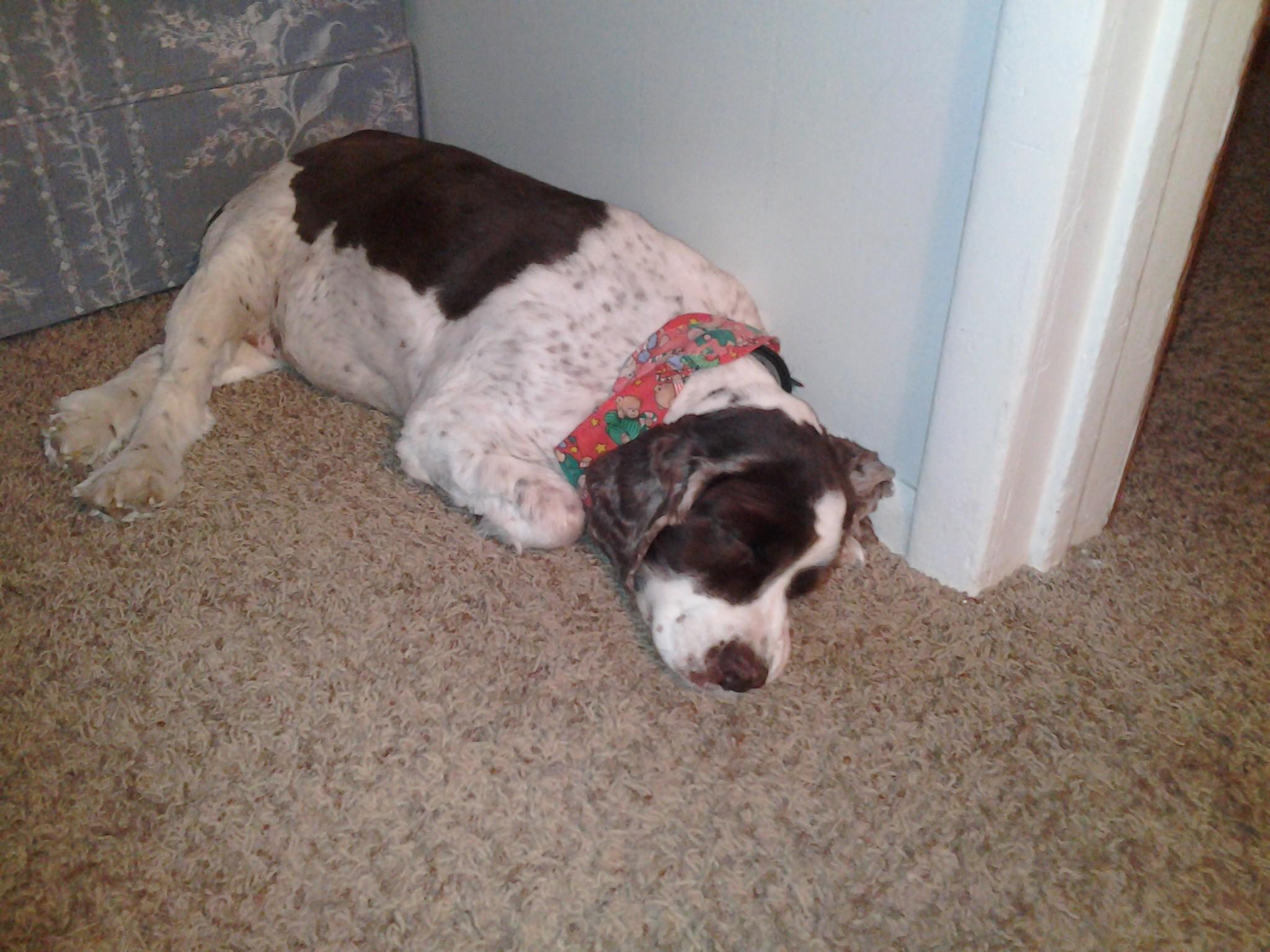
Russ and Connie Peterson’s Springer Spaniel, Shelby


Shelby

Shelby

Jody Graham’s dog


Jody Graham's dog.

Jody Graham’s dog.

Lili Bear


Tri Tran and Whitney Storie’s dog, Lili

Lili Bear

Lili Bear

Bear. She is mini schnauzer and terrier.

Carol Polenske’s dog, Abby


Abby

Abby

Abby sportn her thundershirt during the boomers a few nites ago …love her

HarvestFest 2013 in Bancroft Sat. Sept. 7


The events are on the poster below.

999704_673909272638031_494503235_n

Back to school


Rachel Wise

Rachel Wise

Rachel Wise, District 3, Nebraska State Board of Education (August, 2013)

Back to School!

School shopping, school supplies, new teachers, new friends, getting to bed early these are the memories of August for students and teachers! This time of year is also a busy time for local school boards and for the State Board of Education.  A packed agenda welcomed the State Board on August 8th and 9th.

By the time you read this article, the 2012-2013 Nebraska Statewide Assessments (NeSA) reading, math and science scores will have been released to the public. NeSA is the assessment or testing system developed to measure student progress on Nebraska standards. While these test scores provide valuable information for schools, teachers and parents, it is important to remember these tests are one-time, drop-in measures of student learning that, in my opinion, should not be used alone to judge the performance of our students, teachers or schools. Are they measures that can be of value? Absolutely! However, we must look at multiple factors as they relate to student performance, teacher performance and school success.

In late September, the Nebraska Department of Education will release the State of the Schools Report (SOSR), which will provide a great deal more information about our schools and include the Nebraska Performance and Accountability System (NePAS). NePAS will provide information on how school districts perform in reading, math, writing and science. Information on growth and improvement of districts will be provided for reading and math. This year the SOSR will provide more detailed information because of a change in the way we report performance for small groups of students. While the new rules or “masking” rules are complex, in general the department will display only percentages for student performance and those percentages will be rounded to continue to protect confidential information about individual students. Data for small student groups ― groups with fewer than 10 students ― will continue to be masked but percentages will be displayed when five or more students perform at a specific performance level such as below, meeting or exceeding the standards. This new reporting strategy will be especially useful for smaller schools when graduation rates are reported in November.

Earlier in the year, I provided some background information about Nebraska Standards, the Common Core and an alignment study that was being conducted by the McREL organization. The completed language arts alignment study was a focal point of discussion at the August Board meeting. A math standards alignment study is being finalized. Those results will be shared with the Board next month. The report for the language arts alignment is available on the Nebraska Department of Education’s website and contains some excellent information. In quick summary, there is a high correlation between Nebraska’s language arts academic standards and the Common Core language arts standards. The report showed that 3 percent of the Nebraska language arts standards were more rigorous than the Common Core language arts standards and 3 percent of the Common Core language arts standards were more rigorous than Nebraska language arts standards. I will touch on the alignment study of language arts and math standards in more detail next month. The State Board approved a timeline and process for validating Nebraska academic standards and to ensure our high school seniors are college and career ready when they graduate. This fall, representatives from postsecondary education and Nebraska language arts standards writing teams will begin that process. The review process will include findings from the McREL alignment study and involvepostsecondary education representatives, teachers, administrators and the public

Finally, the State Board is moving forward with its search for a new Commissioner of Education. At the August meeting, the State Board approved a position profile that will serve as the foundation for recruiting and hiring the next Commissioner.

For more information on the release of NeSA scores, the process for ensuring Nebraska standards are college and career ready and the search for a new commissioner, please search the Nebraska Department of Education website at www.education.ne.gov .


.


State Fair experiences


Mary Loftis

Mary Loftis

Going to the Nebraska State Fair always provides some interesting experiences. Now, I’m talking from my own perspective as an extension staff member for over 34 years, plus my personal experiences as a 4-H member.

The State Fair was always been a big thing…even when I was a kid and went with my family. The bad news was we always had to go through ALL the buildings before we ever got to see the midway! Back then my Dad loved the chocolate and nut covered ice cream on a stick so we all got one. All I can remember is losing more chocolate than what I ate as it melted and slid off my ice cream.

When I went to the State Fair as a 4-H member it was even more exciting. Seeing ALL the beautiful exhibits other 4-H members made and trying to find an exhibit of mine somewhere in the huge old 4-H building in Lincoln was amazing. Giving a 4-H demonstration at the State Fair was a special honor, even though the stages were curtained off in part of the big building until they built a special presentations building, but that was LONG after my State Fair exhibitor years!

In college the University of Nebraska Collegiate 4-H Club ran a concession stand (or two) on the first floor of the 4-H Building, basically under the arena seats. As you can imagine, that was a fun experience, but I especially remember a young 4-H member racing into the concession stand needing a carton of milk for her 4-H demonstration. She had forgotten it at home and in her rush she didn’t have any money with her to buy it. I gave her the milk, wished her good luck and she later came back and paid for it. I knew she would!

When the State Fair became part of my JOB, it took on a different, but still exciting look. Packing and taking all those exhibits from the county fair to the state fair was a lot of work, but also a lot of fun as you run into (sometimes literally) extension friends from other counties as we hauled everything into the 4-H Building.

If you remember the huge 4-H Building in Lincoln, a vast majority of the exhibits were carried up two flights of steps to the second floor to be judged and then displayed. Of course the building was not air conditioned and it was always a very HOT August day carrying them in and helping getting them judged. I think we were tougher then, younger…and in better shape, as carrying some of those heavy and awkward items up the stairs was a real challenge.

Today, we are still doing much the same things taking things to the State Fair only since 2010 the Nebraska State Fair is in Grand Island instead of Lincoln.

Carefully packing and recording all the exhibits is quite the process. John Wilson is a packing expert. (Obsessive is another way to describe him!) He can fit more stuff into a vehicle and get it safely to State Fair than anybody I know. However we met our match this year.

Do you remember the beautiful glider porch swing that sat outside the 4-H Building at the county fair? It was selected to go to the state fair. Brent Miller of Lyons refurbished the swing using plastic lumber (not the hollow stuff…the HEAVY stuff!) His family called before bringing the swing down to ask if we thought there would be room for it. I thought there would be and knowing John’s skill at packing figured it would be no problem. WRONG!

Since we were trying to get it into a van it just wouldn’t fit! Well, actually it did fit, but then nothing else would get to go to state! I called the Miller family and told them I had been overly optimistic about fitting it in and they were very understanding…after jokingly suggesting we could put it on top of the van! John, the Master Packer felt he had failed, but I didn’t miss it at all when we unloaded in Grand Island!

The good news about the new 4-H Building in Grand Island is the lack of stairs and it’s air conditioned! The bad news is that there isn’t nearly enough space for the 4-H exhibits as we are still sharing space with State Fair vendors and FFA. The challenge of carrying something the size of a small kitchen cabinet through a tight maze of home environment exhibits trying to find the right entry number sign for it was nearly impossible without falling over or running into other exhibits. CRAZY!

Talk about CRAZY, getting the tags printed for the exhibits this year was a nightmare, but thanks to Sharon Wimer, and the wonderful people at the state fair fixing all the problems, everything got entered. Hopefully it all got judged and recorded too. Hopefully the results will be up on the website very soon!

Make your own State Fair memories this year in Grand Island. The State Fair runs through Labor Day, September 2. Go to the website, http://www.statefair.org or for more detailed 4-H information and results go to:http://4h.unl.edu/nebraskastatefair.


Mary Loftis,

Extension Assistant
UNL Extension – Burt County
111 North 13th Street, Suite 6
Tekamah, NE 68061
Phone: (402) 374-2929

Fax: (402) 374-2930

Internet: mloftis2@unl.edu