Back to Where it all Began


By U.S. Senator Deb Fishcher

I recently returned to the halls of my high school. It’s been quite a few years since I attended Lincoln Southeast High School as a student, and I was delighted to learn of the wonderful opportunities for current students from Principal Brent Toalson.  


As I passed by the lockers, bustling classrooms, and friendly faces of students, I reflected on my own time at Lincoln Southeast studying the periodic table, reading “The Odyssey,” and dreaming of the future. There were teachers I adored, and even some I feared. But I would not be who I am today if not for their dedication to my learning.


My experience at Lincoln Southeast was not unique. Nebraska schools from Omaha to Scottsbluff, and everywhere in between, are filled with dedicated teachers who work hard every day to prepare the next generation of leaders for success. Our teachers exercise great patience and often go the extra mile to create engaging lessons that will reach every student and provide the right tools for future careers.


Providing a quality education for our children is the greatest investment we can make as a nation. I have firsthand knowledge of the important role this plays in our children’s future. My mother was a teacher, and I served on my local school board, the Nebraska School Finance Review Committee, and as president of the Nebraska Association of School Boards. These experiences helped with my work as a state lawmaker, and I continue to draw upon the knowledge I gained from these institutions as a member of the U.S. Senate.


That is why I strongly believe education decisions are best made at the local level. As part of my recent visit to Lincoln Southeast, I visited with Dr. Steve Joel, the superintendent of Lincoln Public Schools. During our time together, we discussed several important education policy issues, including the reauthorization of the Elementary and Secondary Education Act, which is a current issue before Congress.


In the Senate, we’ve had a successful year advancing policies to help Nebraska schools and Nebraska students.


Over the summer, we passed the Every Child Achieves Act, which is a bill that will provide states with greater control over their education policies. For years, requirements resulting from the No Child Left Behind law have caused over-testing and forced educators to “teach to the test” rather than provide students with the knowledge and tools they need. By ending the federal test-based accountability system, the Every Child Achieves Act would also give states the ability to determine how to use federally required tests for accountability purposes.


This legislation included a local governance amendment, which I introduced with the support of Senators Angus King of Maine and Jon Tester of Montana. The bipartisan amendment ensures that local school districts are not coerced into adopting misguided education requirements. It also ensures that local stakeholders have a stronger voice in both the regulatory and guidance processes.


With the Every Child Achieves Act, we can return control to local schools, parents, school boards, teachers, and communities so they can determine the best policies for their unique situation.


In closing, I would like to thank the great teachers and students at Lincoln Southeast who truly made my return to campus a wonderful experience. Enjoy the rest of the school year. Remember, once a Knight, always a Knight.


Thank you for participating in the democratic process. I look forward to visiting with you again next week.
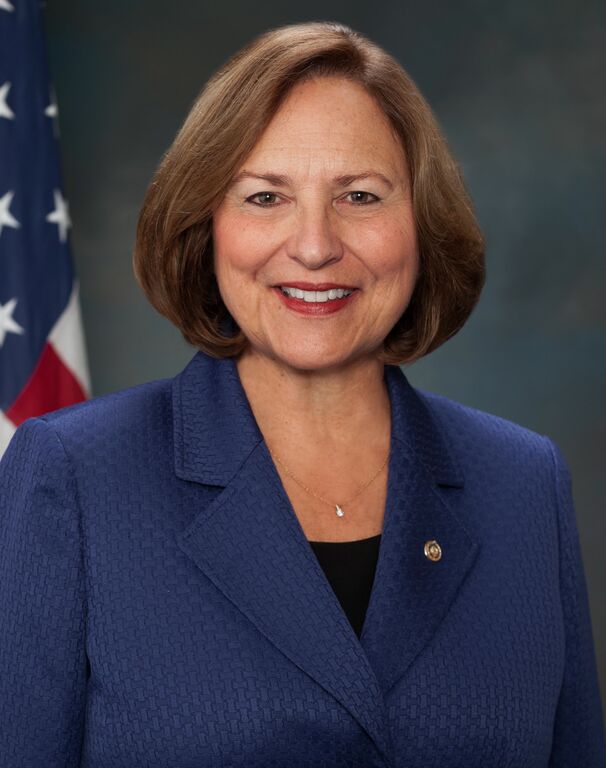
U.S. Senator Deb Fischer

U.S. Senator Deb Fischer


Budget Deal has Implications on Agriculture


This week, the White House and Congressional leaders struck a tentative budget deal that provides a framework and additional funding needed to allow Congress to complete the annual appropriations funding legislative process.
According to Traci Bruckner, Senior Policy Associate at the Center for Rural Affairs, the budget deal contains significant implications for agricultural and Farm Bill programs. “This bill takes a small step in reforming federally subsidized crop insurance programs by reducing the cap on the profits that crop insurance companies extract from administering the program from 14.5 percent to 8.9 percent,” said Bruckner. “In addition, it also indicates that the Standard Reinsurance Agreement must be renegotiated by December 31, 2016 and once every five years thereafter.”
“This is a small but a positive step forward,” noted Bruckner. “Insurance companies have been one of the largest beneficiaries of the subsidized crop insurance program. They witnessed double digit returns over the last decade or more, with one year being as high as 34%. During belt-tightening times, it is most appropriate to ask crop insurance companies to accept a reduction in the profits from federal subsidies that they receive.”
“Moreover, the budget deal scraps the Farm Bill provision that prevented taxpayers from benefiting from government negotiations with the private sector over the delivery of crop insurance,” added Bruckner. “This was an outrageous gift to the crop insurance lobby and it is a policy that should never have seen the light of day.”
Bruckner noted further that while there is a great deal more crop insurance subsidy reform needed to support and protect family farmers and the environment, renegotiation is a small but important first step toward much needed comprehensive reform.
“And with the additional funding the budget deal provides to the appropriators to finish the fiscal year 2016 funding bills, Congress has the opportunity to turn back the tide on cuts to conservation,” Bruckner continued. “Congress should move quickly to eliminate the 23 percent cut to the Conservation Stewardship Program in the pending House bill and the $300 million cut to the Environmental Quality Incentives Program that is currently included in both the House and Senate bills.”
“Opponents of cuts to crop insurance company profits have criticized ‘opening up the Farm Bill’ but those criticisms ring hollow when compared to how often Congress has opened up the Farm Bill to cut conservation programs,” concluded Bruckner. “It is disingenuous to use rhetoric about family farmers to protect crop insurance company profits while at the same time cutting the conservation programs that farmers and ranchers depend upon to improve soil and water quality, conserve water, and prepare for extreme weather events.”

Tekamah-Herman School not Meeting Adequate Yearly Progress


By Brandon Lavaley, Tekamah-Herman Superintendent

With the release of the State of the Schools report for each district in the state, there are certain to be questions arising about how we are preforming at Tekamah-Herman Schools. While there will be letters distributed to many of you in the near future, I wanted to take the opportunity to briefly explain where we are now and where we believe we will be in the near future.

Tekamah-Herman Schools, as most other districts in the state, will be on the list of schools not meeting Adequate Yearly Progress (AYP). Federal legislation known as No Child Left Behind (NCLB) requires that each district meet AYP or face requirements to improve student achievement. The AYP goal for the 2014-15 school year was 100% proficiency, meaning every student in grades 3-8 and 11 met the proficient standard in reading and math. While this is a goal we certainly strive toward, it is very difficult to meet given the multitude of variables in each student’s education.

Although we did not meet AYP of 100% proficiency, we showed improvement, many areas of significant gains, over last year’s scores in ALL areas at ALL grade levels. As a district, we are extremely excited about the strides we made over the past year and couldn’t be more proud of the hard work our students and staff put in to earn such results. Additionally, we had 35 perfect scores recorded on the state assessments (NeSA) by individual students.

The teaching staff is focused on making instructional decisions based on individual student data from various assessments given throughout the year. The staff also makes preparations for the assessments so the students have the opportunity to achieve as highly as possible. If you have a student in school, please take the time to review individual NeSA results with him/her and discuss ways that they might be able to improve.

The district has made several recent improvements that we believe benefit our students learning and achievement, including but not limited to: new reading curriculum in the elementary, professional learning communities among our staff members, 1:1 laptop initiative in the high school, and “data days” for staff to review individual student data. Looking forward, core curricular areas will continue to be evaluated and adjusted to meet the needs of our students and the standards set by the State Department of Education. The Continuous Improvement Committee, composed of teachers and administrators, meets several times throughout the year to evaluate the district and propose improvements, where needed.

Finally, outside involvement and participation by patrons is encouraged in our schools. A community engaged in the education process helps support our students, reinforcing the importance of what happens at school on a daily basis. Thank you for your continued support of Tekamah-Herman Schools and the education the students receive.

Brandon Lavaley, Tekamah-Herman Superintendent

Brandon Lavaley, Tekamah-Herman Superintendent

The Gospel of “It’s a Wonderful Life” Coming This November


By Gary Fugman
To make his point, Jesus often used a parable, an earthly story with a heavenly meaning.  Parables allow us to recognize real life events as relevant examples of spiritual truth.  Thus, parables link what we already know to what we should believe.  Parables help us look past a surface story to find deep meanings.  Connect how parables help us to find deep meanings to one of the most loved Christmas movies of all times and you have a formula for a fascinating learning experience.  Imagine using scenes from “It’s A Wonderful Life”, a movie parable with George and Mary Bailey, Uncle Billy, and Clarence the Angel Second Class helping you study the biblical principles of Goodness, Godliness, Prayers and Miracles!
You are invited to experience Goodness, Godliness, Prayers and Miracles through “It’s A Wonderful Life” this November.  On Sundays, November 1, 8, 15, and 22 at 1:30pm at 1506 Riverview Drive, Decatur, Pastor Gary and Sharon Fugman are leading a biblical view of the classic Christmas movie.  Scenes from the movie and guide books will be provided for the four sessions.  Refreshments will be served.  Use these four Sunday afternoons to prepare for the Christmas season…and the rest of your life!
For more information on the Gospel of “It’s A Wonderful Life” Sundays at 1:30pm this November, please call Pastor Gary or Sharon Fugman at 402-349-1953.

It’s Fall in Nebraska


By Governor Pete Ricketts

It’s fall in Nebraska.  The green of the grass and fields has begun to change into a multitude of colors.  Harvest is in full swing as our farmers reap the fruits of their labors.  The school year is well underway.  Fall in Nebraska also presents numerous opportunities to hunt and fish in the great outdoors.  From the Native Americans who roamed the prairies and the pioneers seeking a brighter future to present day sportsmen and sportswomen, our state’s abundant and diverse hunting and fishing opportunities have helped our state thrive and grow through the years.


Hunting and fishing have a major impact on our state, fueling the economies of both small and large communities.  Every year, thousands flock to every corner of our state to utilize public access lands, state-leased properties, or private property as they pursue the game of their choice.  During these trips, sportsmen invest in our communities as they stop for breakfast at a local cafe, purchase fuel for their truck, or pay for lodging along the way.  The Nebraska Game and Parks Commission estimates the annual economic impact of hunting in Nebraska at $848 million and the total yearly impact of hunting, fishing, wildlife viewing, and state parks at $2.4 billion.


For Nebraskans, access to great opportunities to hunt and fish are not just a matter of economic development – these activities are important to our individual quality of life.  They provide a way for us to enjoy our beautiful state with our friends, family, and loved ones.  As a hunter, I really enjoy pheasant season.  A couple years ago, I took my son Roscoe hunting for the first time.  It was an opportunity for me to pass along the tradition of hunting to the next generation while spending time with my son.  This year pheasant season opens October 31st, and I am looking forward to joining fellow Nebraskans as we continue the annual tradition of the Governor’s Pheasant Hunt in Beatrice in a couple weeks.


If you are not a seasoned hunter or have not picked up a fishing pole in a few years, there are still many opportunities that will allow you to enjoy the outdoors this fall.  The brand new Danish Alps Recreation Area near Hubbard in Northeast Nebraska is not only great for fishing, but it also offers camping facilities and is popular for wildlife viewing.  In the Panhandle, the Wildcat Hills State Recreation Area near Gering is building a family-friendly shooting complex which allows new hunters to develop shooting sports skills using either firearms or archery.


These are just a couple of examples of the many opportunities waiting for you to explore and enjoy.  I hope you take advantage of the great outdoor activities and traditions by visiting a state park with your family or hunting and fishing with friends.  To get started, you can find all the information you need about these opportunities and permits to participate in these activities at OutdoorNebraska.ne.gov.  As always, you are also welcome to contact my office with your questions at any time by writing pete.ricketts@nebraska.gov or calling 402-471-2244.

Governor Pete Ricketts

Governor Pete Ricketts

Market Report


Market close

Dec Corn +3’6 @ 3.76’6

Nov Beans +5’0 @ 8.96’0


My Blog this week can be found here

http://www.cvacoop.com/blog/its-too-busy-to-market/

Greg Mockenhaupt

ProEdge Risk Management Consultant

P: (402) 685-5613 | Greg.Mockenhaupt@cvacoop.com

1007 County Road O

Oakland, NE 68045

Medicaid Mythbuster #3: Medical Care When You Need It


By Jon Bailey, Guest Writer

Another frequent complaint about Medicaid is that it provides substandard medical coverage. Once again though, the numbers tell a different story. Medicaid coverage provides health care financial peace-of-mind. Not surprisingly, few Medicaid beneficiaries experience financial issues related to health care.
Only 10% of those with Medicaid had problems paying medical bills, and 19% have at least one medical bill that is a problem or a debt. More people with private insurance had both (21% with problems paying or unable to pay a medical bill, and 33% with at least one problem medical bill or medical debt). The uninsured face even more serious health care-related financial difficulties. Over a third (35%) of the uninsured have problems paying medical bills. Nearly half of the uninsured (47%) have at least one problem medical bill or medical debt.
Medicaid out-performs private insurance or being uninsured for measures of obtaining health care when it is needed. Only 10% of those on Medicaid did not visit a doctor or clinic with a medical problem requiring treatment, compared to 17% of those with private insurance and 40% of the uninsured. Only 13% of those on Medicaid did not fill a prescription, compared to 15% of those with private insurance and 30% of the uninsured.
Moreover, less than a quarter of those on Medicaid (23%) had at least one cost-related health care access problem. Meanwhile 30% of those with private insurance and 54% of the uninsured had at least one cost-related health care access problem.
Jon M. Bailey is a rural policy and research expert and former Center for Rural Affairs Policy and Research Director. Contact him at jonmbailey1@gmail.com.

Special Youth Pheasant Hunt


The statewide youth pheasant, quail and partridge season is Oct. 24–25 and the Nebraska Game and Parks Commission again will have a special youth pheasant hunt on 10 wildlife management areas (WMA).

Youth ages 15 and younger are encouraged to participate. Rooster pheasants will be released at specific WMAs before the special youth hunt season. The special hunts are open to the public, and the number of participants is not limited. No registration or special permit is required. Special regulations posted at each of the 10 WMAs will apply to all portions of the designated areas normally open to hunting. All other current youth and regular hunting regulations also will be in effect on these designated areas.

Pheasants will be released at the following WMAs: Pressey (Custer County); Sherman Reservoir (Sherman County); Oak Valley (Madison County); Branched Oak (Lancaster County); Twin Oaks (Johnson County); Hickory Ridge (Johnson County); Wilkinson (Platte County); Peru Bottoms (Nemaha County), Yankee Hill (Lancaster County) and Cornhusker (Hall County).

The special regulations on these WMAs include:

— Only nontoxic shot may be used at Wilkinson and Peru Bottoms.

— Adult mentors must be licensed hunters age 19 or older to accompany a youth.

— Adult mentors may harvest one rooster pheasant per day only.

— The 10 WMAs are the only locations where adults may harvest pheasants during the youth season.

— Cornhusker WMA is a new addition to the list of hunting sites this year.

— Only one adult mentor per youth will be allowed to hunt (additional non-hunting mentors may accompany the youth on the hunt).

— Youth may harvest two roosters per day.

This is the fifth year of the pheasant releases during the special youth season, which is intended to increase youth participation in upland game hunting.

News From Bancroft Senior Center


The senior center provides Information and Assistance to any individual who is looking for services for themselves or another person 60 years and older, the center manager and/or center participant can provide information to individuals on services available within the community. We link individuals to the services and opportunities that are available within or beyond the community itself. We will then establish adequate follow-up procedures to see that their needs were met. For more information call 402-648-3387.

*If you are 60 years and older and need information on programs designed to help keep you in your home longer or if you need legal help, contact Connie at 402-648-3387 or in the evening at 402-648-7648.

* We have the following medical equipment to loan out on an as need basis, wheel chair, bath seats, toilet seat riser and portable toilet chair, crutches or walkers. Call 402-648-3387 during office hours.

Meals on Wheels

*Would you like to get Meals on Wheels? Anyone over the age of 60 years and lives within the city limits are eligible for these meals. You may sign up anytime for the Meals on Wheels program; you can get the meals delivered however many times you want them each week. You must call 402-687-2332 before 8:30 a.m. if you want a meal that day. The suggested donation for the meals is $4.00.

Weekly Activities:

Wed. Oct. 21: The melody chime group will practice at 9:00 am. Come for coffee at 10:00 am. The foot clinic is today starting at 11:00 a.m.; call and set up an appointment. Dominoes will be played at 1:30 p.m.

Thurs. Oct. 22: Rolls and coffee served from 9:00 am. until noon. Tai Chi class at 9:30 a.m. and the walking ex class at 10:45 a.m. Sign up to play in the pitch tournament at 1:30 p.m.

Fri. Oct. 23: If you want to play in the pinochle tournament at 1:30 p.m.; you will need to sign up.

Sun. Oct. 25: Make plans to come to the senior center to have a Salisbury steak dinner serving from 11:00 a.m. until 1:00 p.m. Your help is needed at the fund raiser dinner; contact the manager if you can help.

Mon .Oct. 26: Stop in for coffee and visit. Sign up to play in the pitch tournament at 1:30p.m. Make your reservations for tomorrow’s meal.

Tues. Oct. 27: Tai Chi class is at 9:30 am. and walking ex. class at 10:45 am. Stop in for coffee at 10:00 am. Blood pressure clinic at 11:45 a.m. Chicken and chili soup for dinner. Cards will be played in the afternoon.

Wed. Oct. 28: The melody chime group will practice at 9:00 am. Join us for coffee at 10:00 am. The board meeting is at 3:30 p.m. Come and play golf at 1:00 p.m.


Use Caution to Avoid Collisions with Deer


Deer are more active this time of the fall. Crops are being harvested and deer breeding season is in full swing. The Nebraska Game and Parks Commission has suggestions to help drivers avoid deer-vehicle accidents and lessen the risk of personal injury or vehicle damage.

— During the breeding season, bucks become more active searching for does with which to breed. Bucks are bolder, less wary and more susceptible to collisions with vehicles. Deer movement peaks each day near dawn and dusk.

— Anticipate the possibility of a deer on the road and plan how to avoid a collision. Be prepared to stop suddenly, but braking too sharply or swerving may cause you to lose control and roll your vehicle.

— Wear your seat belt.

— When driving near shelterbelts, woodlots or creeks, especially during evening or early morning, slow down and watch for deer. Keep your headlights on bright if there is no approaching traffic.

— When you spot a deer, assume there will be others in the same area.

— Deer often seem to be disoriented or confused by headlights. Some react by freezing in the light, some dart into the path of the vehicle and others bolt away. Honk your horn and flash your headlights to frighten deer away. If there is other traffic on the road, activate your emergency flashers and tap your brakes to alert other drivers to the potential danger.

— Many places where deer-vehicle collisions occur are posted with deer crossing signs.

— If a deer is struck, the driver may take possession of it but must contact a Game and Parks conservation officer within 24 hours to obtain a salvage tag.