4-H Deadlines Nearing


Tagging Day

The annual calf, sheep and meat goat tagging day is set for Thursday,

May 21 in Oakland on the Fairgrounds from 3:00-6:00 p.m. Tags will cost $1.00.

If this date does not work you may purchase tags and bring the animals to the courthouse to complete the livestock ID sheets. Make sure you call to confirm either John or I are available to check your animals. All completed ID sheets are due June 1 in the Burt County Extension Office.

If you need rabbits tattooed, please call the office to borrow the tattoo kit or to make arrangements with me to tattoo your rabbits.


Drop Dead 4-H Enrollment Deadline is June 1

This is your last chance to get your on-line 4-H enrollment and project forms completed. If not, you WILL NOT be able to exhibit at any fairs this year. To save time you do not have to complete the Health Form on the enrollment if you wish. This is also the last chance to add any projects you might want to take.

Go to the Burt County website at: www.burt.unl.edu and then to the drop down menu “Burt County 4-H” there is a link to take you to the enrollment site and another link for step-by-step instructions and a list of 4-H projects and the 4-H Resource Guide to help  you when enroll or add projects to your list. If you have questions call our office 402-374-2929 and visit with Sharon.


LIVESTOCK QUALITY ASSURANCE (QA) CERTIFICATION REQUIREMENTS

Livestock Quality Assurance Certification is mandated for 4-H member and FFA students exhibiting beef, sheep, swine, dairy cattle, bucket calves, goats, rabbits, and/or poultry at the Burt County Fair, the Fremont 4-H Fair, the Nebraska State Fair and the Ak-Sar-Ben Livestock Exposition. Exhibitors are required to be Quality Assurance Certified through online certification or testing no later than June 15, 2015.

The successful completion of 3 new modules each year in the correct age category is all you need to do. You can go to thewww.burt.unl.edu website and click on the Burt County 4-H Heading. You can go to the Quality Assurance website under Online Course Information after opening the quality assurance link.


An Exciting New Summer Workshop is being planned!

A Pottery Workshop will be held in early June with Marilyn Tenney of Lyons as our guest artist. 4-H members will get 2 Sessions for the price of one!

Session #1 will be Tuesday, June 9 – Learn how to make two or more hand-built pottery pieces using coil, slab or pinch methods. Morning Session from 9:00-10:30 a.m.; Afternoon Session 1:00-2:30 p.m. Workshops held at the studio of Marilyn Tenney at 415 Grant, in Lyons.

Session #2 will follow up on Tuesday, June 16 – Students will glaze the pieces they made, observe throwing on the pottery wheel and learn about the firing process.

Fired projects will be returned to the Extension Office the following week. The cost for Pottery Workshop is $30 (4-H Council will pay half for Burt County 4-H members) Sign up by Tuesday, June 2 for this workshop.

Mary Loftis,

Extension Assistant
UNL Extension – Burt County
111 North 13th Street, Suite 6
Tekamah, NE 68061
Phone: (402) 374-2929

Fax: (402) 374-2930

Internet: mloftis2@unl.edu

Ticks


By John Wilson, Extension Educator

           Last week a friend of mine and I went out in search of morel mushrooms. We found a few, but I think we found almost as many ticks! Ticks are close relatives of mites and spiders and pass through four stages in their life cycle: egg, larva, nymph and adult. All stages except the egg are blood-sucking parasites that can also carry diseases.

            Prompt removal of embedded ticks is important as the risk of disease transmission increases the longer ticks are attached and feeding. The best method to remove a feeding tick attached to an animal or human is to grasp it as close as possible to the skin with tweezers.

            Gently, yet firmly apply steady pressure on the tick until you pull it out. If you try to jerk or twist the tick out, you risk the mouthparts breaking off and remaining in the skin where a hard nodule will form until your body naturally breaks it down. Always clean out the wound with a good antibacterial product to help prevent infection.

            Do not grasp or squeeze the rear portion of the tick’s body. This can force the gut contents of the tick into your tissues and increase the potential for disease transmission if the tick is infected with disease-causing organisms. The use of tape, alcohol, or Vaseline to cover the tick and cause it to voluntarily pull its mouthparts out of the skin is not effective.

            Ticks usually crawl onto people below the knees and then crawl upwards. When you are outdoors in known tick areas, wear protective clothing, such as long-sleeved shirts and long pants. Wear light colored clothes so it is easier to see ticks on you. For added protection, tuck pants inside your socks. This helps keep them on the outside of your clothing, giving you more time to see and remove them before they get to your skin and start feeding.

            Use repellents for additional protection. Apply them to socks, pant legs, and parts of clothing that may brush against vegetation. DEET and permethrin are effective repellents. You can apply DEET to clothing and skin, but permethrin should be applied only to clothing.

            Check your clothes and yourself when you’ve been outdoors in known tick areas. Particularly examine yourself around the waist, under your arms, inner legs, behind your knees, and around your head, including in and around your ears and in your hair. Adults should check their young children for ticks.

            Tick control on animals is also important. Many pet owners choose simply to remove ticks regularly from their animals by hand. Other pet owners use chemical products to treat their pets for ticks. Dust or shampoo treatments that contain pesticides are often used, but remember that repeated applications are needed when using these products.

            Tick collars are another option. These collars contain pesticides that kill ticks around the head and neck of pets. Manual inspection and removal of ticks on other areas of the body may still be necessary when using tick collars. In addition, collars need to be replaced occasionally in order to remain effective. When using tick collars, read the package carefully for instructions on use. Do not attempt to use these products for controlling ticks on humans.

            Your local veterinarian can prescribe certain products for tick control on animals. These products are spot-on, which means you apply a few drops between the shoulder blades of your pet. The chemicals move through the oils of the skin to provide protection on all areas of the body. These products typically persist for up to a month. They are not repellents, so ticks may still temporarily attach to the animal, but those that attach typically die within 24 to 48 hours.

            Tick numbers around your home are influenced by the amount of favorable habitat found there such as brushy or tall, grassy areas. You can reduce tick numbers through landscape modification that creates a less favorable environment for ticks and their animal hosts.

            Keep native vegetation short around homes, where it borders lawns, along paths, and in areas where people may contact ticks. It is not necessary to treat your lawn for ticks because ticks rarely infest maintained yards. Remove leaf litter and brush, especially from buffer areas where the lawn borders grassy, brushy areas.

            It is generally not effective to treat large areas of woods, brush, or grass with insecticides as insecticides do not always reach into areas where ticks are found in the leaf litter. Ticks can also be reintroduced into areas when wildlife carrying ticks move into previously treated areas.

            In cases where high numbers of ticks are present in areas adjacent to home yards, treating the edges of wooded or brushy areas and paths can help reduce tick numbers. Use an insecticide labeled for a turf area and contains permethrin, cyfluthrin, or carbaryl as an active ingredient.

            For more information on ticks and tick control, contact your local Nebraska Extension office.

Preventing Complications From Diabetes


You probably already know that diabetes can lead to devastating problems with the heart, kidney, eyes and nerves.  Did you also know that by taking control of diabetes and identifying problems early you can prevent or slow many of these conditions?

High blood glucose is a major cause of serious diabetes complications.  Recognizing diabetes early and getting your blood glucose levels under control allows for swift action to slow its progression and avoid complications.  Lowering your A1C by just one percentage point lowers your chance of getting eye, kidney or nerve disease by 40 percent. 

Blood glucose control is just one aspect of preventive care.  Following a meal plan, being physically active, losing excessive weight, keeping your blood pressure and cholesterol levels in check, quitting smoking and taking aspirin are all important ways to prevent future health problems.

Good control requires both diligence and willingness to try new strategies. Learn new strategies by attending “Control Diabetes for Life.” The June 8 session will focus on “Getting in Touch with Your Diabetes Self-Management.”

Set a goal to take control of your diabetes. Aim for lower blood glucose levels to feel better now and stay healthy for years to come.Monday, June 8, topics include: “Health Coaches are There to Help You”; “Summertime Snack Fun”; and “Food Safety for those with Diabetes” and will also be a question and answer period. 

Participants will sample a new recipe for a diabetic appropriate food. Team-teaching the program will be Stacie Petersen, B.S.N. & Certified Diabetes Educator; and Deborah Willcox, R.D., L.M.N.T., both of Franciscan Care Services in West Point and Debra Schroeder, UNL Extension Educator in Cuming County. These sessions are designed to supplement the education that you receive from your local diabetes education team and are not a substitute for diabetes classes through your local health care providers.

Control Diabetes for Life will be available from 7:00–9:00 p.m. at the Tekamah Herman Public High School distance education room.

“Control Diabetes for Life” is a joint project of University of Nebraska-Lincoln Extension, Franciscan Care Services of West Point and school hosting the programs. The program is offered free-of-charge. “Control Diabetes for Life” will help participants learn to control diabetes and prolong the onset of complications from the disease.

Participants are asked to pre-register for “Control Diabetes for Life” by calling Nebraska Extension in Burt County at 402-374-2929. Please register by Friday, June 5, so the proper number of handouts may be prepared. Nebraska School Food Service Association has approved this session for two hours of continuing education credits.

Control Diabetes for Life! Start by attending the June 8 program. Call today to register!


Mary Loftis,

Extension Assistant
UNL Extension – Burt County
111 North 13th Street, Suite 6
Tekamah, NE 68061
Phone: (402) 374-2929

Fax: (402) 374-2930

Internet: mloftis2@unl.edu

Babysitting Clinic Held


Deputy Sheriff, Eric Nick discussed safety issues at the Babysitting Clinic including when to call 911 with 30 participants last week in Tekamah. This three session workshop drew participants from Lyons, Decatur, Tekamah and Herman.  Photo Credit/Mary Loftis.

Deputy Sheriff, Eric Nick discussed safety issues at the Babysitting Clinic including when to call 911 with 30 participants last week in Tekamah.
This three session workshop drew participants from Lyons, Decatur, Tekamah and Herman.
Photo Credit/Mary Loftis.

Legislative Session Nearing an End


Another week has flown by at the Legislature with the completion of Day 77 on May 7. There are only 13 session days left, with many major issues remaining on the agenda such as the budget, prison and corrections reform, and property tax relief.


The budget advanced through second round of debate on Wednesday. While much of the debate on the budget may occur during final reading and after line-item vetoes by the Governor, some concerns have been raised. For instance, there was extended discussion regarding an $8 million appropriation to Creighton University for the construction of a dental clinic. The debate focused on whether public tax dollars should be solely disbursed for this private institution. The appropriation was amended to provide eligibility for funding to the University of Nebraska’s dental college as well.


A recent announcement by the Nebraska Economic Forecasting Advisory Board was good news. It was anticipated the Forecasting Board would announce a shortfall in projected tax revenues requiring budget cuts, but instead the Board announced a $12 million increase. Thankfully, the additional revenues were allotted for further property tax relief within the budget.


While the decision to provide increased property tax relief was a prudent move, I remain disappointed by the passage of LB610. LB610 hikes the motor vehicle gas tax by six cents over the next four years. LB610 was advanced to the Governor who immediately vetoed the bill. LB610 needs thirty votes to override the Governor’s veto.


Recently, a few bills I introduced made progress through the legislative process. LB570 expands the authority of cities, villages, and counties to permit the usage of golf car vehicles within their jurisdictions, subject to specific safety requirements.


Additionally, LB569 and LB571 were amended into LB449. LB569 modifies certain provisions of the Business Innovation Act and gives the Department of Economic Development greater flexibility to fund several programs supporting development of Nebraska-based technology and innovation in both rural and urban communities. LB571 provides the Tourism Commission with the discretionary authority to establish highway tourism signage for significant tourism attractions at the request and funding of local, private or public entities. LB449 recently passed final reading and has been presented to the Governor for his signature to become law.


Our office continues monitoring developments in the recent, abrupt decision by Deseret Health Group to close the Logan Valley Manor in Lyons. We are working closely with Senator Al Davis (District 43), whose district has another of Deseret’s nursing homes, Governor Ricketts, Director Phillips of the Department of Health and Human Services, the Department of Labor, and other private groups and individuals. On May 8, I stopped by the home in Lyons to speak with staff concerning needs of both residents and staff. Currently only 7 residents await placement to a different facility. All residents continue being well cared for. Residents, family, community and the state are grateful to the wonderful, caring staff who are yet to be paid during the past month. Actions are underway by the Attorney General’s Office to secure funds for wages due to the staff.


Finally, a special thanks to Pastor Coral Parmenter and Reverend Les Parmenter from the Wisner-West Point area who served as Chaplains of the Day, offering beautiful and eloquent prayers over the Legislature and our great State.


As always, please contact me, administrative aide, Katie Wattermann, or legislative aide, Tom Venzor, with questions or thoughts at (402) 471-2728 or e-mail at lbrasch@leg.ne.gov.


Keeping the Good Life Growing in Nebraska,

Senator Lydia Brasch, District 16

Senator Lydia Brasch

Senator Lydia Brasch

Happenings at Oakland Heights


Next week on Tuesday May 19th we will be having Root beer Floats at 2:30 pm. On Wednesday May 20th Charlie Davis will be here to play his Harmonica at 2:30 pm., and then on Thursday May 21st is our Monthly Waffle supper we will be serving from 5:30 pm to 6:00 pm.

On Monday May 18th at 2:30 pm is Communion with First Lutheran Church.

Activities for the week of May 18th to May 23rd , are as followed, Reading with Marilyn, Manicures, Sing a Long, Bingo w/Salem, Bible Fellowship, Reading the Local Paper, Word Games, Let’s Play Ball, Crafty Cooking, Friday Bingo and Saturday morning movie.

Volunteers signing in last week were; Judy Nelson, Betty Hanna, Bonnie Fleischman, Marge Maller, Judee Dix, Patty Miller, Mary Donavon, Anne Anderson, Nadine Anderson , Lola Bridgeford, Dani Moseman, Pat Anderson, and Sly Rouse.

Guest signing in last week was: Ron and Mary Plageman and Tom Larson to see Dorothy Larson. Charlie and Bobbie Lang were here to see Joan Price. Also visiting was Kathy and Kevin to see Margaret Moderow. Visiting Dale and Jeanette Johnson was Kris Peters.

State Track Schedule


By Clare Wiltse, Sports Contributor

It will be a busy Friday afternoon for the State Qualifiers from Northeast’s track team.  The Class D prelims are set to start at 3:30 P.M. on May 23 at Burke Stadium in Omaha..  


LDNE has two athletes in the 400 meter dash which starts at 5::45 P.M.  Brianne Haskell will run in lane 8 of  the third heat.  Chevy Henneman  also lines up in lane 8 of second heat of the boys’ race.  The top eight times will advance to the finals on Saturday at 12:55 P.M.


Jon Christiansen will get the jump on the track athletes as his event, the triple jump, starts at 3:00 P. M.  Jon is in the third flight which has the top eight marks from the district meets.


LDNE’s other jumper, Kelly Wakeley competes at 5:30 P. M.    She will be in he second flight of the girls’ long jump.


Northeast has both of its discus throwers in the third flight.  Abby Peterson and Darcey Simonsen are seeded at fourth and eighth in the competition which starts at 5:30.


On Saturday,  Dylan Hardeman starts Northeast’s day with an 800 meter race at 9:30 A.M.   He runs in section one of the race.


The 4×400 meter relay is the last event on Saturday.   Jon Christiansen, Benny Estrada, Dylan Hardeman, and Chevy cap off a successful season as they race in Section 1 at 3:55 P.M.

Cougars Qualify Eight for State Track


By Clare Wiltse, Sports Contributor

Cougar Track and Field will have eight representatives at the State Track Meet next Friday at Burke Stadium in Omaha.  “It was a very competitive meet as the teams had to battle a brutal wind,” said Coach Hosch. The Lady Cougars finished in third place with 71 points.  They trailed Allen who scored 124 and Wynot with 86  points.  The boys finished in fourth with 55 points. Wausau was the winner with 133 points followed by Randolph with 84.


Three Athletes are making a return trip to Burke Stadium.  Darcey Simonsen is going back for the third time.  She placed third last year in the discus..  Chevy Henneman and Kelly Wakeley are competing in different events this year.  Chevy moves up from the 100M to the 400 M.  Kelly switches from the triple jump to the long jump.


The girls got a big boost from the discus competition.  Northeast throwers took the top two positions.  Abby Peterson was a surprise winner.  She had been battling illness all week, but came through with a personal best by eight feet to take the gold.  Her winning mark was 119 fee 3 inches.  Darcey Simonsen took the other qualifying position with a toss of 113 feet 6 inches.


Brianne Haskell fought the wind and a B-R runner down the stretch in the 400 M dash.   She got the edge with fifteen meters left and held on to place second place in 1:07.1. After sitting out last year because of a basketball injury it was a sweet feeling to qualify for the first time.   In the boys’ race, Chevy Henneman found himself  behind coming off the final curve.  He battled to the lead coming down the stretch, loss it, and surged at the end to take a photo finish win in a slow time for him of 55.4.


Jon Christiansen made up for the disappointment of taking third in the triple jump as a freshman.  He had a career best of 41 feet 8 3/4 inches to place second to one of the best jumpers in the state from Wausau.


Dylan Hardeman raced to a second place finish in the 800 M run.  It was a three man race to finish and the senior had the fortitude to claim the second qualifying position with a time of 2:13.2.


The boys’ relays had one victory and one disappointment.  After a disastrous first hand off the 4×400 team had to play catch up to the team from Allen.  A strong  anchor leg by Chevy Henneman got the team the lead with 60 meters to go.  They won in  3:44.0.  The team  included Jon Christiansen, Benny Estrada, and Dylan Hardeman.  The same foursome had lined up the race before, the 4×100,  and lost to Randolph as the Cardinal anchor edged out Chevy by one tenth of a second.   The Cougars’ time was 47.4.


Northeast had several place in non qualifying places.  Madie Ronnfeldt took fourth in the 100M with a time of 13.3.  Cierra French took fifth in the 400M in 1:09.4 and added a fifth in the 200M with clocking of  28.7.  In the 1600M, Sophia Henneman placed fourth in 6:25.9 and Tessie Collins added a fifth with a 6:38.1.  The 4×100 Relay took third in 55.3.  French, Haskell, Ronnfeldt, and Wakeley made carries.


The shot put supplied eleven points  with Darcey in third with a 33 feet 10 1/4 inch toss.  Libby Henneman got fourth with a 33 feet 4 inch effort, and Abby P added a sixth at 32 feet 9 inches.  Kelley Wakeley placed third in the triple jump with a best mark of 31 feet 9 inches.


The Cougar boys got a third in the 400 M by Benny Estrada.  He timed at 59.2.  Jon Christiansen took fourth in the 200M with a 24.4   Joey O’Connor added a sixth in the 3200m run.  His time was 12:17.4

Oakland Garden Club News


Twelve members of the Oakland Garden Club met in the Rosen room at the Oakland auditorium at 2:00 p.m., on Thursday May 14, 2015.


Leila Heineman was hostess. The front table held a mixed bouquet of cut leaf peony, viburnum, columbine, red-leafed penstemon leaves, and spring rocket. Members gave pledge to the American flag and read the Garden Club Creed from their handbooks. Each member answered roll call by answering “What’s stressed at your place?” Although many first answered that they were, they followed with name of plants, bushes, or trees. Again, many gave a similar answer by naming what had been lost over the winter.


Cathi McMurtry read the minutes of the April meeting. Audrey Unwin gave the treasury balance. She reported receiving a Memorial check of $5.00 for Doris Anderson.


Julie Easton announced a card and a rose had been sent to May Taylor after the death or her husband Bill.

Stan Pearson attended and joined the Garden Club.


In old business, Lela Heineman said we need to plant more roses in the Memorial rose bed. Members discussed that we had agreed to move the knock-out rose from there to other places and plant tea roses in the bed. Vernelle Nelson gave a check of $25.00 to help pay for flower plants.


Marie Daubert wondered if the burning bushes at the old Piper place might be rescued and planted elsewhere in Oakland before the property was razed. While members liked the idea, they agreed we need to find out first who owns the property and their decision. Audrey Unwin said she would check.


Audrey reported that the city had budgeted $450.00 for the Garden Club; however, Katie Onken said, with a new auditing system, she was not sure yet if she could write a check to the Garden Club or if the Garden Club would need to turn bills into the City to pay.


Lela Heineman reported that Evelyn Swenson gave a $125.00 check for the Jim Swenson Memorial flower bed. Lela also reported that Amanda Huntington is making the sign designating it as Jim Swenson Memorial bed.


Marie Daubert reported that California pesticide rules farmers must abide by are the nation’s strictest to protect workers and consumers. While grapes & almonds have 20-year cycles, strawberries are treated every year, causing great danger to people. A new way to grow potatoes is in the new potato bag which sets on top the ground, is filled ½ with dirt, then spuds on top, and grass clippings on that. These plants evidently don’t die down as fast as those growing directly from ground.


The blackpole warbler, ½ oz. in weight, summers in forests of N. America and Canada and then flies 1700 miles for 49 to 73 hours nonstop over the Caribbean to S. America for the winter.


If you’re planting a crab apple tree, you have over 900 varieties to choose from, but be sure to get one that is disease resistant. When pruning trees or shrubs, cut dead stems back to a hardy upright, and trim off cross branches.


A late reminder: According to 2013 figures, mothers are worth $38,126.00 and $8,879.00 for overtime.


Members read the Garden Club Benediction.


THURSDAY, MAY 14, 2014 OAKLAND GARDEN CLUB                                                                                                                      2


Lela Heineman gave the lesson on “Care of Stressed Plants” which she limited to outdoor plants to limit the time and amount of material. Winter damage to trees and shrubs often comes from rabbits and deer. Rabbits will gnaw limbs and bark. If the trunk is completely girdled, the plant will die. Suckers may come up, but if it is a fruit or ornamental item grafted to root stock, the suckers will not be the same. If the evergreen buds are chewed off, that season’s growth is gone.


Plants may seem to be under insect damage that is often due to moisture damage. Dig for moisture at 6” depth. If is dry, water and plant should recover in 24 hours. If it is too wet, stop watering. If plant doesn’t recover, that wasn’t the problem or was severe enough to destroy plant. Heat may cause a plant to wilt during the day to shut down moisture loss, but it may recover in cooler evening temperatures. Newly planted seedlings or ones moved from outdoors may need shade or fabric protection till they are acclimated. You might turn the fan on seedlings before moving them outside to toughen them up. Bleached spot on these plants may indicate more need for early protection from sun.   Black areas on leaves may indicate frost damage. The foliage will not recover, but the plant may survive. Wait till plant begins to show new growth before trimming off blighted areas. Ragged foliage can be caused by heavy winds, rain or hail, and this foliage can make plant more susceptible to diseases, so trim it.


Off color foliage can mean nutrient deficiency—if pale, most likely nitrogen. If veins green, but rest pale, then iron, a reddish or purplish cast, phosphorous. Stunted growth—overall lack of nutrients. Check soil level for pH and fertilize accordingly. Be sure to follow application directions. Dried leaf margins can mean wind or fertilizer burn, while burned area in one location may indicate damage by herbicide overspray or animal urine. Spray area with clear water & trim off damaged area. Also, maybe plant is not happy in that location, so move it to one with more or less shade or wind, moisture or dryness, etc.


Another problem may be insect damage. Certain ones attack certain plants and leave tell-tale marks. Earwigs leave irregular holes, aphids leave a sticky residue, lace bugs eat tree & bush leaves, while scale on trees & shrubs suck sap from twigs and branches and cause die back. Most can be controlled with chemicals. Check cans or bags for symptoms, plants affected, and application.


Diseases affect plants in varying degrees. Powdery mildew affects some plants and various shrubs, Although it doesn’t cause serious damage, it can slow growth and reproductive rate. Aster yellows affects many plants, is transmitted by leafhoppers, and results in stunting, dwarfing, yellowing of foliage, spindly stalks, failure to develop flower color or seeds. No cure. Remove and destroy all affected foliage. Root rot usually affects roses and azaleas. Symptoms are drooping and yellowing leaves that roll downward. Don’t plant in poorly drained soil, on exposed south side of building or in windy areas. Leaf spot affects many plants and first appears as small brown spots. High humidity and moisture make plants susceptible to fungal infection. Improve air circulation by removing some of surrounding plants, and in fall remove and destroy dead or spotted plant material so as to reduce spoors available for infection the following spring.


Finally, if there is a sad-looking plant in a store that you really want, take it home, remove it from pot and soak it in a bucket of water till bubbles quit. Since in many stores they are watered from above, they often lack sufficient water. Also, many are root bound. Once bubbles quit, trim the roots, repot, and water. If it doesn’t thrive, quit and try a new plant.


Cathi McMurtry, Secretary


Elden E. Prazan, 76, of Columbus NE


Elden E. Prazan was born February 20, 1939, south of Clarkson, Nebraska, the son of Emil and Emma (Dostal) Prazan. He passed away Friday, May 15, 2015 at his home in Columbus, Nebraska.

Elden got his elementary education at District 38 Colfax County. He graduated from Clarkson High School in 1958.
He married Frances (Marco) Prazan on April 19, 1965, at St. Andrew’s Catholic Church in Sibley, Iowa. They lived their married life in Columbus. Elden worked at Vishay Dale Electronics as a Mechanical Inspector for 47 years. He also held a second job at Lohr’s 66 for 33 years.

Elden enjoyed dancing and helping his parents on the farm, and he was always a hard worker. He loved his family very much, his greatest joy was in spending time with them, and he truly enjoyed his grandchildren.

He was preceded in death by his parents; infant granddaughter, Jennifer Prazan; brother-in-law, Fred Thalken.

He is survived by wife of 50 years, Frances; daughter, Dianna (Jeff) Hansen of Norfolk, NE; son Dwayne (Amy) Prazan of Johnstown, CO; 4 grandchildren, Shania Hansen of Norfolk, Ryan, Garrett and Alex Prazan of Johnstown; sister, Emily (Homer) Hastings of Columbus.

FUNERAL SERVICE: Tuesday, May 19, 2015, 10:30 am at St. Bonaventure Catholic Church in Columbus, NE

VISITATION: Monday, 5-7 pm with family receiving friends at St. Bonaventure Catholic Church. Visitation will also be held at the church one prior to service.

BURIAL: Tuesday 1:15 pm, Clarkson National Cemetery, Clarkson, NE

MEMORIALS: To the family

Please feel free to send your condolences to the family.
Each condolence will be printed and given to the family after the service.

pelan@pelanfuneralservices.com

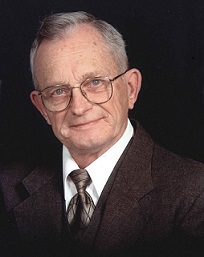
Elden Prazan

Elden Prazan