Minimize Menacing Mosquitos


By John Wilson, Extension Educator

Many people considered Memorial Day weekend as the official beginning of the outdoor summer season with barbecues, boating, fishing and ball games… or just mowing your lawn or working in your garden. Nothing spoils these outdoor activities quicker than being swarmed by mosquitoes. Recent rains have provided moisture we’ll need later this summer, but they also can cause problems for anyone working outside. Rain creates ideal sites with standing water for mosquitoes to develop.

To reduce this problem, eliminate mosquito breeding areas that catch and hold water. Check for leaf-clogged gutters, puddles, bird baths, old tires, cans, bottles, lagoons, and children’s wading pools. Drain water from these when practical. Rinse out your bird bath weekly.

Still water in birdbaths, ponds or lagoons may also be treated with Bacillus thuringiensis, or Bt, in the form of biscuits, available at some garden and hardware stores. The sustained release of the active ingredients of these products may provide up to 30 days control of mosquito larvae. These products specifically attack mosquito larvae and will not harm fish or birds or wildlife that drink the water.

Only female mosquitoes possess piercing-sucking mouthparts and require a blood meal to produce viable eggs. Eggs are laid in batches between blood meals. A single female may deposit several hundred eggs in her lifetime. Under favorable conditions, a new generation of mosquitoes can be completed in less than a week.

To keep mosquitoes out of your home, check all doors, windows and window screens, to make sure these are tight and in good repair. Screens should be 1/16th-inch mesh or smaller to prevent mosquito entry into the home. Keep porch lights off as much as possible in the evening. Or, replace traditional white light bulbs with yellow ones to help reduce the attractiveness of your home to mosquitoes and other night-flying insects.

To prevent mosquito bites when working outside, wear long-sleeved shirts and full length pants. Two layers of clothing are more difficult to penetrate by biting mosquitoes. Wearing light-colored clothes will reduce your attractiveness. Work outdoors when it is cooler, or when there is a brisk air movement or strong sunlight. Different species of mosquitoes have specific feeding periods, but many are most active in the early evening hours, generally from 5 to 9 p.m.

But, because female mosquitoes are attracted to the carbon dioxide that we exhale, using an insect repellent while outdoors may be the most important method to prevent mosquito bites. You can use repellents containing DEET. These come under numerous brand labels and many formulations such as lotions, gels, aerosols, creams, and sticks.

Mosquitoes are always a nuisance, but they can also pose a health risk because of their potential to transmit West Nile Virus (WNV). In humans, WNV causes flu-like symptoms such as fever and muscle weakness. WNV can also cause encephalitis (an inflammation of the brain), disorientation, convulsions and paralysis. People over 50 (years ago I would have said older people, but not now!) and those with weak immune systems are especially vulnerable to the disease and should take extra precautions to avoid mosquito bites.

For more information on mosquito control, contact your local Nebraska Extension office.

John Wilson

John Wilson

It’s Time to Reform Crop Insurance


By Traci Bruckner, tracib@cfra.org, Center for Rural Affairs 

At the Center for Rural Affairs, we’ve heard from farmers across the Midwest and Great Plains about negative impacts of federally subsidized crop insurance for over a decade. A farm safety net is important to help family farmers mitigate risks, but there are real concerns with the current crop insurance program.

The federal government subsidizes crop insurance, paying 62% of premiums, on average, in 2012. Insurance policies are sold and completely serviced through 19 approved private insurance companies. Not only does the federal government pay the majority of producers’ premiums on every single acre, regardless of how large they are or how much money they make, insurance companies’ losses are also reinsured by USDA. In addition, the federal government reimburses the insurance company’s administrative and operating costs. In total, these insurance companies have lobbied and negotiated for guaranteed profits approaching a 14 percent return on their investment.
However, the current government subsidized crop insurance program is working against the very farmers we all believe deserve a safety net. The program is not transparent, props up private insurance company profits, and puts our natural resources at risk. Moreover, unlimited crop insurance subsidies result in mega-farms driving up land costs, driving their smaller neighbors out of business, and barring the next generation of family farmers from even getting a start.
The time has come for crop insurance reforms that emphasize conserving soil and water, put real limits on subsidies to the nation’s largest farms, and ensures these subsidies are transparent to taxpayers.

News From Bancroft Senior Center


The Senior Center has refurbished Memorial Flowers of all types for sale. Anyone who is looking for reasonably priced flowers is encouraged to stop in and see what we have available.

* The senior center provides Information and Assistance to any individual who is looking for services for themselves or another person 60 years and older, the center manager and/or center participant can provide information to individuals on services available within the community. We link individuals to the services and opportunities that are available within or beyond the community itself. We will then establish adequate follow-up procedures to see that their needs were met. For more information call 402-648-3387.

*If you are 60 years and older and need information on programs designed to help keep you in your home longer or if you need legal help, contact Connie at 402-648-3387 or in the evening at 402-648-7648.

* We have the following medical equipment to loan out on an as need basis, wheel chair, bath seats, toilet seat riser and portable toilet chair, crutches or walkers. Call 402-648-3387 during office hours.

Meals on Wheels

*Would you like to get Meals on Wheels? Anyone over the age of 60 years and lives within the city limits are eligible for these meals. You may sign up anytime for the Meals on Wheels program; you can get the meals delivered however many times you want them each week. You must call 402-687-2332 before 8:30 a.m. if you want a meal that day. The suggested donation for the meals is $4.00.


Weekly Activities:

Wed. May 20: Melody chimers will practice at 9:00. Come and play cribbage at 1:30.

Thurs. May 21: Rolls and coffee served from 9:00. until noon. Tai Chi class at 9:30 and walking ex class at 10:45. There will be a pitch tournament at 1:30.

Fri. May 22: Sign up to play in the pinochle and hand and foot tournament at 1:30

Mon. May 25: The center is closed for Memorial Day.

Tues. May 26: The Tai Chi class is at 9:30 and the walking ex. class at 10:45. Stop in for coffee at 10:00. Sign up to play in the pitch tournament at 1:30. The evening will be pancakes, French toast, scrambled eggs, sausage and orange drink.

Wed. May 27: Melody chimers will practice at 9:00. We will play fun bingo at 2:00, bring your quarters.

Ticks


By John Wilson, Extension Educator

           Last week a friend of mine and I went out in search of morel mushrooms. We found a few, but I think we found almost as many ticks! Ticks are close relatives of mites and spiders and pass through four stages in their life cycle: egg, larva, nymph and adult. All stages except the egg are blood-sucking parasites that can also carry diseases.

            Prompt removal of embedded ticks is important as the risk of disease transmission increases the longer ticks are attached and feeding. The best method to remove a feeding tick attached to an animal or human is to grasp it as close as possible to the skin with tweezers.

            Gently, yet firmly apply steady pressure on the tick until you pull it out. If you try to jerk or twist the tick out, you risk the mouthparts breaking off and remaining in the skin where a hard nodule will form until your body naturally breaks it down. Always clean out the wound with a good antibacterial product to help prevent infection.

            Do not grasp or squeeze the rear portion of the tick’s body. This can force the gut contents of the tick into your tissues and increase the potential for disease transmission if the tick is infected with disease-causing organisms. The use of tape, alcohol, or Vaseline to cover the tick and cause it to voluntarily pull its mouthparts out of the skin is not effective.

            Ticks usually crawl onto people below the knees and then crawl upwards. When you are outdoors in known tick areas, wear protective clothing, such as long-sleeved shirts and long pants. Wear light colored clothes so it is easier to see ticks on you. For added protection, tuck pants inside your socks. This helps keep them on the outside of your clothing, giving you more time to see and remove them before they get to your skin and start feeding.

            Use repellents for additional protection. Apply them to socks, pant legs, and parts of clothing that may brush against vegetation. DEET and permethrin are effective repellents. You can apply DEET to clothing and skin, but permethrin should be applied only to clothing.

            Check your clothes and yourself when you’ve been outdoors in known tick areas. Particularly examine yourself around the waist, under your arms, inner legs, behind your knees, and around your head, including in and around your ears and in your hair. Adults should check their young children for ticks.

            Tick control on animals is also important. Many pet owners choose simply to remove ticks regularly from their animals by hand. Other pet owners use chemical products to treat their pets for ticks. Dust or shampoo treatments that contain pesticides are often used, but remember that repeated applications are needed when using these products.

            Tick collars are another option. These collars contain pesticides that kill ticks around the head and neck of pets. Manual inspection and removal of ticks on other areas of the body may still be necessary when using tick collars. In addition, collars need to be replaced occasionally in order to remain effective. When using tick collars, read the package carefully for instructions on use. Do not attempt to use these products for controlling ticks on humans.

            Your local veterinarian can prescribe certain products for tick control on animals. These products are spot-on, which means you apply a few drops between the shoulder blades of your pet. The chemicals move through the oils of the skin to provide protection on all areas of the body. These products typically persist for up to a month. They are not repellents, so ticks may still temporarily attach to the animal, but those that attach typically die within 24 to 48 hours.

            Tick numbers around your home are influenced by the amount of favorable habitat found there such as brushy or tall, grassy areas. You can reduce tick numbers through landscape modification that creates a less favorable environment for ticks and their animal hosts.

            Keep native vegetation short around homes, where it borders lawns, along paths, and in areas where people may contact ticks. It is not necessary to treat your lawn for ticks because ticks rarely infest maintained yards. Remove leaf litter and brush, especially from buffer areas where the lawn borders grassy, brushy areas.

            It is generally not effective to treat large areas of woods, brush, or grass with insecticides as insecticides do not always reach into areas where ticks are found in the leaf litter. Ticks can also be reintroduced into areas when wildlife carrying ticks move into previously treated areas.

            In cases where high numbers of ticks are present in areas adjacent to home yards, treating the edges of wooded or brushy areas and paths can help reduce tick numbers. Use an insecticide labeled for a turf area and contains permethrin, cyfluthrin, or carbaryl as an active ingredient.

            For more information on ticks and tick control, contact your local Nebraska Extension office.

Babysitting Clinic Held


Deputy Sheriff, Eric Nick discussed safety issues at the Babysitting Clinic including when to call 911 with 30 participants last week in Tekamah. This three session workshop drew participants from Lyons, Decatur, Tekamah and Herman.  Photo Credit/Mary Loftis.

Deputy Sheriff, Eric Nick discussed safety issues at the Babysitting Clinic including when to call 911 with 30 participants last week in Tekamah.
This three session workshop drew participants from Lyons, Decatur, Tekamah and Herman.
Photo Credit/Mary Loftis.

Happy Place: Poem by Diana Schulzkump


By Diana Schulzkump

When times are hard and things are tough,
When I want to say “I’ve had enough”,
I like to retreat to my Happy Place.
Where there are no troubles to face.
There I do not dwell on problems or pain,
There you are not allowed to cry or complain.
Everyone needs to find a Happy Place of their own.
It could be anywhere, maybe even home.
Each must reach deep down inside,
to find where you can set your worries aside.

Travel U.S. Route 83 With Author Stew Magnuson at Neihardt Site


The Neihardt Foundation encourages travelers and historians alike to take note of the May “Sunday Afternoon at the Museum” program.  

Author Stew Magnuson recently released The Last American Highway: A Journey Through Time Down U.S. Route 83: Nebraska Kansas Oklahoma, (Court Bridge Publishing) a travel-history book that uncovers stories along the road that bisects the United States from north to south, and will be at the John G. Neihardt State Historic Site in Bancroft on May 17 at 5:00 p.m. for a presentation and book signing.  

Descending 1,885 miles down the center of the United States from Westhope, N.D. to Brownsville, Texas, U.S. 83 is one of the oldest and longest federal highways that has not been replaced by an Interstate.  Magnuson takes readers through the Nebraska Sand Hills, the Smoky River Valley in Kansas and the singular Oklahoma Panhandle.  Along the route are the stories of the famous, infamous, and the forgotten. Buffalo Bill Cody hunted these lands, but what about Buffalo Jones, who set out to save the American bison from extinction?  

This is where the ruthless, but now largely forgotten bank robbers, the Fleagles, committed their most heinous crime; where the Grand Duke Alexis of Russia met George Armstrong Custer and Pussy Cat Nell dispatched the corrupt Sheriff “Bushy” Bush with a shotgun blast.  U.S. 83 ties President Eisenhower, the architect Frank Lloyd Wright and author Truman Capote together.  Magnuson recounts the story of the town of Audacious, the longest-lasting and largest African-American settlement in Nebraska, which lasted some 30 years in the depths of the Sand Hills north of Thedford, as well as the night in the 1990s when a clandestine truck carrying a nuclear weapon crashed along the side of U.S. 83.  

The story becomes personal for Magnuson, as he returns to his father’s hometown in Stapleton, and tells the story of his grandmother’s struggles during the Great Depression and the secret she kept from her family for decades.  “This is a book of true stories connected by a ribbon of concrete that cuts right down the middle of the nation,” Magnuson said.  He is the author of The Death of Raymond Yellow Thunder: And Other True Stories from the Nebraska-Pine Ridge Border Towns, Nebraska Center of the Book’s 2009 nonfiction book of the year.  

Magunson also penned Wounded Knee 1973: Still Bleeding, an account of the controversial 2012 Dakota Conference at Augustana College in Sioux Falls, S.D., where members of the American Indian Movement squared off against retired FBI agents.  Magnuson writes the Highway 83 Chronicles blog and set up the U.S. Route 83 Travel page, which gives tips to those who are interested in taking a trip on the road.  All “SAM” programs are free and open to the public.  Reception to follow the program.  The Neihardt State Historic Site is located at 306 W. Elm St., Bancroft, NE.  For more information, call 1-888-777-4667 or contact us through email at Neihardt@gpcom.net.  “Like” us on Facebook at John G Neihardt State Historic Site to stay informed about programming.

May SAM Program Poster

Golden Oaks Rummage Sale a Success


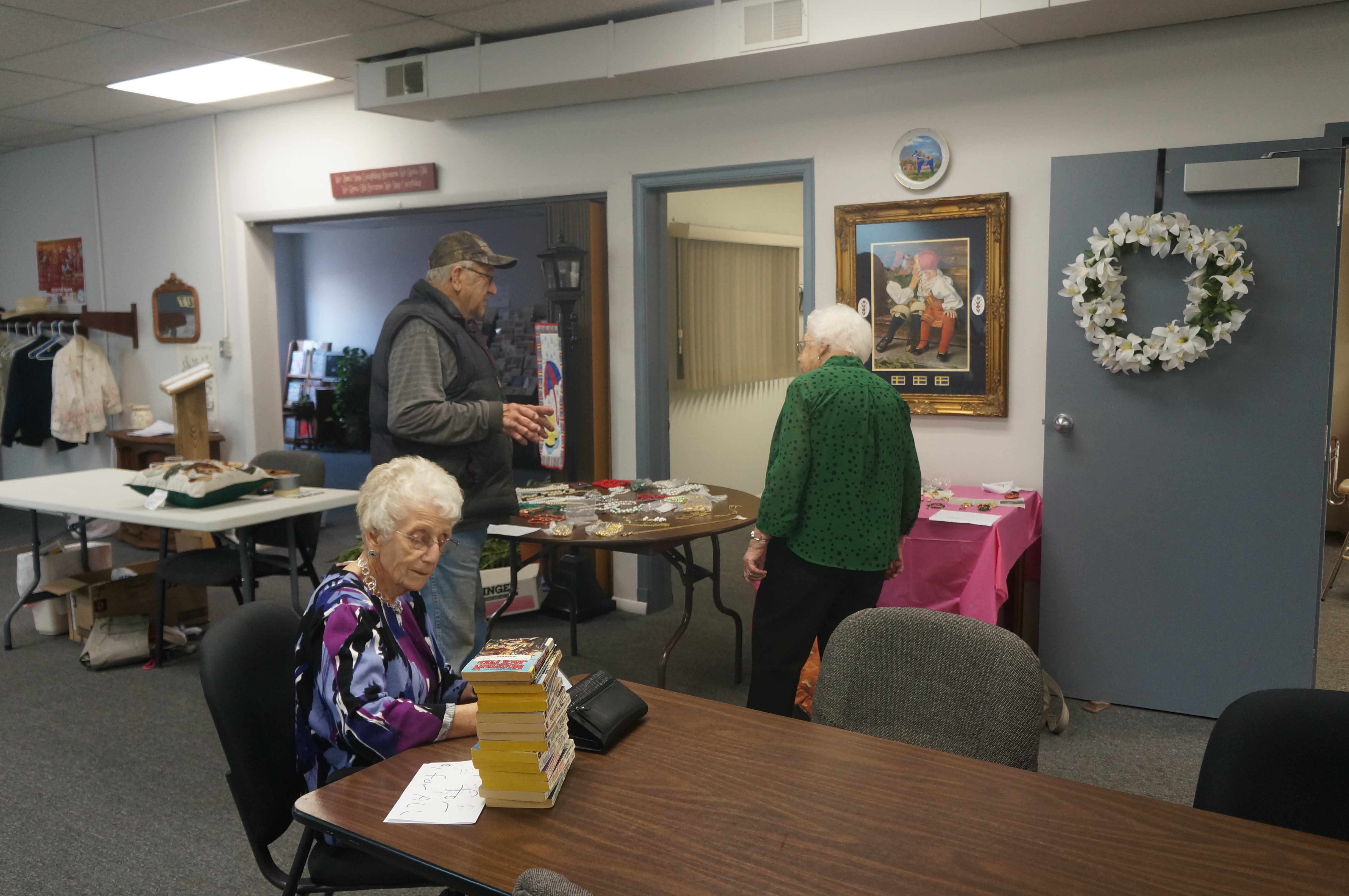
Elfie Nelson is visiting with Lee Schinck at the Golden Oaks Rummage sale while Betty Rogers is looking over some items. Photo Credit/Denise Gilliland, Editor and Chief, Kat Country Hub.

Elfie Nelson is visiting with Lee Schinck at the Golden Oaks Rummage sale while Betty Rogers is looking over some items. Photo Credit/Denise Gilliland, Editor and Chief, Kat Country Hub.

Margaret Groteluschen assisted with the rummage sale at Golden Oaks, commenting that "it was a huge success. We had many more items donated for shoppers to purchase this year." Photo Credit/Denise Gilliland, Editor and Chief, Kat Country Hub.

Margaret Groteluschen assisted with the rummage sale at Golden Oaks, commenting that “it was a huge success. We had many more items donated for shoppers to purchase this year.” Photo Credit/Denise Gilliland, Editor and Chief, Kat Country Hub.

Scrap Computers and Electronics Collected


More than 21 tons of scrap computer and other electronic equipment was collected in Dakota, Thurston, Burt and Washington Counties through an E-Waste recycling effort sponsored by the Papio-Missouri River NRD. Items collected included computers, monitors, televisions, microwaves, copiers, video and audio equipment and other electronics.

The collections took place at U.S. Department of Agriculture Service Centers on April 7th in Tekamah and Blair and April 9th in Dakota City and Walthill. “211 households and 34 businesses participated in these collections,” said Deborah Ward, Papio-Missouri River NRD Program Assistant in the NRD’s Tekamah Field Office. “These events were very successful despite rain, sleet and even a little snow. Participants were so grateful for the opportunity to recycle their e-waste that we hope to organize another series of free collections in 2016,” said Ward.


NRD employees and volunteers from the USDA Natural Resources Conservation Service, the Nebraska Loess Hills Resource Conservation & Development Council, and Tekamah Herman High School staffed the collection and assisted with promotion and pre-collection events. The materials collected will be recycled by Secure Recyclers of Lincoln, NE.  Funding was provided through the Waste Reduction and Recycling Incentive Program of the NE Department of Environmental Quality.

“Recycling is just one of many natural resources protection program areas of the state’s 23 Natural Resources Districts,” said NRD General Manager, John Winkler. “This effort is just another example of how the Papio NRD works cooperatively with our constituents from all parts of the District to protect life, property and our natural resources for generations to come,” he said.


(From left) Bill Woehler, Lance Olerich, Lowell Roeber, Wally Juhlin, and Jon Krause, Papio-Missouri River Natural Resources District (NRD) staff, assist with the Papio Missouri River NRD’s scrap electronics collection. A total of 211 households and 34 businesses participated in the event which was held in the communities of Dakota City, Walthill, Tekamah, and Blair.  The collection event was free of charge to local Nebraska residents and businesses.  Funding was provided by the Papio-Missouri River NRD and Nebraska Department of Environmental Quality (NDEQ).  Secure Recyclers of Lincoln was the recycling contractor.  Photo Courtesy of Deborah Ward, NRD.

(From left) Bill Woehler, Lance Olerich, Lowell Roeber, Wally Juhlin, and Jon Krause, Papio-Missouri River Natural Resources District (NRD) staff, assist with the Papio Missouri River NRD’s scrap electronics collection. A total of 211 households and 34 businesses participated in the event which was held in the communities of Dakota City, Walthill, Tekamah, and Blair. The collection event was free of charge to local Nebraska residents and businesses. Funding was provided by the Papio-Missouri River NRD and Nebraska Department of Environmental Quality (NDEQ). Secure Recyclers of Lincoln was the recycling contractor.
Photo Courtesy of Deborah Ward, NRD.

Ushering in a New Era of Accountability


By Rachel Wise, District 3, Nebraska State Board of Education

Ushering in a New Era of Accountability

The State Board of Education moved forward this month on two very important steps for Nebraska schools. The first step was to authorize the Commissioner of Education to submit a waiver from certain No Child Left Behind (NCLB) requirements. NCLB is the accountability system imposed by federal law. I wrote an article last July on this topic urging the U. S. Congress to do its job and, with a new Congress in place, one would hope for action. However, in the case of reauthorizing ESEA—currently known as NCLB—there seems to be “talk” but still no real action!! Because Congress has not reauthorized ESEA—action that should have occurred in 2007—it is time to pursue the NCLB waiver. The Commissioner of Education will submit a waiver request to support our schools that are still saddled with an unrealistic federal accountability system and start negotiations with the U. S. Department of Education to allow Nebraska to establish a system of accountability that is clear, transparent and a system that benefits Nebraska’s children, families and communities!

Before I continue, I again urge you to contact your Congressional representatives to encourage bipartisan collaboration on the reauthorization of ESEA. We may be moving forward with the NCLB waiver request, but I believe my colleagues and I are on the same page—reauthorization of ESEA needs to occur!

The other important step taken by the State Board of Education was to approve four levels of school classification for Nebraska’s a new accountability system, AQuESTT—Accountability for a Quality Education System, Today and Tomorrow. AQuESTT was developed as a result of the Nebraska Quality Education Accountability Act, state legislation passed last year.

Under AQuESTT this first year, student growth and improvement on state tests as well as high school graduation rates, will be the primary indicators used to classify each school and district as Excellent, Great, Good or Needs Improvement. Within the Needs Improvement classification, the three schools in greatest need of assistance to improve will be designated as priority schools. The Nebraska Department of Education will develop intervention teams to help improve student achievement for priority schools and will share those strategies and interventions with all Nebraska schools.

The AQuESTT tenets and examples of possible future indicators include:

  • College and Career Readiness: rigorous curriculum and alignment with state standards as well as student participation in career education and/or college courses while in high school
  • Assessment: competency-based assessment or adaptive assessment
  • Educator Effectiveness: percent of classes taught by appropriately endorsed staff, a formal evaluation process to monitor and to ensure effective instruct
  • Positive Partnerships, Relationships and Student Success: engagement of families and communities as well as individual learning plans for students
  • Transitions: improvement in school attendance, reduction in dropout rates and improved achievement for highly mobile students
  • Educational Opportunities and Access: number of instructional units available to students, expanded enrichment opportunities, including programs before and after school and in the summer, access to early childhood programs and digital learning.

The State Board will continue to refine AQuESTT and seek additional input on from individuals across the state.

This article represents my personal view, not that of the State Board of Education or my role as president. Feel free to contact me at rachel.wise@nebraska.gov. Search the Nebraska Department of Education website at www.education.ne.gov to learn more about education in our state.